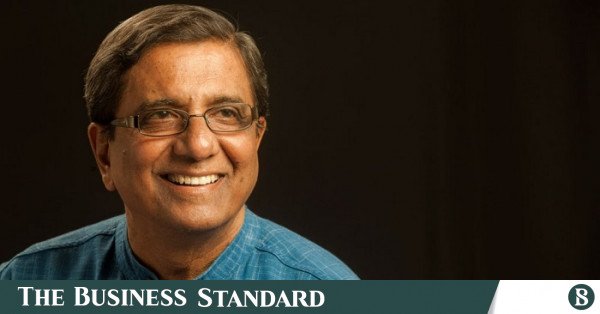
Prothom Alo Editor and Publisher Matiur Rahman has criticised successive governments, including the previous Awami League and interim administrations, over their treatment of the media, while urging the current BNP government to fulfil its election pledges on press freedom and media reform.
Speaking at a session titled “Journalism After the Turning Point” at the Bay of Bengal Conversation yesterday (4 October), he said the BNP’s 31-point reform programme and election manifesto had promised a media commission, repeal of restrictive laws and protection for “fearless, impartial journalism”.
“Despite this commitment by BNP as a political party and by the government, no significant steps have yet been taken to reform the newspaper and the broader media sector,” he said.

Matiur said journalists faced imprisonment and sustained pressure during the Awami League government led by Sheikh Hasina, while Prothom Alo was subjected to various forms of pressure.
He alleged that advertisements from 50 major companies were halted following government orders in an attempt to undermine the newspaper financially. Nearly 80 cases were also filed against him, including a case under the Digital Security Act in 2023, he said.
He recalled that Sheikh Hasina had publicly described Prothom Alo as an “enemy” of the Awami League and the country in parliament.
Matiur also alleged that military intelligence exerted “tremendous pressure” on the newspaper’s management before the 2024 uprising to remove him and bring about a change in ownership.
“I believed that if the government had remained in power for a few more months, control of Prothom Alo’s management could have been taken away,” he said.
He said the interim government that followed also failed to meet public expectations regarding media reform.
“The media industry became increasingly unstable as pressure from various groups forced management changes at media houses, leaving many journalists jobless,” he said.
He added that an atmosphere of uncertainty and fear had pushed media outlets, including Prothom Alo, towards self-censorship.
Matiur said the interim administration “took virtually no initiative” to implement the recommendations of the Media Reform Commission.
He also criticised the government’s response to the attacks on the offices of Prothom Alo and The Daily Star on 18 December 2025.
He said “hateful propaganda” and protests by extremist groups eventually culminated in arson and destruction at the two newspaper offices.
“Only after everything had been burned down and destroyed did the law enforcement agencies clear the way for the fire service,” he said, alleging that government authorities failed to issue effective instructions to prevent the destruction.
In contrast, Matiur said he enjoyed “considerable freedom” while serving as editor of Bhorer Kagoj and Prothom Alo during the BNP governments led by Khaleda Zia in 1991-1996 and 2001-2006.
Although his newspaper strongly criticised the 2001-2006 government, he said, it did not face major legal harassment.
He recalled having heated exchanges with Khaleda Zia and her son Tarique Rahman, now the prime minister, without facing retaliation.
Matiur also reflected on his participation in a student protest against the Ayub Khan regime on 1 February 1962 demanding press freedom.
He said the demands he raised more than six decades ago remain relevant today.
“After 64 years, we still have to speak about those demands. We still have to ask for them. We still have to remind those in power that the right to speak and freedom of the press are not privileges. They are fundamental rights,” he said.
“After 56 years of journalism, I find myself standing in the same place once again,” he added.
About The Author