He also expressed a positive outlook on restructuring the SME Board and increasing women’s representation at the policymaking level to ensure maximum opportunities for women entrepreneurs.
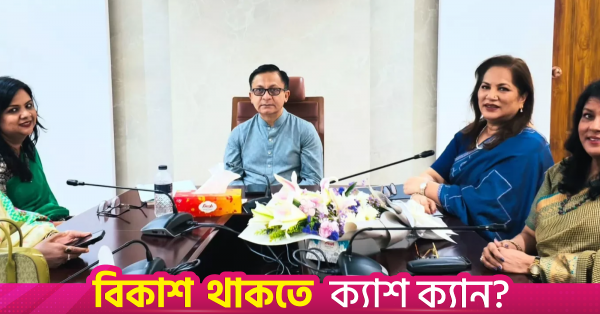
Industries Minister Khandakar Abdul Muktadir holds a meeting with a delegation of the Bangladesh Women Chamber of Commerce and Industry (BWCCI), led by its President Sangita Ahmed, at his office today. Photo: Courtesy
“>

Industries Minister Khandakar Abdul Muktadir holds a meeting with a delegation of the Bangladesh Women Chamber of Commerce and Industry (BWCCI), led by its President Sangita Ahmed, at his office today. Photo: Courtesy
The government is taking steps to remove administrative hurdles for women entrepreneurs, expand their access to credit and strengthen their representation at the policymaking level, Industries Minister Khandakar Abdul Muktadir said today (5 September).
He made the remarks when a delegation of the Bangladesh Women Chamber of Commerce and Industry (BWCCI), led by its President Sangita Ahmed, met him at his office.
The minister said the introduction of a single-window system will allow women traders and entrepreneurs to obtain essential documents, including trade licences, import registration certificates (IRC) and export registration certificates (ERC), online.

“Entrepreneurs can apply and pay the required fees from any corner of the country, even from abroad, to avail these services. This will reduce the need to visit government offices in person and make it easier to complete the formalities needed for doing business,” he said.
Speaking about SME financing, Muktadir said the loan facility for the sector has been raised from Tk 300 crore to Tk 2,000 crore. “The funds will be disbursed at a 6 percent interest rate.”
He also expressed a positive outlook on restructuring the SME Board and increasing women’s representation at the policymaking level to ensure maximum opportunities for women entrepreneurs.
At the meeting, BWCCI representatives highlighted the lack of information, complexities in formal registration and limited coordination at the district level as key barriers to the expansion of women-owned businesses.
To address these, they proposed a comprehensive database, a central compliance desk and regular central-district coordination meetings.
The BWCCI delegation said there are no precise statistics on how many women entrepreneurs operate in which sectors and at what scale.
This makes it difficult to assess their actual needs, formulate effective policies and deliver need-based support, they said.
Along with a central database, they stressed making it mandatory for district-level women’s chambers to maintain entrepreneurs’ information.
The delegation said women-run businesses also face various difficulties in preparing required documents and complying with regulations to come under the formal framework.
They demanded a central compliance desk, or integrated service platform, which will provide guidance and support on business registration, necessary documentation and legal procedures.
The organisation also proposed holding meetings twice a year with central and district-level representatives to bring district-level problems to the central level and ensure effective coordination for solutions.
The minister praised the alternative service platforms that have emerged to support women entrepreneurs, and reiterated the government’s positive stance on improving their access to business services and financing.
About The Author