Government targets 30% renewable electricity by 2030 amid efforts to address energy crisis.
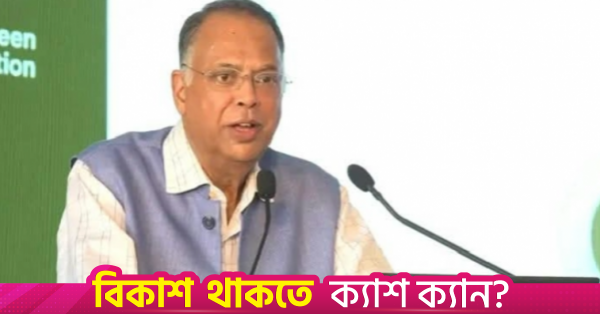
Power, Energy and Mineral Resources Minister Iqbal Hassan Mahmood Tuku delivers his inaugural speech at the Second Renewable Energy Fest 2026 at BUET on 27 October. Photo: Courtesy
“>

Power, Energy and Mineral Resources Minister Iqbal Hassan Mahmood Tuku delivers his inaugural speech at the Second Renewable Energy Fest 2026 at BUET on 27 October. Photo: Courtesy
The government is taking various initiatives to address the energy crisis and aims to generate 30% of the country’s electricity from renewable sources by 2030, Power, Energy and Mineral Resources Minister Iqbal Hassan Mahmood Tuku said today (27 October).
“The government aims to generate 30% of the country’s electricity from renewable sources by 2030. We have enacted a special energy law to achieve the target,” he said.
The minister made the remarks while inaugurating the Second Renewable Energy Fest 2026 at the Central Field of Bangladesh University of Engineering and Technology (BUET).

The event called for expanding renewable energy systems across the country to reduce carbon emissions.
The three-day festival, running from 26 to 28 October, is jointly organised by ActionAid Bangladesh and BUET, in collaboration with Just Energy Transition Network Bangladesh (JETnet-BD) and BUET’s Institute of Energy and Sustainable Development (IESD).
Tuku said the people of Bangladesh would have to bear the consequences of mismanagement in the energy sector over the past 17 years for a hundred years.
He also blamed an unplanned quick-rental power policy for contributing to the energy crisis.
“Under the previous government’s irrational rules, power plants have to be paid capacity charges even when they do not generate electricity. Bangladesh bought LNG from the spot market at prices of up to US30perunit.ThegovernmenthasspentmorethanUS4 billion in the energy sector in just the past few months,” he said.
The minister also highlighted problems with electricity distribution in rural areas, saying the absence of fault detectors on rural electricity lines often makes it difficult to identify technical problems.
He said that although electricity lines were installed across villages to achieve 100% electrification, fault detectors were installed alongside them.
As a result, when a fault occurs, rural electricity workers have to travel to the affected areas and search for the problem manually, a process that can take two to three days in some cases.
In many villages, he said, even vehicles cannot enter, forcing workers to use vans to reach the sites.
He said such technical faults often leave consumers without electricity, but the resulting outages are blamed on the government as load-shedding.
“These are the practical problems I face every day, but there is no one to understand them. Because we come to power through people’s votes, we are a soft target,” he said.
Referring to nuclear power, he said Bangladesh has repeatedly raised the issue of nuclear energy, but generating electricity alone would not be enough without the necessary downstream infrastructure to transmit it.
He said the Power Development Board (PDB) is not ready for that task.
He urged NGOs to help expand solar power systems in rural communities, saying the organisations could collect payments from households through meters and use the revenue to sustain the systems.
He requested NGOs to focus on installing solar panels on sheds, noting that he had seen solar-powered sheds in many places.
He said the government is working to improve the power system and urged stakeholders to pay greater attention to such initiatives.
Tuku noted that solar power generation fluctuates with changes in sunlight, making a modernised electricity grid necessary to manage such variations.
“Smart grids are not yet available in our country. We have to develop them, and we are trying to do so. But five years is a very short period,” he said.
First Counsellor and Head of Section for Green Economy and Public Sector Investments at the EU Delegation to Bangladesh Tobias Biermann, Second Secretary at the Australian High Commission in Bangladesh Jacob de Leon, and Country Director of ActionAid Bangladesh Farah Kabir attended the programme, among other distinguished guests.
Representatives from the European Union, Indonesia, Australia and Pakistan also participated in the renewable energy festival.
About The Author