Before the US and Israeli attacks on Iran began, LNG was priced at around $10 per MMBtu.
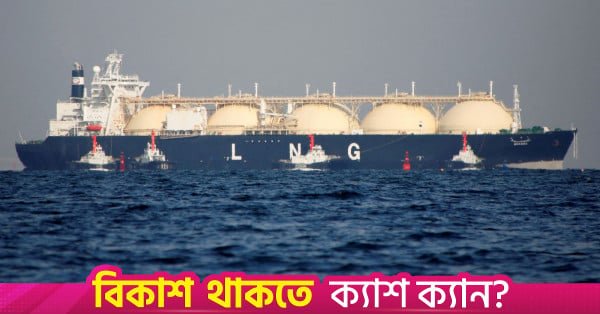
File of an LNG vessel. Photo: Reuters
“>

File of an LNG vessel. Photo: Reuters
The government is importing liquefied natural gas (LNG) at nearly three times the price it paid before the Middle East conflict began, with one cargo approved at $29.795 per million British thermal units (MMBtu).
The Cabinet Committee on Government Purchase today (14 September) approved the proposal to import one LNG cargo from Singapore-based Vitol Asia Pte Ltd for delivery on 27-28 October.
The approval came at a meeting of the committee chaired by Finance Minister Amir Khosru Mahmud Chowdhury, according to the finance ministry’s public relations department.

Before the US and Israeli attacks on Iran began, LNG was priced at around $10 per MMBtu.
The committee also approved the import of one LNG cargo from UK-based TotalEnergies Gas & Power Ltd for delivery on 9-10 October. The cargo will be procured through an international quotation process at $28.95 per MMBtu.
In addition, the committee approved the direct purchase of two LNG cargoes from US-based DARAB Inc at $17 per MMBtu and two cargoes from US-based Mind Mingle LLC at $19 per MMBtu.
Earlier, the government decided to import 18 LNG cargoes from France-based energy company TotalEnergies over nine months, with two cargoes scheduled each month from October this year to June next year.
The government may also purchase additional cargoes from TotalEnergies if required, subject to mutual agreement between the two sides.
The LNG will be procured through the direct purchase method for international procurement, with each cargo priced at the Japan Korea Marker (JKM) plus $0.06 per million British thermal units (MMBtu).
The rate is slightly lower than the price agreed with US-based Gunvor for 14 LNG cargoes to be imported between 2026 and 2028. Under that deal, the price was set at JKM plus $0.0875 per MMBtu.
Meanwhile, the government plans to add 1,600 million cubic feet per day (mmcfd) of LNG supply capacity by 2030 to meet rising gas demand, State Minister for Power, Energy and Mineral Resources Anindya Islam Amit said on 11 September.
Under the plan, a 600 mmcfd floating LNG terminal will be established in Maheshkhali by 2028, while a 1,000 mmcfd land-based terminal will be commissioned in Matarbari by 2030.
The state minister announced the plans at the 15th LNG Producer-Consumer Conference 2026 in Tokyo, Japan.
The government is also assessing the feasibility of urgently setting up another floating LNG terminal near Payra or Mongla ports, or at another suitable location along the southwestern coast, Prime Minister Tarique Rahman told parliament on 9 September.
The proposed terminal is part of a broader plan to expand LNG import capacity and increase domestic gas production to reduce the impact of sudden or temporary supply disruptions, particularly on industries.
The government is also progressing with plans for a floating LNG terminal at Kutubjom in Maheshkhali and a land-based terminal at Matarbari. The Kutubjom terminal is expected to start supplying regasified LNG in 2028, while the Matarbari terminal is expected to begin supplying gas by December 2030.
About The Author