Three high-level subcommittees to work under central cell.
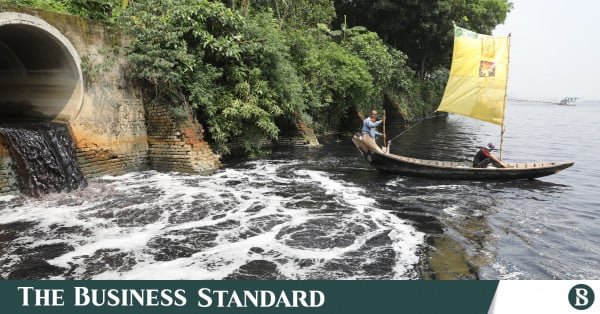
The blackened water of Buriganga offers little sign that this was once the lifeline of Dhaka. Photo: Mehedi Hasan
“>

The blackened water of Buriganga offers little sign that this was once the lifeline of Dhaka. Photo: Mehedi Hasan
The Prime Minister’s Office has formed a central cell and three high-level subcommittees to curb pollution in the Buriganga, Turag, Dhaleshwari, Balu and Shitalakshya rivers around Dhaka and restore the navigability and natural flow of the water bodies and connected canals.
The initiative will focus on identifying and controlling sources of pollution, including industrial and household waste, illegal drains and waste discharged into canals and waterways.
Ministers or state ministers from the ministries of environment, forest and climate change; local government; shipping; and planning will serve as advisers to the central cell, while the Bangladesh Navy will act as its coordinator.

According to a notification issued on 1 September, the 35-member central cell will be headed by the prime minister’s principal secretary.
The subcommittees will focus on controlling waste at its sources, removing waste from canals and drains and restoring water flow, and clearing accumulated waste from riverbeds while preparing long-term restoration plans.
The central cell will direct relevant ministries and agencies to implement decisions and provide necessary manpower, vehicles, vessels and equipment. It will review the progress of the subcommittees and submit monthly updates to the prime minister.
It will also coordinate ongoing projects on pollution control, conservation and management of the Buriganga and surrounding rivers, as well as activities related to Dhaka’s circular waterway under the Ministry of Shipping.
Pollution control at source
The first subcommittee, led by the Department of Environment, will work to control pollution from industrial and other waste sources.
It will regularly update the list of polluting industries and inspect factories, institutions and vessels, taking legal action where necessary.
The committee will also work to prevent vessels from discharging waste into waterways and prepare plans to establish bilge-removal facilities at major river ports.
The second subcommittee, led by the Local Government Division, will oversee waste removal from canals and drains, river restoration and the restoration of water flow.
The 16-member committee, headed by an additional secretary of the Local Government Division, will coordinate with city corporations, municipalities and Wasas to remove waste, including medical waste, and restore canals and rivers.
As part of medium- and long-term plans, it will also initiate the establishment of sewage treatment plants, effluent treatment plants and waste-to-energy plants alongside canals and drains.
The third subcommittee, led by the Bangladesh Inland Water Transport Authority, will focus on removing accumulated waste from riverbeds and preparing long-term plans.
The 14-member committee will collect data through necessary surveys for dredging and arrange for accumulated waste to be removed from riverbeds and safely dumped at designated locations.
The central cell will also prioritise project proposals and funding requirements for long-term restoration efforts through the relevant ministries and agencies.
About The Author