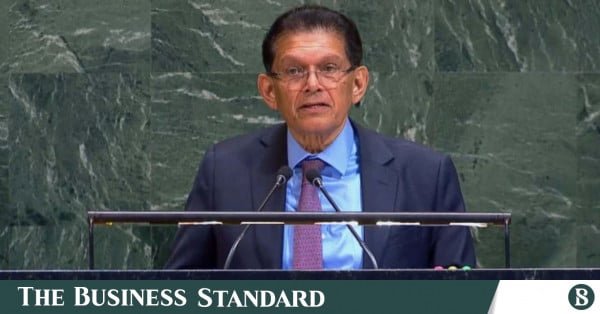
The government considers production or import costs, raw material prices, taxes and duties, distribution costs, market prices and reasonable profit margins when setting and approving medicine prices, Health and Family Welfare Minister Sardar Md Sakhawat Husain told parliament today (7 September).
The government fixes the prices of most medicines listed under the country’s primary healthcare programme, with these prices serving as benchmarks, he said in a written reply to a question from reserved women’s seat-5 lawmaker Newaz Halima Arly during the question-answer session of parliament.
The government has fixed prices for different doses and forms of 117 medicines on the primary healthcare list. Pharmaceutical companies must submit proposals in a prescribed format to set their maximum retail prices within the specified price limits.

After reviewing the applications, the authorities approve the proposed prices and issue price certificates, he said.
For medicines outside the primary healthcare list, prices are referred to as “indicative prices”. The manufacturers themselves set the prices of these medicines and subsequently apply to the Directorate General of Drug Administration (DGDA) for price certificates for VAT payment purposes.
The minister said such applications must include the proposed price, a valid annexure, a copy of the approved block list of active ingredients and, in cases of price revision, a copy of the previous price certificate.
Based on the company’s application, the licensing authority mainly issues the price certificate for the purpose of VAT payment, he added.
New committee formed to determine medicine prices
The minister said a new “Drug Price Determination Committee” has been reconstituted under Section 12 of the Drugs and Cosmetics Act, 2023.
The 15-member committee has four observers and is headed by the senior secretary or secretary of the Health Services Division. The director general of the DGDA serves as its member-secretary.
Representatives of the pharmaceutical industry and traders’ associations are included as observers, but they do not have voting rights in the committee’s decision-making process, the minister said.
The committee will determine, approve and, where necessary, revise the maximum retail prices of listed, imported and locally manufactured medicines in accordance with the law, relevant regulations and the government’s drug pricing policy.
While determining prices, the committee will consider production or import costs, taxes and duties, reasonable supply-chain costs, domestic and relevant international prices, availability of alternative medicines in the market and reasonable profit margins.
It will also assess the necessity of a medicine, the disease burden, people’s purchasing power, its potential impact on government healthcare expenditure and whether there is an adequate supply of the medicine in the market.
The minister further said selling medicines above the government-set price is a punishable offence under Section 30(4) of the Drugs and Cosmetics Act, 2023.
The offence carries a maximum penalty of two years’ imprisonment, a fine of up to Tk2 lakh, or both.
About The Author