New police unit to inherit RAB’s personnel, powers and assets
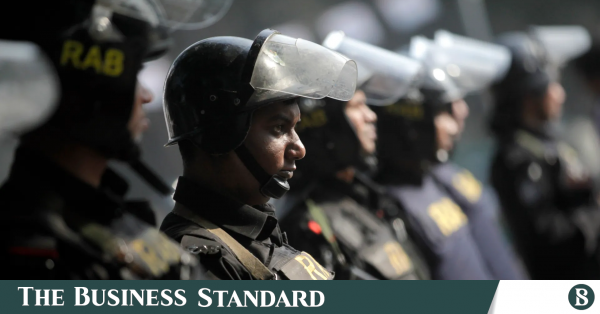
Members of the Rapid Action Battalion. Representational Image/File/Reuters
“>

Members of the Rapid Action Battalion. Representational Image/File/Reuters
The government has given final approval to a draft law seeking to abolish the Rapid Action Battalion (RAB) and establish a new specialised police unit, the Special Response Battalion (SRB).
The draft law provides for the transfer of RAB’s personnel, powers, assets, funds, accounts, records and other related matters to the new unit. It also proposes a multi-party complaint redress committee to address complaints from citizens and grievances raised by SRB members.
The Cabinet gave policy and final approval to the draft Special Response Battalion (SRB) Act, 2026 at a meeting chaired by Prime Minister Tarique Rahman at the Prime Minister’s Office today (17 August).

However, the draft will require vetting by the Legislative and Parliamentary Affairs Division before the law is finalised, according to a press release from the Prime Minister’s Press Wing.
Under the proposed law, RAB will be formally abolished and the SRB will be established as a specialised unit under the police.
RAB personnel, orders, powers, authority, facilities, funds, property, accounts, records and other assets will be transferred to the new unit.
Until new regulations are framed, existing rules governing RAB-related departmental proceedings will remain in force with necessary adaptations, according to the draft.
The draft also proposes changes to the accountability framework.
A multi-party complaint redress committee will handle complaints from citizens as well as internal grievances raised by SRB members.
The move comes amid longstanding allegations against RAB, particularly concerns over accountability in law enforcement and allegations of human rights violations.
RAB was established in 2004 under the BNP-led government and played a key role in combating militancy, terrorism and organised crime.
The force later faced serious allegations of extrajudicial killings, enforced disappearances, torture and other human rights violations.
In December 2021, the United States imposed sanctions on RAB and several of its officials over allegations of serious human rights violations.
Following the July-August 2024 uprising, demands for a fresh investigation into RAB’s role and reforms to the force gained renewed momentum.
A 2025 investigation report by the Office of the United Nations High Commissioner for Human Rights identified RAB as a force linked to serious human rights violations and called for structural and accountability reforms in law enforcement agencies, including RAB.
The Commission of Inquiry on Enforced Disappearances had earlier recommended abolishing RAB as part of broader structural reforms to law enforcement agencies aimed at ending enforced disappearances and human rights violations.
Human Rights Watch also recommended abolishing RAB and pursuing long-term reforms in the security sector. It said accountability for the force’s past actions had been inadequate and that any new structure should ensure independent oversight and accountability.
Discussions on reforming RAB had begun within the government earlier. In late 2024, proposals to change the force’s name, structure and legal framework emerged.
In April 2025, the then RAB director general also said a new law was needed to ensure accountability of the force.
The government’s newly approved draft proposes formally abolishing RAB rather than simply changing its name and establishing the SRB under the police.
However, as the draft also provides for transferring RAB personnel and assets to the new unit, the extent of structural change and the independence and effectiveness of the proposed complaint redress mechanism will remain key issues during implementation.
About The Author