The newly formed wage board will be the eighth since the first one was constituted in 1984, with entry-level monthly pay rising nearly 20-fold over four decades.
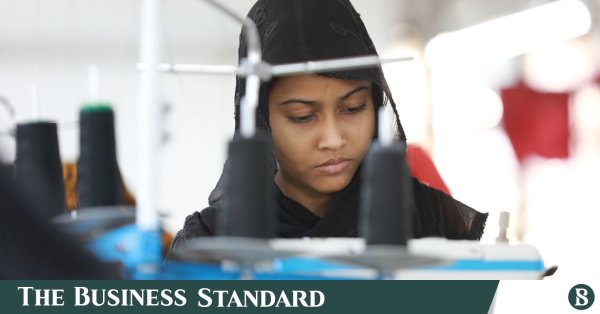
A women worker is busy making clothes. The picture was taken on Monday. Photographer: Mohammad Minhaj Uddin.
“>

A women worker is busy making clothes. The picture was taken on Monday. Photographer: Mohammad Minhaj Uddin.
The government has formed a six-member wage board to review the minimum wages of readymade garment (RMG) workers amid protests demanding a monthly minimum wage of Tk30,000.
Labour and Employment Minister Ariful Haque Choudhury announced the formation of the board at a press conference today (1 November), urging its members to take up their responsibilities promptly.
The new board will be the eighth wage-setting exercise since the first board was constituted in 1984. Over the past four decades, the minimum monthly wage for the lowest-paid workers has increased from Tk627 to Tk12,500.

The first wage structure was published in the Bangladesh Gazette on 27 December 1984. It fixed the monthly wage at Tk627 for the lowest-paid category, including line feeders and packers, while workers in the highest-skilled category were entitled to Tk1,112. The schedule included different rates for workers according to their skills and job responsibilities.
In 1994, the minimum monthly wage was raised to Tk930. The next revision came in 2006, when the lowest-grade minimum was increased to Tk1,662.50. The highest-grade minimum was Tk5,140 under the seven-grade structure.
In 2010, the minimum wage for the lowest grade was raised to Tk3,000, while the highest-grade minimum reached Tk9,300. The 2013 revision increased these figures to Tk5,300 and Tk13,000 respectively.
The 2018 wage structure raised the entry-level minimum to Tk8,000, with the highest-grade minimum set at Tk17,510. However, following protests over disparities between grades, the government revised several rates in January 2019. The highest-grade minimum was increased to Tk18,257, while the lowest-grade rate remained unchanged at Tk8,000.
The latest revision came in 2023, when the government raised the lowest-grade minimum from Tk8,000 to Tk12,500, effective from 1 December that year. It also reduced the number of grades from seven to four. Under the new structure, the highest-grade minimum was Tk15,035.
Thus, the entry-level minimum wage has increased almost 20-fold since the first Gazette in 1984, although these are nominal figures and do not account for inflation or changes in workers’ purchasing power.
The seven previous wage-setting rounds took place in 1984, 1994, 2006, 2010, 2013, 2018 and 2023. The January 2019 adjustment was a revision of the 2018 structure, not a separate wage-board round.
The new board will have to consider workers’ demands and rising living costs alongside the garment industry’s capacity to absorb higher labour costs. Its recommendations will determine the next minimum wage structure for millions of workers in the country’s largest export-earning industry.
About The Author