Passengers travelling from Dhaka to various parts of the country face the worst suffering during Eid journeys, with traffic conditions deteriorating each year despite massive spending on infrastructure projects aimed at easing congestion.
Eid-ul-Adha will be celebrated on Thursday (28 May). Passenger pressure has already intensified on major highways and is expected to increase further as more people leave the capital.
Travellers from Dhaka, Gazipur and Narayanganj heading towards northern districts face particularly acute delays, regardless of whether they use Gabtoli, Ashulia or Tongicorridors.

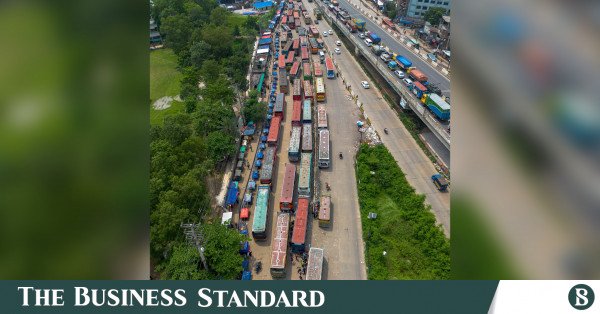
Crossing Chandra alone can take 8-10 hours, with little respite thereafter. Traffic stretching from Elenga intersection in Tangail often extends 30-40km up to Mirzapur, while the long queue at the Jamuna Bridge toll plaza merges with the Elenga congestion.
As a result, some passengers travelling from Dhaka to Rajshahiand Chapainawabganj – a 6 to 7-hour journey – have spent as long as 17-18 hours on the road by bus to reach home.
Yet several projects costing thousands of crores have already been implemented, while others remain under construction – to ensure smooth travel. Although traffic police take various measures, including diversions ahead of Eid, travel misery has not eased.
Experts say road development in Bangladesh has largely focused on connectivity, but the priority now should shift to mobility, ensuring faster and uninterrupted movement.
Md Hadiuzzaman, civil engineering professor at Buet, said Bangladesh can build roads and bridges quickly, but fails to ensure their effective management.
“Work on major projects such as elevated expressways isprogressing slowly, and road management underneath the structures is being neglected during construction,” he said.
Contractors often fail to understand how much space is needed to keep the roads below operational. As a result, roads become disorderly, he told The Business Standard.
Dhaka-Ashulia Expressway
The Dhaka-Ashulia Expressway, launched nine years ago has become a major choke point. Scheduled for completion in 2022, the project remains unfinished. A proposal is now to raise costs by Tk9,680 crore to Tk27,233 crore and extend the deadline to 2028.
Alternative routes via Gazipur-Chandra or Gabtoli-Savar-Nabinagar-Bypail-Chandra also offer little relief. From Abdullahpur to the Bhogra Bypass, roads are clogged with battery-run auto-rickshaws and dense industrial activity.
A similar situation persists on the Gabtoli-Aminbazar-Savar-Nabinagar-Bypail-Chandra corridor, where the four-lane highway loses capacity due to garment worker crowds and indiscriminate bus stoppages. It often takes 6-7 hours just to reach Chandra from Dhaka – although the distance should not take more than 3 hours.
Chandra intersection remains the biggest bottleneck. Despite a flyover at the Gazipur-Tangail highway junction, congestion persists.
Md Hadiuzzaman blamed planning failures for the chronic congestion at Chandra. He said an interchange should have been constructed at Chandra instead of a flyover.
“Building a flyover at such a critical intersection was a major planning mistake because it cannot ensure smooth traffic movement and, in many cases, worsens congestion,” he added.
Elenga intersection
Under the Tk19,000 crore SASEC Road Connectivity Project-2, work is underway to upgrade the Elenga-Hatikamrul-Rangpur highway into a four-lane corridor.
Although the Chandra-Elenga stretch has already been widened to four lanes, congestion at Elenga intersection and the Jamuna Bridge continues to cause major delays.
Waliur Rahman, project director of the Elenga-Hatikamrul-Rangpur Highway project, said, passengers heading to northern districts are unlikely to face severe disruption after crossing the Jamuna Bridge this year.
He said the Hatikamrul-Kamarpara section has been upgraded to six lanes. Road conditions from the western end of Jamuna Bridge to Rangpur have improved. Only the Gobindaganj area may see minor disruption as a flyover there is yet to be fully completed.
He added that breakdowns on Jamuna Bridge frequently trigger congestion, and rented buses often become stranded during Eid travel, causing long tailbacks.
To address this, personnel have been deployed at 200m intervals on the bridge to respond quickly to breakdowns, along with tow trucks stationed on both sides for rapid clearance.
25 spots on Dhaka-Gazipur highway
Authorities have identified 25 congestion-prone points on the Dhaka-Gazipur highway. One of the worst is the western end of Chandra flyover in Kaliakair, where the four-lane road narrows into two lanes.
Amzad Hossain, superintendent of Gazipur Industrial Police, said factories will close in two phases on 25 and 26 May to avoid a potential crisis, while some will stay open until 27 May.
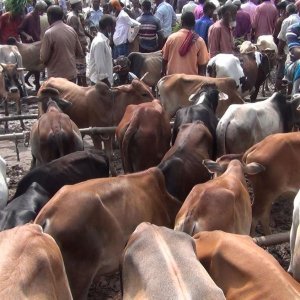
Ahead of Eid-ul-Adha, 111 cattle markets have been set up in Gazipur. Several of these are located along highways, including one in the Sreepur bus stand in Ashulia.
Authorities fear that the movement and indiscriminate parking of cattle-laden trucks around these markets could further intensify congestion.
Congestion at Dhaka exit points
Despite massive investment to widen Dhaka’s entry and exit corridors, unregulated land use, flawed planning and weak traffic management have turned these gateways into sprawling bus terminals and commercial hubs, driving severe congestion.
Jahangir Alam, additional SP, Dhaka Police, said Ashulia, Savarand Nabinagar are industrial zones with a population of at least 70 lakh.
He said a large share of factories will go on holiday, triggering a sudden surge of passengers, while limited vehicle availability will push more commuters onto the roads.
He added that ongoing elevated expressway construction has left several stretches uneven and narrowed, with excavation work further disrupting traffic flow. “If it rains, the situation will slow down even more. These factors are beyond our control,” he said.
He said incoming vehicles from Nabinagar will be directed to turn left and enter via the loop, while additional deployments are in place to manage congestion.
Southern and south-eastern entry points
Severe gridlock has long persisted at Dhaka’s southern and south-eastern entry points, including Jatrabari, Sayedabad and Postogola. These routes carry heavy traffic from the east, including Chattogram and Sylhet, as well as vehicles from Barishal and Khulna.
At the Jatrabari-Sayedabad point, buses often stop on the main road for passenger pickup and drop-off, creating tailbacks that frequently stretch up to the Dhaka-Chattogram highway.
In Postogola and near Buriganga Bridge, intense industrial activity in Shyampur and surrounding areas has led to heavy freight movement, slowing general traffic.
Similar pressure is evident at Babubazar Bridge and Nayabazarentry points. Since the opening of the Padma Bridge, traffic from Munshiganj, Shariatpur and wider southern regions has further strained these corridors.
After crossing Babubazar Bridge, long-distance vehicles entering dense Old Dhaka areas such as Nayabazar, Imamganjand Moulvibazar struggle through narrow streets.
Loading and unloading in wholesale markets, with uncontrolled movement of vans, rickshaws and covered vans, has pushed much of the area towards standstill conditions.
Shafiqul Islam, Project Director, Dhaka-Ashulia Elevated Expressway Project, said around 50 traffic controllers have been deployed alongside police efforts to reduce congestion.
Cumilla bottleneck on Dhaka-Chattogram highway
Concerns have been raised over traffic congestion on the Cumilla stretch of the Dhaka-Chattogram highway. In addition to heavy Eid travel pressure, congestion is likely to be worsened by illegal structures along the highway, permanent markets in areas such as Nimshar and Chandina, and indiscriminate passenger pick-up and drop-off.
Repair works in several sections, including the CumillaCantonment area, have contributed to persistent gridlock. However, repair works have been suspended to ease Eid travel.
According to Highway Police sources, 25 congestion-prone points have been identified along the Dhaka-Chattogram highway, with efforts focused on these critical locations.
Shahinur Alam Khan , superintendent of Cumilla highway police, said additional police and BGB have been deployed on the roads since Thursday. He added that the Roads and Highways Department has been requested to expedite repair works.
TBS correspondents from Gazipur, Savar, Cumilla contributed to this report.
About The Author