The rating agency highlights Bangladesh’s manageable debt burden and steady access to concessional financing as key buffers against mounting economic pressures
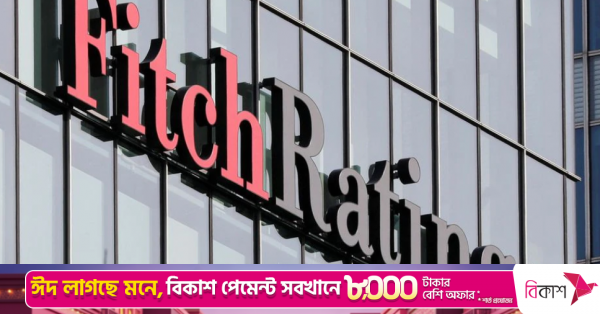
The Fitch Ratings logo at their offices at Canary Wharf financial district in London,Britain on 3 March 2016. File Photo: REUTERS/Reinhard Krause
“>

The Fitch Ratings logo at their offices at Canary Wharf financial district in London,Britain on 3 March 2016. File Photo: REUTERS/Reinhard Krause
Fitch Ratings has revised Bangladesh’s outlook to “negative” from “stable” while affirming the country’s Long-Term Issuer Default Ratings (IDRs) at “B+”, citing rising external vulnerabilities and slow progress in reforms.
In a statement issued from Hong Kong today (13 May), the global credit rating agency said the outlook revision reflects Bangladesh’s growing macroeconomic and external financing risks stemming from significant exposure to the ongoing conflict in the Middle East.
Fitch said limited progress in implementing reforms aimed at strengthening the country’s policy framework, public finances and financial sector has also contributed to the decision.

The agency further noted that sustained weak institutional governance is gradually reducing Bangladesh’s ability to absorb economic shocks.
Despite the negative outlook, Fitch affirmed the sovereign rating at “B+”, pointing to Bangladesh’s moderate government debt levels and continued access to concessional external financing.
However, the agency said these strengths are offset by relatively weak external liquidity, lower governance standards compared with peer countries, persistent challenges in the financial sector and weaker structural indicators.
About The Author