Industries warned of prolonged pressure as energy projects take shape.
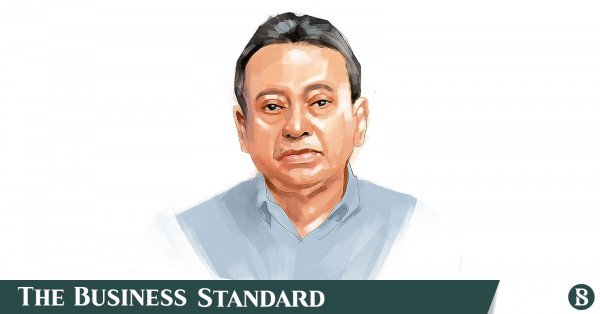
Amir Khosru Mahmud Chowdhury. Sketch: TBS
“>

Amir Khosru Mahmud Chowdhury. Sketch: TBS
Finance Minister Amir Khasru Mahmud Chowdhury has sought a two-year cushion to overcome the gas crisis and stabilise the economy, warning that industries will remain under pressure as the government works to secure energy supplies amid the global fallout from the war.
Speaking at a luncheon meeting titled “Sustainable Power and Energy: Driving Investment in Bangladesh”, organised by the Foreign Investors’ Chamber of Commerce and Industry (FICCI) at a city hotel today (19 October), he said the energy crisis could not be resolved quickly.
“If I promise anything better than that, it would be a mistake,” he said, adding that the fourth and fifth years would be when the government’s initiatives fully took off.
The minister said Bangladesh had already incurred $7 billion in out-of-pocket energy costs, while the scale of further expenditure remained uncertain. The global crisis had compounded existing economic weaknesses, putting additional pressure on industries and producers.

The government is pursuing plans to expand gas supplies, including the development of three to four floating storage and regasification units (FSRUs), with private investment expected from South Korean, Chinese and American investors.
Such facilities would take around 18 months to develop, Amir Khasru said.
The government is also discussing shore-based liquefied natural gas (LNG) terminals with foreign investors, including American, South Korean and Italian companies.
It has identified Matarbari and another location near Khulna, where water depth is around 20 metres, for energy infrastructure capable of accommodating large vessels and reducing shipping costs.
On domestic gas production, the minister said the government was pursuing onshore and offshore exploration through production-sharing contracts and state-owned Bangladesh Petroleum Exploration and Production Company (Bapex).
The government plans to drill 150 wells through Bapex, with procurement of the necessary equipment already approved.
To address immediate energy shortages, the government is promoting renewable energy, particularly solar power, through tax incentives and measures to encourage rooftop installations.
It aims to develop around 10 gigawatts of solar capacity over the next three to four years.
Households will also be allowed to sell surplus electricity to the grid at incentivised rates, the minister said.
He acknowledged that gas shortages were hurting industrial production and increasing the cost of doing business but cautioned that the situation could not be resolved overnight.
An energy security plan is expected to be completed by June, while the government is working to establish key infrastructure over the following two and a half years, he added.
Turning to the wider economy, Amir Khasru identified weaknesses in the financial sector, instability in the capital market and low tax-to-GDP performance as major concerns.
The government is working to stabilise banks and the stock market, attract investment and reform tax administration by separating policy formulation from implementation.
He said the government was receiving support from multilateral and bilateral development partners and was also seeing interest from global capital markets.
The minister urged businesses to prepare for a difficult period, noting that reforms and energy infrastructure projects would take time to produce results.
About The Author