An investigation into Saturday’s fire at Tuptup Resto and Resort should establish how it started, how quickly it spread, and whether the guests had a safe means of escape.
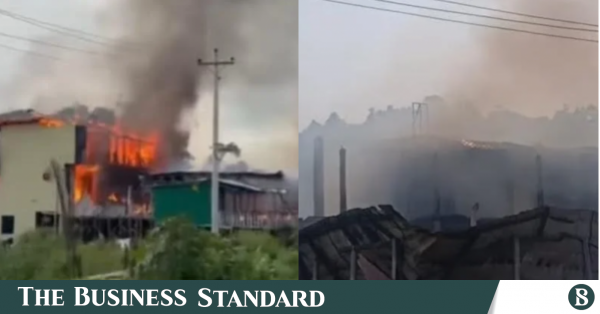
Flames and smoke engulf Tuptup Resto and Resort in the Inani area of Cox’s Bazar during a devastating fire that claimed at least 10 lives. Fire Service and Civil Defence officials stated that the two-storey resort operated without a fire safety license and had previously been cautioned regarding safety measures. Photo: Courtesy
“>

Flames and smoke engulf Tuptup Resto and Resort in the Inani area of Cox’s Bazar during a devastating fire that claimed at least 10 lives. Fire Service and Civil Defence officials stated that the two-storey resort operated without a fire safety license and had previously been cautioned regarding safety measures. Photo: Courtesy
At least 10 people were killed in a fire at Tuptup Resto and Resort in Cox’s Bazar’s Inani area today (17 October), raising fresh concerns over fire safety at tourist accommodation facilities in one of Bangladesh’s most popular destinations.
Fire Service and Civil Defence authorities said the two-storey resort did not have a fire safety licence and had been cautioned in June this year.
In recent years, two other major fires involving resorts in Cox’s Bazar district have been reported in the news media, highlighting recurring fire risks at tourist accommodation facilities.

On 15 January 2025, a fire on Saint Martin’s Island damaged three resorts in the Galachipa area along the western beach. Beach Valley Eco Resort was destroyed, while Kingshuk Eco Resort and Shayari Eco Resort also suffered damage. No injuries were reported.
On 22 May 2026, a fire damaged Pacific Beach Lounge Eco Resort in the Cox’s Bazar beach area, between Sugandha and Kolatoli points, according to media reports. Three cottages and a storeroom were reportedly destroyed, while the restaurant section remained intact. The fire took around two hours to bring under control, with losses estimated at Tk60-70 lakh.
These reports establish that at least three significant fires involving resorts in the district were reported during the period. These incidents have raised concerns over fire safety at resorts, although they do not establish how common such fires are or prove that all the properties involved lacked adequate safety measures.
The repeated fires nevertheless warrant closer scrutiny of fire prevention and emergency preparedness at tourist accommodation facilities. Where buildings contain extensive wooden structures or other combustible materials, flames can spread rapidly.
The outcome depends on how quickly a fire is detected, whether firefighting equipment is available, whether emergency exits are accessible and how quickly guests can be evacuated.
An investigation into Saturday’s fire at Tuptup Resto and Resort should establish how it started, how quickly it spread, and whether the guests had a safe means of escape.
For Cox’s Bazar, the wider issue is whether hotels and resorts are being inspected regularly and whether safety requirements are enforced consistently. The latest tragedy makes those questions urgent, but the answers must come from evidence, official inspections and the findings of the fire investigations.
About The Author