For low-income workers, however, escaping the heat is often not an option.
Representational Image. Photo: TBS
“>

Representational Image. Photo: TBS
The scorching heat gripping Bangladesh is reshaping daily life in the capital, emptying busy streets, slowing businesses and putting added pressure on workers who depend on daily earnings to keep the wolf from the door.
Today (4 June), Dhaka’s usually busy Shonir Akhra-Jatrabari and Jurain-Postogola gateways appeared unusually quiet. Days after Eid-ul-Azha, bus stops were nearly empty, only a few local buses, cars and pickup trucks were visible, and long-distance coaches were largely absent from the roads.
The heat also hurt businesses. Many roadside shops remained closed, while those open saw few customers. In Postogola’s steel and metal market, machinery fell largely silent as workers paused their activities, taking shelter inside workshops or beneath makeshift shades.

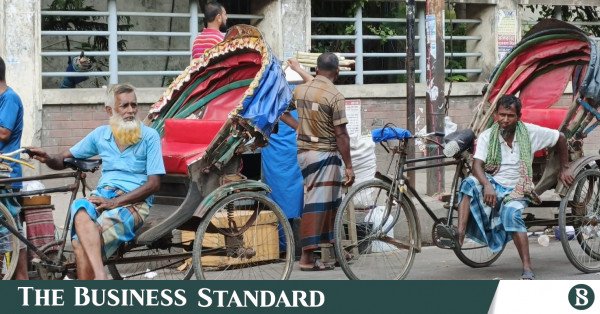
For low-income workers, however, escaping the heat is often not an option. One of them is Nasir Mia, an elderly pedal-powered rickshaw puller who supports a family of seven by carrying passengers across Jatrabari, Sadarghat, Ray Saheb Bazar, Shyambazar, Postogola and Jurain.
He had hoped business would pick up after Eid, particularly around Sadarghat. Instead, the heat has kept many people indoors, reducing passenger numbers and cutting into his income. Unable to endure the afternoon sun, he has also shortened his working hours.
“Working under this heat is very difficult at my age,” Nasir said. “But if I don’t work, there is no income.”
His predicament mirrors that of countless day labourers, transport workers and small traders across the city, many caught between protecting their health and making ends meet.
Professor Md Zillur Rahman of the Department of Disaster Science and Climate Resilience at the University of Dhaka said temperatures in May and June are seasonally high, but cities often feel much hotter because roads and buildings absorb and retain heat.
“The temperature itself may not be drastically different, but the heat experienced in cities is often much more intense due to the urban heat island effect,” he said.
He advised outdoor workers to schedule activities during cooler hours and avoid prolonged exposure to direct sunlight. He also called for cooling centres and safe drinking water facilities for vulnerable communities as heatwaves become more frequent and intense.
About The Author