Exporters estimate that actual export growth in April may have been around 8-10%, even though official year-on-year figures appear much higher compared to April last year.
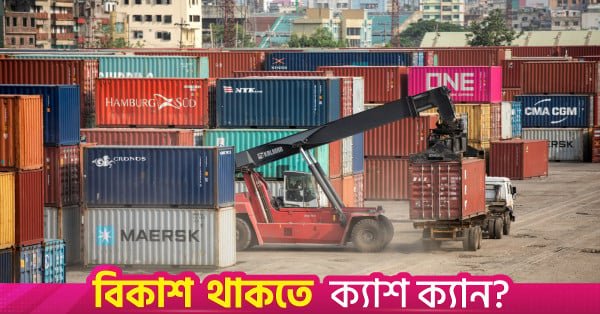
Representational image. Photo: TBS
“>

Representational image. Photo: TBS
Despite recording strong export growth in April, Bangladeshi exporters are showing limited enthusiasm, saying the surge is largely due to a low base effect caused by last year’s Eid holidays rather than a significant rise in real demand.
Bangladesh’s exports rebounded strongly in April, ending an eight-month streak of decline and crossing the $4 billion mark. According to Export Promotion Bureau (EPB) data released today (3 May), export earnings rose 32.92% year-on-year during the month, while also increasing 15.2% from March’s $3.48 billion.
Exporters estimate that actual export growth in April may have been around 8-10%, even though official year-on-year figures appear much higher compared to April last year.

Speaking to The Business Standard, Bangladesh Garment Manufacturers and Exporters Association (BGMEA) President Mahmud Hasan Khan said the growth was driven by two key factors.
“The first reason is that Eid-ul-Fitr fell on 31 March last year, with holidays extending until 6 April, which significantly reduced exports during that month. Compared to that low base, this year’s full-month export figures naturally appear much larger,” he said.

He added that many international buyers had delayed orders while awaiting the outcome of February’s national election.
“Following a credible election, buyer confidence has improved, and that has positively impacted April’s export earnings,” he said.
According to Mahmud, real export growth in April was around 8-10%, while May is unlikely to see similarly strong performance due to upcoming Eid-ul-Azha holidays. However, he expressed optimism that exports could pick up again from June if tensions in the Middle East ease.
Bangladesh Knitwear Manufacturers and Exporters Association (BKMEA) Senior Vice-President Fazle Shamim Ehsan also attributed the export increase to improved buyer confidence after the election and seasonal purchasing patterns.
He said lower order volumes in previous months had left buyers with depleted inventories, while April and May are traditionally key months for importing winter garments, which contributed significantly to April’s export boost.
However, he cautioned that growth in May may remain subdued due to Eid-ul-Adha holidays, while slower incoming orders could reduce export momentum from June onward. He noted that much would depend on the ongoing conflict in the Middle East.
BKMEA President Mohammad Hatem echoed similar concerns, saying the recent growth was largely a result of deferred shipments from March rather than any major increase in fresh orders.
He explained that March exports had declined primarily because factories remained closed for around 10 days during Eid-ul-Fitr, disrupting production schedules. As a result, many shipments delayed in March were completed in April.
“To our knowledge, no factories have received unusually high additional orders, nor has there been any sudden influx of new buyers,” Hatem said.
He warned that exports could face renewed pressure later this month due to another major holiday period, which may again disrupt production and shipment schedules.
“To understand the real export trend, we need to wait until July. Temporary increases may continue through June because of Eid-related shipment adjustments, but only then will the actual picture become clear,” he added.
About The Author