Commerce Secretary Md Ataur Rahman Khan disclosed the plan while chairing a workshop “Bangladesh Export Diversification Strategy: Product and Market Diversification Across 18 Key Trading Destinations” at the Secretariat today (28 September).
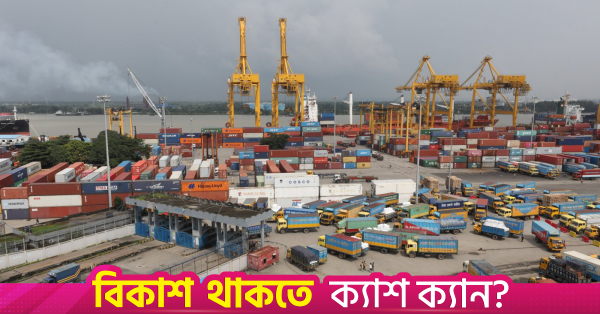
An aerial view of Chattogram Port. File Photo: Mohammad Minhaj Uddin/TBS
“>

An aerial view of Chattogram Port. File Photo: Mohammad Minhaj Uddin/TBS
The government is formulating separate export strategies for 18 key markets, including India, China, Russia, Iran and the US, focusing on market potential, existing barriers, competitors and measures needed to expand Bangladesh’s exports.
The strategies will identify potential products for each market, assess Bangladesh’s current position and major competitors, and outline policy and institutional measures to increase exports.
The remaining markets include Malaysia, Singapore, the UAE, Switzerland, South Korea, Brazil, Turkey, the UK, France, Japan, Canada, Belgium, Australia, New Zealand and Fiji.

Australia, New Zealand and Fiji have been treated as a single region, as the three countries are part of Oceania.
Commerce Secretary Md Ataur Rahman Khan disclosed the plan while chairing a workshop “Bangladesh Export Diversification Strategy: Product and Market Diversification Across 18 Key Trading Destinations” at the Secretariat yesterday (28 September).
He said both product and market diversification were being prioritised to make the exports stronger and more sustainable.
“Detailed information on the selected 18 export destinations is being collected and analysed to prepare country-specific profiles and actionable strategies,” he said.
This information collected on market conditions, export barriers and potential products will be consolidated to prepare separate action plans for each market, making it easier to determine which products have the greatest potential, who Bangladesh’s key competitors are and what measures are needed to remain competitive, according to the secretary.
The ministry is using a specific matrix to analyse the 18 markets. It covers Bangladesh’s share of total exports to each country, major competitors for specific products, ways to improve competitiveness, and policy and institutional measures required for market expansion.
“Analysing these 18 key markets will help identify new potential products, expand markets for existing products and determine the necessary steps to enter new markets,” the secretary said.
At the workshop, CPD Distinguished Fellow Dr Mustafizur Rahman said export diversification should not focus only on products, stressing the need to give equal importance to services.
He called for greater support for information technology, a skills-based economy, capacity-building services and freelancers.
Improving skills and technological capabilities is crucial to strengthening Bangladesh’s competitiveness in global markets, he said, urging greater use of technology in both manufacturing and services.
He also suggested stronger efforts to increase exports to neighbouring countries by leveraging geographical proximity and market potential.
Representatives from BGMEA, CPD, Walton Group, Bangladesh Agro-Processors Association and the pharmaceutical sector, among others, presented recommendations at the event.
Participants stressed the need to make pharmaceuticals, electronics, agricultural and processed agricultural products, leather and leather goods, light engineering, IT and other services more competitive globally alongside the garment sector.
They said Bangladesh has production capacity and potential in these sectors but needs stronger measures to improve market access, technology, skills, competitiveness and policy support.
About The Author