Chattogram received 1,354mm of rainfall between 6am on 5 July and 3pm on 12 July. Of that, 412mm fell in the 24 hours ending 3pm on 7 July – the city’s highest daily rainfall in 43 years.
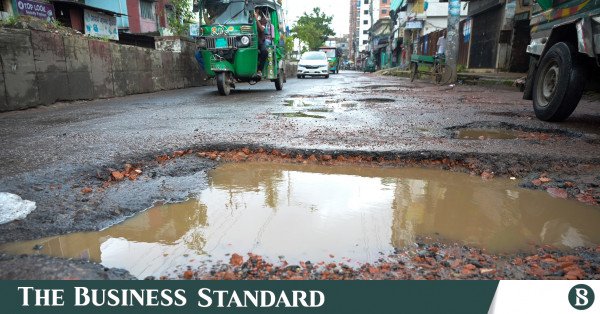
Eight days of heavy rain have stripped bitumen, bricks and sand from Chattogram’s roads, leaving 196.79 kilometres riddled with potholes and raising accident risks. The photo shows damage on Bayezid–Hathazari Road. Photo: Mohammad Minhaj Uddin/TBS
“>

Eight days of heavy rain have stripped bitumen, bricks and sand from Chattogram’s roads, leaving 196.79 kilometres riddled with potholes and raising accident risks. The photo shows damage on Bayezid–Hathazari Road. Photo: Mohammad Minhaj Uddin/TBS
Eight consecutive days of heavy rain have damaged 196.79 kilometres of roads across Chattogram, exceeding the total monsoon road damage recorded in each of the past six years and leaving the Chattogram City Corporation (CCC) facing a repair bill of nearly Tk348 crore.
Bitumen, bricks and sand have been washed away from road surfaces, leaving potholes that are disrupting traffic and increasing accident risks. The CCC estimates Tk347.82 crore is needed to restore the damaged roads, compared with just Tk22 crore allocated for emergency patchwork in FY27.
“Roads designed for eight-tonne vehicles are carrying trucks weighing 20 to 22 tonnes, causing further deterioration,” CCC Secretary Mohammad Ashraful Amin told The Business Standard. “The current budget is inadequate. We will seek a special allocation from the Local Government Division and undertake full-scale repairs after the monsoon.”

According to the Bangladesh Meteorological Department, Chattogram received 1,354mm of rainfall between 6am on 5 July and 3pm on 12 July. Of that, 412mm fell in the 24 hours ending 3pm on 7 July – the city’s highest daily rainfall in 43 years.
Nearly 80% of the city remained waterlogged for several days. Engineers said prolonged inundation weakened asphalt roads, while heavy vehicles travelling through submerged streets accelerated the damage.
Port corridors worst affected
Following field surveys across six zones, the CCC found the worst damage in Agrabad, Pathantuli, Madarbari and Gosaildanga, where 67.82km of roads were affected. These roads serve Chattogram Port and have long been prone to waterlogging.
Another 28.62km of roads were damaged in South Pahartali, Jalalabad, Panchlaish, West Sholoshahar and Shulkbahar.
The city has 3,459 roads spanning 1,442.5km, including 1,046km of asphalt roads, 364km of concrete roads, 15km of brick-paved roads and 17.5km of earthen roads.
This year’s damage surpassed that of every monsoon since 2020. Road damage measured 142.281km in 2025, 42km in 2024, 50.71km in 2023, about 100km in 2022, 36.27km in 2021 and 170km in 2020. Only 2017 saw greater destruction, with around 300km of roads damaged.
Immediate repairs
The corporation has separate annual allocations for patchwork using asphalt mix produced at its own plant.
Although Tk22 crore has been earmarked for materials this fiscal year, actual spending remained well below budget in previous years: Tk9.7 crore out of Tk26 crore in FY26, Tk9.4 crore out of Tk24 crore in FY25, and Tk14.55 crore out of Tk26 crore in FY24.
CCC Chief Engineer Md Anisur Rahman Sohel said restoring road connectivity is the corporation’s immediate priority.
“We will initially fill potholes with bricks to keep traffic moving. Once the roads dry, permanent patchwork will begin. Contractors already working on development projects will also be engaged in the repairs,” he said.
About The Author