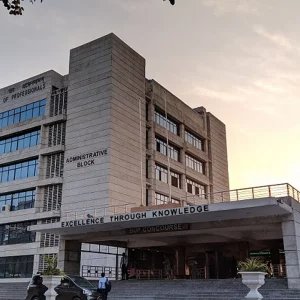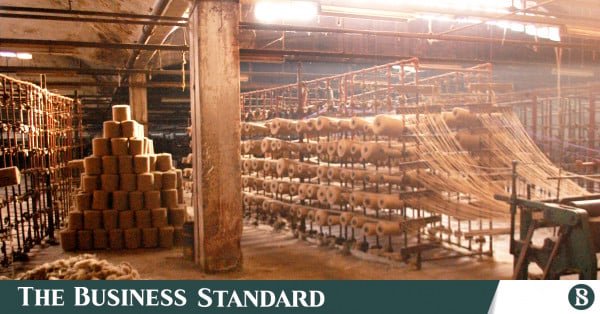
The move aims to put long-unused industrial assets back into productive use, attract domestic and foreign investment, establish new industries and create jobs, according to officials of the Bangladesh Economic Zones Authority (Beza)
Representational image. Photo: TBS
“>

Representational image. Photo: TBS
Highlights:
- Government plans economic zones on land of three closed mills
- Demra’s two jute mills provide 133 acres for development
- Kushtia Sugar Mills offers another 220 acres for investment
- Land transfers await settlement of the mills’ outstanding liabilities
- Proposed zones require roads, gas, electricity and water infrastructure
- Adamjee EPZ’s success demonstrates potential for revitalising idle industrial land
The government has taken an initiative to establish economic zones on the land of the closed Latif Bawany Jute Mills Limited and Karim Jute Mills Limited in Demra, Dhaka, and Kushtia Sugar Mills Limited.
The move aims to put long-unused industrial assets back into productive use, attract domestic and foreign investment, establish new industries and create jobs, according to officials of the Bangladesh Economic Zones Authority (Beza).

The decision was taken at a meeting of Beza’s governing board in August. Under the plan, the land of the three state-owned enterprises will be transferred to Beza to facilitate the establishment of economic zones and expand investment activities.
The proposed zones will require infrastructure such as internal roads, gas, electricity and water supply to create an investment-friendly industrial environment, officials said.
Beza officials said the success of Adamjee Export Processing Zone, developed on the site of the former Adamjee Jute Mills, is being considered an example for putting the land of closed factories to productive use.
Infograph: TBS
“>

Infograph: TBS
133 acres in Demra
Latif Bawany and Karim Jute Mills in Demra have been closed since 2000 due to persistent losses. The factories were established in 1953 and 1954 respectively and brought under the Bangladesh Jute Mills Corporation in 1972.
Karim Jute Mills has around 50 acres of land, while Latif Bawany Jute Mills has about 83 acres. Together, the two sites offer around 133 acres for new economic activities.
The government hopes the proposed economic zones will turn the long-idle industrial land into new centres of production and investment.
220 acres of Kushtia Sugar Mills
The government also plans to establish an economic zone on 220 acres of land belonging to Kushtia Sugar Mills.
Established in the 1965-66 fiscal year, the sugar mill initially operated profitably but began incurring persistent losses after the 1990s. Its production was eventually suspended in 2020 due to continued losses.
The factory’s machinery, worth hundreds of crores of taka, has remained unused and is gradually deteriorating. Although there had been a decision to restart the mill after years of closure, the plan was not implemented. The latest initiative seeks to use its 220 acres for new economic activities instead.
Contacted, Saleh Ahmed, executive member (Investment Promotion) of Beza, told TBS, “We are now working on how the transfer process will be carried out. In this regard, we are considering Adamjee Jute Mills as an example.”
He said they want the process to follow the same approach as Adamjee, where the government settled the mill’s liabilities and handed over the land to Bepza.
“We are working on transferring the land of these closed mills after the government settles all their outstanding liabilities,” Saleh added.
To come under Invest Bangladesh Authority
The proposed economic zones may eventually come under the planned Invest Bangladesh Authority, officials said.
Parliament recently passed the “Invest Bangladesh Bill, 2026”, paving the way for a single investment development agency by abolishing Beza, the Bangladesh Investment Development Authority and the Bangladesh Public-Private Partnership Authority.
The law allows industrial areas or establishments to be transferred to or from the new authority under mutually agreed terms.
Accordingly, the government may, in consultation with the governing board, transfer industrial establishments or areas owned by other authorities or agencies to Invest Bangladesh Authority.
Similarly, industrial areas or establishments under the authority may be transferred to other agencies for development, operation and management.
Beza officials said this provision could allow the proposed economic zones to eventually be managed under an integrated investment development framework.
Adamjee EPZ sets example
The Adamjee site demonstrates how unused industrial assets can be transformed into productive economic centres.
After independence, the jute mill was nationalised and later came under the management of Bangladesh Jute Mills Corporation. However, prolonged losses, weak management, technological limitations and labour unrest pushed the mill into crisis.
The government eventually shut down the mill on 30 June 2002 after years of losses.
On 1 December 2004, the government decided to hand over the mill’s land to the Bangladesh Export Processing Zones Authority. The Adamjee EPZ was formally inaugurated in 2006 by then Prime Minister Khaleda Zia.
According to data, the 292.62-acre Adamjee EPZ now has 276 industrial plots, with 47 enterprises in operation. Since its establishment, the EPZ has attracted $847.03 million in investment and exported goods worth $11.14 billion.
The zone currently employs 76,027 people and produces a wide range of export products, including garments, textiles, electronics, electrical goods, footwear, safety jackets, suits and blazers, as well as Japanese automobile seat covers.
About The Author