Several myths continue to dominate the discussion on Bangladesh’s energy transition, undermining its compelling technical, financial, and social benefits. For instance, energy transition is often framed as only a greenhouse gas (GHG) mitigation solution.
Energy sector professionals often question whether Bangladesh should pursue climate change mitigation when its per capita GHG emission is only 1.48 tonnes of carbon dioxide (tCO2) equivalent (eq) as opposed to the global average of 6.48tCO2eq registered in 2022.
The debate on energy transition often focuses only on the high upfront cost of shifting to renewable energy, making it appear socially and financially undesirable. On top of this, the misconception that this shift could lead to job losses casts further doubts on its social desirability.

The net benefits of energy transition, however, range from energy security to monetary savings and additional job creation, outweighing the upfront costs and enhancing its social benefits, regardless of misconceptions. These benefits are additional to climate change mitigation.
Energy transition is more than just mitigation
In an increasingly volatile global energy market amidst heightened geopolitical risks, Bangladesh can no longer view energy transition as a mere mitigation tool. Instead, it should consider its multitude of benefits, ranging from cost-competitiveness to energy security.
In the four years since Russia’s invasion of Ukraine, Bangladesh has been struggling to meet the energy demand of various sectors. The fossil fuel-dominated power sector alone accounts for approximately 7% of the annual budget due to its increasing revenue shortfall.
For example, in the fiscal year (FY) 2024-25, the sector registered a revenue shortfall of Tk556.6 billion ($4.53 billion) in a total budget of Tk7,970 billion ($65.1 billion).
Driven by the West Asia crisis, the demand for budgetary support will likely increase by the end of FY2025-26.
In light of the latest hike of up to 17% in retail electricity prices, industries with a sanctioned load of up to five megawatts (MW) currently paying between Tk9.75/kWh ($0.079/kWh) and Tk13.62/kWh ($0.11) will face tariffs from Tk11.56/kWh ($0.094/kWh) to Tk16.06/kWh ($0.13/kWh).
The steep rise in energy costs will make both rooftop and utility-scale solar systems financially more compelling. Industries derive even more benefits from solar energy during periods of daytime load-shedding, when compared to diesel-run generators.
Bangladesh should also consider making energy efficiency a fundamental tenet of energy policy. This will substantially contain the rising energy demand, apart from contributing to energy security and emission reductions. Energy efficiency offers triple dividends – lower energy-related costs across sectors, limited investment in expensive energy infrastructure, and avoidance of maintenance costs.
Energy transition is socially desirable
Despite the falling cost of clean energy technologies, energy transition is still perceived as a costly endeavour. However, fossil fuel-based development has ultimately intensified Bangladesh’s stranded asset risks and costs.
For instance, the unavailability of a fuel source has delayed the commissioning of the Rupsha
combined-cycle gas power plant of 800MW capacity, making the project technically, financially and socially undesirable.
Similarly, several combined-cycle gas plants commissioned in the last two to three years receive reduced fuel amounts, forcing them to operate at lower plant factors. This compels the government to pay a substantial capacity payment as part of its contractual obligations.
Bangladesh does not need heavy investment in baseload power plants in the near future, due to a subdued growth in demand.
Rather, it could expand renewable energy to gradually limit the use of highly expensive fossil fuel plants, like oil-fired ones.
Since these plants are meant to meet the peak demands, solar energy could easily minimise their use during the day.
Further, adoption of battery energy storage systems (BESS) along with solar energy can provide power during the evening peak hours at a cost well below the average generation cost of private furnace oil-fired plants recorded in FY2024-25 [TK27.5/kWh ($0.22/kWh)].
The absence of capacity payments alongside the opportunity to reduce fuel imports makes solar energy more suitable compared to furnace oil-based energy.
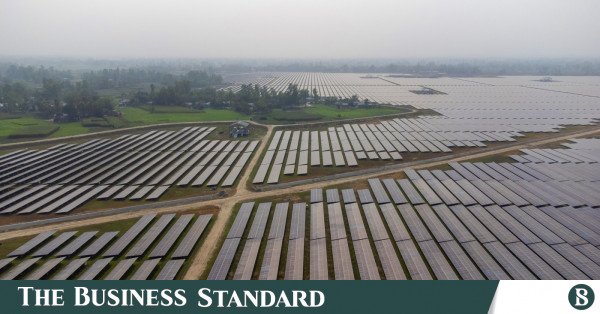
Furthermore, solar energy could also prove to be a compelling choice for rural power consumers who experience persistent load-shedding during the summer.
Job creation from the energy transition
The argument of an energy transition causing job losses does not stand up to scrutiny. Instead, renewable energy and energy efficiency could open up significant job opportunities.
With rising demand for clean energy projects, well-designed energy service companies (ESCOs) could deploy a significant number of professionals with technical, financial, and management competencies.
They would require energy auditors, installers, and other technical experts. Moreover, financial institutions would need sustainable finance professionals to appraise loan applications for clean energy projects.
The development of a super ESCO could also considerably increase the demand for clean energy professionals to handle projects from initiation through financing, implementation, and monitoring.
With the tide turning in favour of clean energy, various countries are undertaking measures to accelerate the energy transition.
Given the fragility of an energy system that relies heavily on imports and is burdened by inefficient capacity payment obligations, Bangladesh should also adapt and pursue energy transition at a faster rate.
It should factor in the net benefits of energy transition instead of focusing on misconceptions.
Shafiqul Alam is IEEFA’s lead energy analyst for Bangladesh
Disclaimer: The views and opinions expressed in this article are those of the author and do not necessarily reflect the opinions and views of The Business Standard.
About The Author