Under the agreement, the terminal will remain under the port authority’s ownership, while DP World will take responsibility for its operation and maintenance.
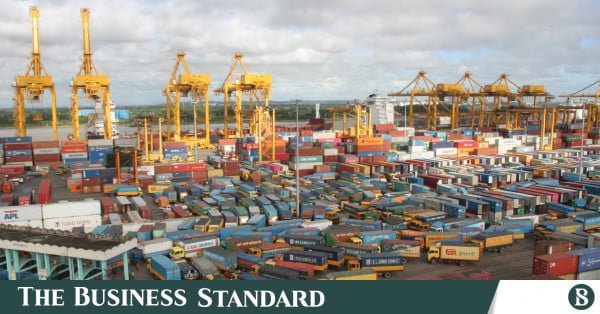
Chattogram Port.Photo: Md Minhaz Uddin/TBS
“>

Chattogram Port.Photo: Md Minhaz Uddin/TBS
The Chattogram Port Authority and Dubai-based DP World have signed a 15-year concession agreement to operate and maintain the New Mooring Container Terminal (NCT) and its Overflow Container Yard, bringing one of the world’s largest port operators into Bangladesh’s main container terminal.
The NCT handled about 13.85 lakh TEUs in the last fiscal year, accounting for roughly 44% of Chattogram Port’s total container handling. Under the agreement, the terminal will remain under the port authority’s ownership, while DP World will take responsibility for its operation and maintenance.

What does DP World bring to Chattogram?
DP World operates container terminals across South and Southeast Asia, including in India, Pakistan, Thailand and the Philippines, as well as other Asian markets. Its regional operations range from conventional container terminals to facilities where it has introduced automated systems, new cranes and electric cargo-handling equipment.

In India, DP World operates several ports and terminals and has been introducing automated operations, advanced terminal operating systems and electric equipment. It is converting diesel-powered rubber-tyred gantry cranes to electric power and has installed 11MW of green energy at its Nhava Sheva terminals.
In Pakistan, DP World operates the Qasim International Container Terminal at Port Qasim near Karachi. Its systems include an automated gate using barcodes linked to the terminal operating system, allowing cargo and truck transactions to be processed electronically.
In Thailand, DP World operates Laem Chabang International Terminal. In 2025, it introduced electric internal transfer vehicles and plans to convert the terminal’s fleet to electric vehicles. In 2026, it announced further investment in electric reach stackers and empty-container handlers.
In the Philippines, DP World and local partner Asian Terminals invested about $100 million in Manila South Harbour. The investment extended a berth, expanded the container yard and added two large ship-to-shore cranes, raising the terminal’s annual capacity from 1.45 million to nearly 2 million TEUs. In 2025, they also introduced 15 electric internal transfer vehicles.
More recently, six hybrid rubber-tyred gantry cranes were commissioned at Manila South Harbour. The cranes have automated steering, anti-sway systems, truck detection and other safety and operating technologies.
What could change at NCT?
The Bangladesh agreement provides for about $150 million in investment over the 15-year concession. Of this, around $90 million is expected to go towards upgrading equipment, technology and the terminal, while $50 million will be paid to the government as an upfront payment.
The operator is expected to introduce modern scanning equipment, upgrade or replace cranes where necessary and move towards paperless operations. The stated objective is to reduce vessel turnaround and container-handling time significantly over the first two to three years.
The agreement also requires DP World to bear the cost of equipment maintenance and repair during the concession. Existing workers are not supposed to be laid off; they are to be integrated into the new system with their existing wages and benefits unchanged.

Why workers oppose the deal
Workers’ leaders argue that NCT is already profitable and question the need to hand over its operation to a foreign company for 15 years. They contend that Bangladesh could lose future earnings from an asset it has already developed and owns, while raising concerns over job security, transparency and the extent of foreign control over a strategically important port facility. The government, however, says existing workers will retain their jobs, wages and benefits, while ownership and overall control of the terminal will remain with the Chattogram Port Authority.

About The Author