They warned that closing the centre before an alternative is ready could disrupt treatment and increase costs. Shubho Bhattacharya, a patient’s relative, read out their written statement.
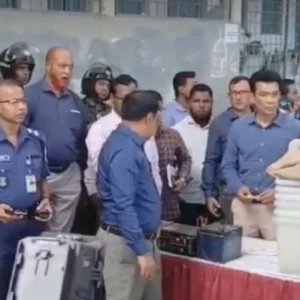
Kidney patients at Chittagong Medical College Hospital hold a press conference at Chattogram Press Club today, 28 October 2026. Photo: Courtesy
“>

Kidney patients at Chittagong Medical College Hospital hold a press conference at Chattogram Press Club today, 28 October 2026. Photo: Courtesy
A total of 276 kidney patients receiving regular dialysis at Chittagong Medical College Hospital (CMCH) and their family members have urged the government to maintain the existing service at the Sandor-operated dialysis centre, proposing a public-private partnership (PPP) with another private provider if the current contract is not renewed.
At a press conference at Chattogram Press Club today (28 October), they warned that closing the centre before an alternative is ready could disrupt treatment and increase costs. Shubho Bhattacharya, a patient’s relative, read out their written statement.
The patients said dialysis must be performed at regular intervals to prevent deterioration in their health. They urged the authorities to ensure service quality, affordable costs and regular schedules before introducing a new arrangement.

According to the patients, dialysis at Sandor costs Tk621 per session with government subsidies, while nine patients receive the service free of charge. Sandor also supplies dialysers, medicines, tubes, syringes, saline and other necessary materials.
The centre operates 24 hours a day, seven days a week, allowing patients to schedule one, two or three sessions weekly according to their needs.
The patients said they had learned that the government planned to install new machines at the existing centre and operate the service under Ward 17 of CMCH’s nephrology department.
However, setting up the machines could take around three months, forcing patients to arrange dialysis at private hospitals in the meantime.
They said they had been told that the proposed government service would require a Tk20,000 deposit for six months of dialysis, equivalent to about Tk417 per session. But they questioned whether this calculation accounted for the cost of dialysers and other supplies.
They also alleged that Ward 17’s 18 machines could not meet demand, leaving new patients waiting for appointments. Patients requiring three sessions a week were not always able to receive all three.
Other complaints included dialyser reuse, manual cleaning, shortages of supplies, malfunctioning machines and staff shortages. They alleged that some sessions were cut to two or three hours instead of the prescribed four, arguing that the Tk417 figure did not reflect the actual cost of treatment.
The patients said private hospitals charge Tk3,500–7,200 per session, an expense they would struggle to bear without government subsidies. They also fear additional costs for oxygen, intensive care and emergency treatment if complications arise during dialysis.
Patients travel to the centre from Cox’s Bazar, Satkania, Feni and the hill districts, they said. Moving services temporarily to private hospitals could make regular appointments difficult, while late-night sessions would create transport problems and affect patients’ ability to attend work the following day.
The patients proposed a PPP agreement with a domestic healthcare provider to use Sandor’s existing infrastructure and experienced staff if the contract cannot be renewed.
They noted that, with the exception of one employee, all staff members at the Chattogram centre are Bangladeshi nationals who have approximately 10 years of experience in dialysis care. They expressed concerns that their jobs might also be at risk if the contract is not renewed.
Calling dialysis essential to their survival, the patients urged the government to ensure that any decision on contract renewal or a new operator does not endanger their lives or interrupt treatment. They called for the centre to continue under a PPP arrangement, with service quality, affordability, regular schedules and emergency care maintained.
About The Author