The roadmap was approved at the inaugural meeting of the National Graduation Monitoring and Coordination Committee, chaired by the finance minister on 29 July.
Representational image: TBS
“>

Representational image: TBS
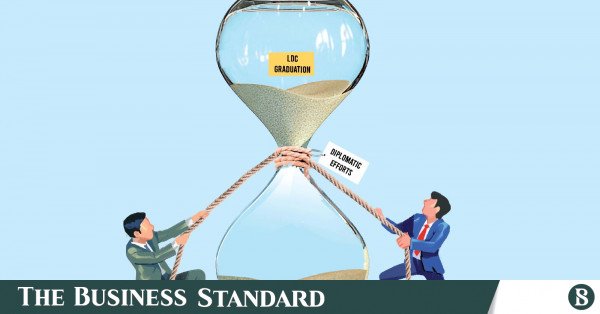
The government has finalised a national roadmap and is preparing an intensive diplomatic campaign to secure support from the United Nations member states for a three-year deferral of Bangladesh’s graduation from the Least Developed Country (LDC) category.
The “National Roadmap for Smooth, Sustainable and Irreversible LDC Graduation 2026-2029” outlines the reform measures Bangladesh will undertake during the proposed extension period and the economic milestones it aims to achieve by 2029.
Infograph: TBS
“>

Infograph: TBS
Dhaka will use the document to persuade member states to back its request at the UN General Assembly.

The roadmap was approved at the inaugural meeting of the National Graduation Monitoring and Coordination Committee, chaired by the finance minister on 29 July.
Infograph: TBS
“>

Infograph: TBS
It sets targets to restore key economic indicators, including GDP growth, to pre-pandemic levels by 2029, while also highlighting improvements in the logistics sector.
It aims to raise Bangladesh’s real GDP growth to 7%, up from a projected 4.14% this year, while reducing inflation to 6% from the current 9.16%.
It also targets to increase the tax-to-GDP ratio from below 7% to more than 9%, and build foreign exchange reserves sufficient to cover six months of imports, compared with around four months at present.
It also aims to more than double private sector credit growth to above 10% within three years and reduce the average container dwell time at Chattogram Port from 9.44 days to a maximum of two days.
The roadmap further targets reducing the banking sector’s non-performing loan ratio from over 30% to 20% by 2029, while increasing the share of non-RMG exports in total exports to at least 25%, up from less than 19% currently.
The roadmap is built around five transformational pillars aimed at sustainable transition. It includes macroeconomic stability and financial resilience; trade transition, market access, and export competitiveness; production capacity, industrial transformation, and infrastructure development; human capital development, innovation, and future skills; and governance, partnerships, and international cooperation.
The document does not specify the total cost of implementation. It proposes financing 40% of the expenditure from the national budget, 30% from development partners, 25% through private sector investment, and the remaining 5% from blended or green finance.
Former Tariff Commission member and international trade analyst Mostafa Abid Khan said the economic targets outlined in the roadmap could not be achieved without reforms.
“Reforms are more important than retaining duty-free market access,” he said, adding that Bangladesh must reduce logistics costs, simplify customs procedures, strengthen the banking sector and improve productivity and skills across all sectors.
Diplomatic push ahead of UNGA in Sep
Bangladesh is currently scheduled to graduate from the LDC category on 24 November 2026.
According to meeting documents, although Bangladesh has formally requested a three-year extension, it remains uncertain whether the UNGA will approve the full period.
Against this backdrop, the government plans to intensify diplomatic efforts to secure a favourable decision. Ahead of the UNGA session in September, Bangladesh’s Permanent Mission to the UN will seek support from key regional and political blocs, including the A-14, Asia-Pacific Group, the GRULAC, Eastern European Group, and Western European Group.
The A-14 includes countries such as Saudi Arabia, Pakistan and Egypt, while the GRULAC comprises 33 Latin American and Caribbean nations, including Argentina, Brazil and Mexico.
Why the roadmap
According to meeting documents, a high-level government delegation led by the commerce minister visited New York on 14-18 July to rally support from UN member states.
During the visit, the delegation held meetings with permanent representatives of UN member states, the president and vice-presidents of the UN Economic and Social Council (ECOSOC), the chair of the Committee for Development Policy (CDP), representatives of the European Union, and the chairs of the G77 and China group, among other key stakeholders.
At those meetings, representatives from the European Union and several other countries sought details of the reforms Bangladesh plans to implement during the proposed three-year extension and requested a roadmap outlining those commitments.
Also, representatives of several countries and senior UN officials advised Bangladesh to prepare a credible and time-bound reform roadmap before the UNGA, noting that the document could significantly influence member states’ decision on the extension request.
About The Author