Dengue is spreading rapidly beyond Dhaka, with Mymensingh, Chattogram, Khulna, Rajshahi and Barishal districts reporting a sharp rise in infections and deaths, putting hospitals under growing pressure.
Dhaka still accounts for the highest number of cases and deaths. According to Directorate General of Health Services (DGHS) data, 19,742 dengue patients have been hospitalised in the two Dhaka city corporations this year, with 107 deaths. Nationwide, 271 people have died, and 88,360 have been infected.
The five districts outside Dhaka have reported 122 deaths – 44 in Khulna, 22 in Mymensingh, 20 in Chattogram, 19 in Barishal, and 15 in Rajshahi.

Nine people died of dengue in the 24 hours to 8am yesterday, including three in Dhaka and six in Barishal, Chattogram, Khulna, Mymensingh, and Sylhet divisions.
Experts say the spread of Aedes mosquitoes beyond the capital is driving infections, while treatment capacity and experienced personnel remain concentrated in Dhaka.
Prof Kabirul Bashar, a zoology professor at Jahangirnagar University and medical entomologist, told TBS that Aedes mosquitoes had spread to districts, upazilas and even villages, contributing to the rise in infections outside Dhaka.
He said local government bodies, including union, upazila and district councils and municipalities, have responsibilities and budgets for mosquito control and should adopt evidence-based measures immediately.
Prof Be-Nazir Ahmed, former director of the DGHS disease control branch, said the spread of dengue outside Dhaka had become a major public health concern. He called for stronger treatment facilities outside the capital so critically ill patients would not have to travel to Dhaka.
Ctg hospitals struggle with patient surge
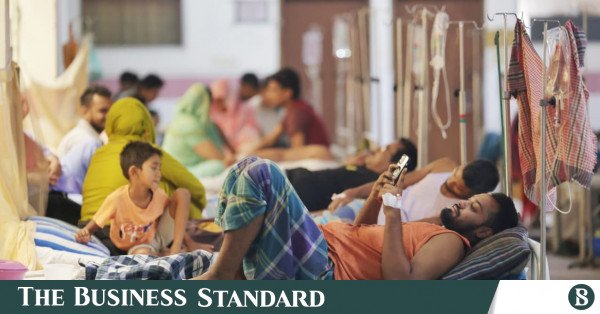
Banshkhali resident Abu Taher, 40, was diagnosed with dengue at Chattogram Medical College Hospital on Saturday after six days of fever. Despite being admitted for two days, he could not get a bed in the dengue ward and is now receiving treatment on a corridor bed.
The hospital’s dengue unit has 40 beds, but 114 patients were admitted as of 10am Sunday.
Dr Nur Mohammad, the hospital’s dengue focal person, said many patients are arriving with shock syndrome and bleeding, with some having dangerously low blood pressure.
Brigadier General Mohammad Taslim Uddin, director of Chattogram Medical College Hospital, told TBS that patients would be transferred to Bangladesh Institute of Tropical and Infectious Diseases and Chattogram General Hospital if the pressure increases further.
Private hospitals are also struggling. Aman Ullah Aman, AGM of Chattogram Metropolitan Hospital, said there were no vacant beds or cabins, forcing patients to wait after receiving initial treatment in the emergency department.
Labaid Specialized Hospital Chattogram also has no vacant beds outside the emergency department. The Centre for Specialised Care Hospital has opened a dedicated unit for dengue patients.
Chattogram Civil Surgeon Dr Mohammad Sazedur Rahman said Ward 16 of Chattogram Medical College Hospital is being used entirely for dengue patients. Measures are also being taken at Chattogram General Hospital and Chattogram Maa-O-Shishu Hospital to cope with the pressure.
Mymensingh, Khulna, Barishal under pressure
The 50-bed dengue ward at Mymensingh Medical College Hospital had 119 patients yesterday, forcing some to receive treatment on floors and verandas. The hospital authorities have decided to open another ward.
In Barishal, Sher-e-Bangla Medical College Hospital has recorded the highest number of dengue deaths in the division, with 15 fatalities.
Khulna is also facing mounting pressure. Dr Mohammad Shawkat Ali, deputy civil surgeon of Khulna, said the dengue situation was alarming. At least five isolation beds have been arranged at every upazila hospital for dengue patients.
If the situation worsens, the Khulna City Corporation is preparing to set up a field hospital on the premises of Khulna Medical College Hospital.
Dr Nurul Islam, director of hospitals and clinics at the DGHS, told TBS that additional wards were being arranged at hospitals facing increased pressure.
“However, we need to put greater emphasis on mosquito control,” he said.
About The Author