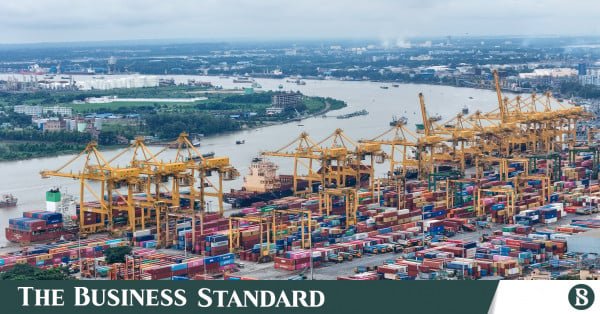
Chittagong Port Authority (CPA) has warned media outlets against publishing or disseminating photographs, videos and operational information about the port without prior permission, citing security concerns and raising questions over the legal basis and timing of the directive.
In a press release issued today (6 October), the authority instructed port users and media outlets not to publish or disseminate, without prior permission, photographs, videos, sketches and operational information related to the port’s security, communication systems, vessel and cargo handling, restricted areas and infrastructure.
The notice specifically referred to social media, online platforms and the media, warning that violations could lead to legal action under the Chattogram Port Authority Act, 2022 and the Official Secrets Act, 1923.

Signed by acting CPA Secretary Syed Refayet Hamim, the notice was sent to editors and bureau chiefs of different media outlets.
The timing of the directive has drawn attention as tensions are mounting over the proposed 15-year lease of the New Mooring Container Terminal (NCT) to foreign operator DP World.
Protesters have demanded the resignation of CPA Chairman Rear Admiral SM Moniruzzaman, accusing him of acting as an “agent of DP World”. They have also threatened to besiege the chairman’s office on 13 October and prevent him from leaving the premises.
Against this backdrop, the sudden restriction on publishing port-related information has raised concerns over whether the move is solely a security measure or could also affect reporting on matters of public interest.
The CPA has the authority to restrict access to sensitive areas and protect information that could pose a genuine security threat.
However, questions remain over whether requiring prior permission to publish port-related photographs, videos and operational information constitutes a legally justified blanket restriction.
The port is already a heavily secured facility. At the same time, allegations have emerged over containers going missing from restricted areas and cargo-filled containers being removed through the gates using forged documents.
The restriction on photography has also raised practical questions, as large sections of the port are visible from the elevated expressway running alongside the facility.
The CPA says the restrictions are intended to protect sensitive installations, security arrangements and operational systems.
Experts, however, say security measures should be specific and proportionate to the risks they seek to address.
Former CPA member Zafar Alam said the port does not engage in secret activities that would warrant invoking the Official Secrets Act, 1923.
“The port is a multi-stakeholder establishment where representatives and workers from different stakeholders operate round the clock. Therefore, I do not see how the Official Secrets Act, 1923, can be applied to the port,” he said.
Engineer Delwar Mazumdar, convener of the Chattogram Port Protection Committee, described the directive as an undemocratic and intolerant move by the port authority.
“People are angry over what we believe are conspiracies surrounding the port, and this initiative is primarily aimed at preventing news about that public anger from being reported,” he said.
He said his committee would support any genuine security measures taken in the national interest.
“If the authority believes there are security risks, we would support measures to address them in the interest of the country and its people. But we believe the biggest security concern is the attempt to hand over the port to outside entities and engage with organisations that have international links and connections with war-related interests,” he said.
He alleged that instead of addressing those concerns, the authority was attempting to interfere with the work of the independent media.
“No one has the right to impose such a directive on the people,” he added.
Senior lawyer and Shushashoner Jonno Nagorik (Shujan) Chattogram city general secretary Advocate Akter Kabir Chowdhury said the Right to Information Act guarantees the free flow of information and should prevail over conflicting provisions of other laws, except in matters related to national defence and security.
“Except for matters of national defence and security, information should remain open to the public. If that is the principle of the Right to Information Act, then what is so sensitive about the port that suddenly everything needs to be kept hidden?” he said.
He alleged that the restrictions were intended to keep irregularities and corruption at the port from public scrutiny.
Maritime law expert and Bangladesh Maritime Law Society (BMLS) President Mohiuddin Abdul Kadir said international maritime security rules, including the International Ship and Port Facility Security (ISPS) Code, require port facilities to protect sensitive security information and control access to critical areas.
“However, they do not automatically make every operational detail, photograph or video concerning a port confidential,” he said.
“This distinction is particularly important for Chattogram Port, the country’s principal maritime gateway. Information about vessel handling, cargo movement, congestion, accidents, infrastructure and port management has a direct bearing on importers, exporters, shipping companies, workers and the wider economy,” he added.
The key issue, therefore, is not whether Chattogram Port should maintain strict security, but whether the authority can legally require prior permission before the media publishes port-related photographs, videos or operational information, and whether such a broad restriction is necessary to address a specific security threat.
Without clear criteria defining what constitutes sensitive information, the directive could leave journalists uncertain about what they can report and have a chilling effect on public-interest reporting on the country’s most important commercial gateway.
About The Author