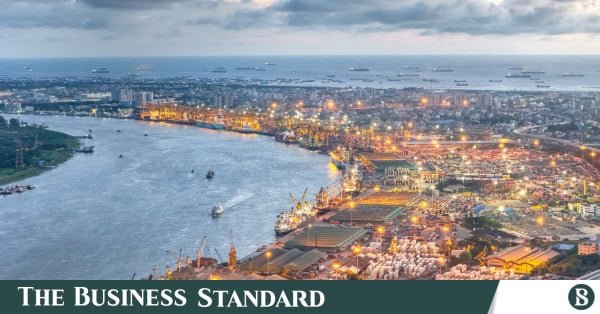
Chattogram Port has recorded robust growth in cargo and container handling in the first nine months of the fiscal 2025-26, but operational bottlenecks, labour unrest and a decline in global ranking are raising concerns over its long-term competitiveness.
A comparative performance report for the first nine months of FY26 shows the port handled 104.29 million tonnes of cargo, marking a 7.39% year-on-year growth. Container throughput also rose, reaching 2.57 million TEUs, up 4.75% from the same period a year earlier.
A report for the first nine months of the 2026-2027 fiscal year shows that the country’s premier seaport handled 104.29 million tonnes of cargo, a 7.39% increase from the previous year. Container handling also grew to 2.57 million TEUs [Twenty-foot Equivalent Unit], up 4.75% from the same period.

Efficiency gains drive performance
Average vessel turnaround time has improved significantly, dropping from about eight days to 2.53 days, which allows the port to handle more ships.
In October 2025 alone, the port handled a record 391 vessels, a 16.02% increase year-on-year. Overall, vessel handling in the first nine months stood at 3,230 ships, up 5.62%.
CPA Secretary Refayet Hamim said, “Automation and digitalisation have been key. Systems like e-gate passes, terminal operations, digital billing, and the “CPA Sky” platform have reduced paperwork, yard congestion, and clearance time—sometimes to just 30 minutes.”
“The implementation of pre-arrival processing has further streamlined customs clearance, enabling faster unloading and delivery of goods”, he said.
He also said, “Another notable achievement has been the return to zero waiting time at the outer anchorage, allowing vessels to berth without delay – a development that significantly cuts logistics costs.”
Khairul Alam Sujan, former vice president of the Bangladesh Freight Forwarders Association and a former director of the Bangladesh Shipping Agents Association, said there remains room for improvement.
He noted that narrowing the gap between the CPA and the Customs Authority would speed up services for users and improve overall port efficiency.
He also called for the swift, full rollout of automation and digitalisation systems.
Growth backed by economic recovery
The increase in cargo handling is mainly due to higher imports of fuel, wheat, and industrial raw materials. This has been supported by a more stable economy and fewer US dollar shortages than before.
In October 2025, cargo handling recorded a 21.11% increase, while container growth surged in August and September with gains of 20.10% and 10.22% respectively.
Even during the Eid-ul-Fitr vacation, the port continued its operations. In just one week in March this year, it handled 2.5 million tonnes of cargo and 55,000 TEUs, ensuring supply chains remained intact.
Structural limits still a concern
Despite the growth, port users say ageing infrastructure and equipment shortages are limiting its full potential.
The New Mooring Container Terminal, the port’s busiest facility, saw a 12-14% increase in efficiency after being handed over to Chittagong Dry Dock Limited in July 2025.
However, disputes over leasing out the terminal to a foreign operator triggered labour unrest, disrupting operations and raising concerns among stakeholders.
Bangladesh Garment Manufacturers and Exporters Association Director SM Abu Tayub said consistent service is essential for any port, warning that even minor disruptions create difficulties for users.
He added that the CPA must ensure uninterrupted, reliable services at all times.
Ranking slip rings alarm bells
The port dropped one position to 68th in the global Lloyd’s List ranking, which analysts see as a warning sign.
A recent decision to raise tariffs has raised concerns, with questions about whether higher costs could hurt the port’s competitiveness.
Rakibul Alam Chowdhury, a former vice president of BGMEA, said the tariff hike has raised the cost of doing business and eroded competitiveness, warning that it could affect future business volumes and reduce the port’s cargo handling.
Investment key to future growth
Port users say sustained foreign investment, modern technology adoption and a stable labour environment will be critical for regaining global standing.
They also stress that modernising the port is essential not just for attracting foreign investors, but also for encouraging domestic investment in trade and industry.
Amirul Houque, a former director of the Chittagong Chamber of Commerce and Industry and managing director of Seacom Group, said investment is crucial for port development, but it must be rational and well justified.
He also stressed the need to improve the skills of port workers to boost efficiency.
About The Author