The controversial plan to build a hospital at Chattogram’s historic Central Railway Building (CRB) area, which was halted four years ago amid protests by civic groups, has resurfaced, triggering renewed opposition and calls for fresh protests.
Railways Minister Shaikh Rabiul Alam is scheduled to visit Chattogram to inspect the proposed site, according to officials, when civic society representatives have already announced plans to protest against any move to construct a hospital in what has been designated a cultural heritage site.
According to the minister’s tour schedule, shared by his personal secretary Habibul Hasan Rumi, he will visit the proposed hospital site in the Goalpara area adjacent to CRB at 4pm tomorrow as part of a four-day regional tour beginning today.

Md Moniruzzaman, additional chief engineer (track) of Bangladesh Railway (East), told The Business Standard, “There was a plan to construct a hospital under the PPP model. It remains suspended. The honourable minister is coming to inspect the proposed site. That is all I know.”
Railway sources said that there had been an initiative to build a 500-bed hospital and a 100-seat medical college on six acres of land in the CRB area under a public-private partnership (PPP) model.
An agreement was signed with United Enterprise, a concern of United Group, which was to finance and construct the facilities.
As per the agreement, the entire establishment would be handed over to the railway after 50 years and would then be considered a railway hospital.
The move had sparked widespread protests from environmentalists, cultural activists, and members of civil society in Chattogram, who opposed the construction of a large commercial structure in what is widely known as the “lungs” of the city. Various organisations had demanded that the project be relocated to an alternative site, leading the Ministry of Railways to suspend the implementation process.
In October 2022, the parliamentary standing committee on the ministry also recommended against constructing the hospital and medical college at CRB.
223 plant species at risk in CRB heritage zone
The CRB area was declared a cultural heritage site under the Detailed Area Plan (DAP) formulated by the Chattogram Development Authority in 2008, with a gazette notification issued on 25 January 2009.
According to DAP guidelines, no part of CRB can be used for commercial purposes, nor can any high-rise buildings be constructed there. Only facilities such as bird sanctuaries, museums, and butterfly parks aimed at attracting tourists are permitted. This has raised legal questions over the validity of any commercial construction in the area.
Beyond its heritage value, the area is also ecologically significant.
A 2021 study, led by Omar Faruk Russel of the Department of Botany at the University of Chittagong, in collaboration with Effective Creation on Human Opinion (ECO), an NGO, identified 223 plant species within CRB that might face extinction if large-scale construction takes place at the site.
The area also hosts large trees, including century-old garjan and shirish and 183 medicinal plants, which are used in treatments for cancer, heart disease, high blood pressure, jaundice, piles, and other conditions.
Experts described the area itself as a “natural hospital”, warning that most of these medicinal plants would be destroyed if construction proceeds. In terms of plant diversity, CRB ranks third among 20 surveyed locations in the city.
The site also holds historical significance, housing the graves of 11 Liberation War martyrs, including Abdur Rouf, former general secretary of the Chittagong University Students’ Union.
On 18 March 2020, the Bangladesh Public-Private Partnership Authority initiated a plan to construct a hospital adjacent to the CRB, one of the port city’s oldest sites, centred around a structure built in 1872, under a PPP agreement.
Demanding cancellation of the project, civic groups launched a continuous protest movement from 13 July 2021, which lasted for around ten months.
Railway sources said that amid sustained protests and growing public pressure, the decision to construct the hospital at CRB was suspended towards the end of 2022. A parliamentary committee later proposed relocating the project to an abandoned railway hospital in Kumira, outside Chattogram city.
However, the proposal did not move forward as the private partner under the PPP arrangement declined to proceed.
Although the project stalled, the PPP agreement was not formally cancelled. After the formation of the new government, administrative processes to implement the hospital project at the proposed site in Chattogram have reportedly resumed, with the minister’s visit seen as part of that process, said the sources.
Fresh protests announced
Engineer Subhash Barua, vice-president of the Planned Chattogram Forum, told TBS, “After extensive protests, construction at CRB was stopped; this is known across Bangladesh. After achieving a new Bangladesh through so much sacrifice, why return to the same path? Killing people is not the only form of destruction; destroying civilisation and heritage is also a form of genocide. This is an attempt to destroy our heritage.”
With the issue resurfacing, civic groups have again announced fresh protests. A meeting has been called on Friday night by organisations that previously led movements on the CRB issue.
They have also announced a protest rally at the CRB site tomorrow morning, coinciding with the minister’s visit.
Mahfuzur Rahman, an organiser of the civic platform, a specialist physician and a freedom fighter, told TBS, “CRB is not only historically rich but also unique in its greenery. A hospital could be built at the Hajee Camp area on railway land in Pahartali, where locals would welcome it. There are questionable motives behind targeting CRB. We will hold a protest rally on Sunday morning.”
Constructed during the British period, the Central Railway Building (CRB) currently serves as the headquarters of Bangladesh Railway’s eastern zone.
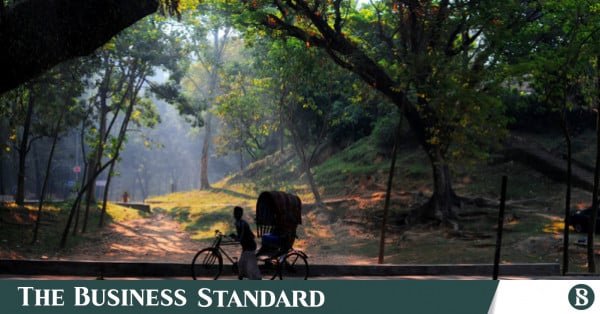
The vast open space, with its hills, dense greenery and open fields, has become a vital recreational and breathing space for city residents amid rapid urbanisation
About The Author