Bad loan ratio climbs to 26.04%
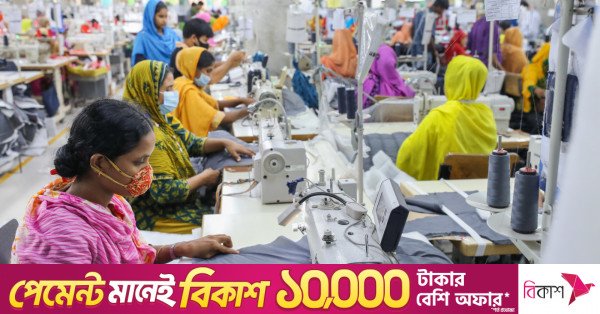
Representational image. Photo: Collected
“>

Representational image. Photo: Collected
Outstanding loans to the country’s cottage, micro, small and medium enterprise (CMSME) sector fell by 5.15% in the first quarter of 2026 as weak business demand, a liquidity crunch and broader economic uncertainty slowed credit growth.
According to Bangladesh Bank’s latest Quarterly Report, outstanding CMSME loans declined to Tk2.98 lakh crore at the end of March from Tk3.13 lakh crore three months earlier. The sector’s share of total bank lending also fell to 15.87%, well below the central bank’s target of 25.5%.
Infographics: TBS
“>

Infographics: TBS
Speaking to The Business Standard, bankers attributed the decline to subdued private-sector investment, elevated lending rates, liquidity shortages and higher import costs arising from the conflict in the Middle East and volatility in global energy prices.
The Bangladesh Bank said the January-March period is traditionally a slow season for portfolio expansion, while geopolitical tensions and the lingering effects of recent global shocks also weighed on business confidence.

Hassan O Rashid, managing director of Eastern Bank, said weak investment stemming from the conflict in the Middle East and Bangladesh’s energy situation had kept credit growth subdued.
“Credit growth has been slow due to a lack of new investment resulting from the conflict in the Middle East and the local energy and power situation,” he said.
“However, with support from the Annual Development Programme and policy measures by both the government and Bangladesh Bank, I expect the economy to gather momentum by the first quarter of next year, which will support stronger credit growth.
“Business confidence will be the key driver, as our entrepreneurs have consistently overcome adversity.”
Bad loans worsen
The classified loan ratio in the CMSME portfolio rose to 26.04% in March from 24.03% in December, indicating that more than one-quarter of outstanding loans had become non-performing.
The deterioration was most severe among Islamic and state-owned commercial banks. Islamic banks recorded a CMSME non-performing loan ratio of 43.97%, while the ratio at state-owned commercial banks stood at 42.73%.
Private commercial banks maintained a significantly lower non-performing loan ratio of 14.15%, while foreign commercial banks reported the lowest ratio at 4.60%.
Financial inclusion
Outstanding loans to women entrepreneurs reached Tk21,692 crore, accounting for 7.28% of the CMSME portfolio, although this remained less than half of Bangladesh Bank’s target of 15%.
Rural enterprises accounted for 24.09% of outstanding CMSME credit, while collateral-free loans represented 15.77% of the portfolio.
Alternative financing channels also expanded during the quarter. Under the Microfinance Institution Linkage model, lenders disbursed Tk1,499 crore to 170,507 enterprises, with women-owned businesses accounting for more than 83% of beneficiaries.
Refinance schemes
To support CMSME lending, the Bangladesh Bank recently overhauled its refinance programmes. It replaced its Tk25,000 crore pre-finance facility with a redesigned Tk18,000 crore refinance scheme, introduced a Tk3,000 crore Cluster Financing Scheme with a capped lending rate of 7%, launched a Tk1,500 crore Financial Sector Fund for CMSMEs and expanded the refinance scheme for women entrepreneurs from Tk3,000 crore to Tk4,500 crore.
Bankers said these initiatives could help revive credit growth in the coming quarters but cautioned that a sustained recovery would depend on easing liquidity pressures, improving business confidence and strengthening loan monitoring and recovery efforts to contain the growing volume of non-performing loans.
About The Author