The association has selected 100 garment factories to work with Japanese buyers.
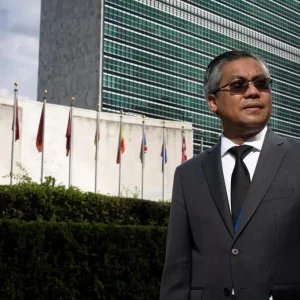
Japanese Ambassador to Bangladesh Saida Shinichi and BGMEA leaders attend the inauguration ceremony of the newly launched Japan Desk at the BGMEA complex in Uttara, Dhaka, today, 23 September 2026. Photo: Courtesy
“>

Japanese Ambassador to Bangladesh Saida Shinichi and BGMEA leaders attend the inauguration ceremony of the newly launched Japan Desk at the BGMEA complex in Uttara, Dhaka, today, 23 September 2026. Photo: Courtesy
The Bangladesh Garment Manufacturers and Exporters Association (BGMEA) has launched a dedicated Japan Desk to help local apparel exporters expand their presence in Japan’s $22 billion apparel market.
The desk was inaugurated at BGMEA headquarters in Dhaka today (23 September). The trade body said it has already selected around 100 garment factories to work with Japanese buyers.
Japanese Ambassador to Bangladesh Saida Shinichi attended the programme as chief guest, while senior representatives of major Japanese buyers, including Teijin Frontier Co Ltd, Marubeni Corporation, ITOCHU Corporation and Toyota Tsusho Corporation, were present.

Bangladesh currently exports just over $1 billion worth of apparel to Japan, according to BGMEA. The association aims to raise the figure to $3 billion by 2030 through the initiative.
“We have a target of reaching $3 billion in apparel exports to Japan by 2030 through the successful implementation of this initiative,” said Mohammed Sohel, BGMEA director and managing director of Bangla Poshak Limited.
BGMEA said the Japan Desk could facilitate buyer-supplier matchmaking, help resolve disputes and encourage repeat business.
Tareq Rafi Bhuiyan Jun, president of the Japan-Bangladesh Chamber of Commerce and Industry (JBCCI), said trust, quality and commitment would be key to expanding Bangladesh’s presence in Japan.
“Only trust, quality and commitment can open Japan’s market, not just market-access benefits [under the EPA],” he said.
BGMEA President Mahmud Hasan Khan said the desk would connect Japanese buyers, particularly those seeking smaller and more flexible orders, with suitable Bangladeshi factories.
“A small order is not a small customer,” he said in his written speech, adding that the desk would match buyers with factories based on their required order volumes.
He said the desk had been established as an institution rather than an initiative of an individual office-bearer to build long-term business ties between Bangladeshi manufacturers and Japanese buyers.
Japanese Ambassador Saida Shinichi said Bangladeshi manufacturers should diversify into higher-value products, including man-made and chemical fibres, as the country prepares to transition into a middle-income country.
Takamasa Yamamoto, general manager of Teijin Frontier Co Ltd, said Bangladesh’s capabilities had improved significantly, creating a “great chance” to expand its presence in Japan.
Yuji Wagata, chief representative of Toyota Tsusho Corporation, identified quality, trust and logistics support as crucial to expanding bilateral trade.
Japan’s new energy framework
Ambassador Saida also said Japan had established a new energy framework with Asian countries, including Bangladesh. He said Japan was considering further government-to-government projects to strengthen Bangladesh’s energy resilience, which could be agreed upon soon, potentially through higher-level exchanges.
He noted that some people had been facing the effects of high energy prices and issues such as load shedding, and said Japan shared Bangladesh’s concerns over these challenges.
Speaking to journalists after the programme, JBCCI President Tareq Rafi said they had heard that Japan was working on such an energy framework. He said countries participating in the framework might assist one another during energy shortages, but added that more details were needed.
About The Author