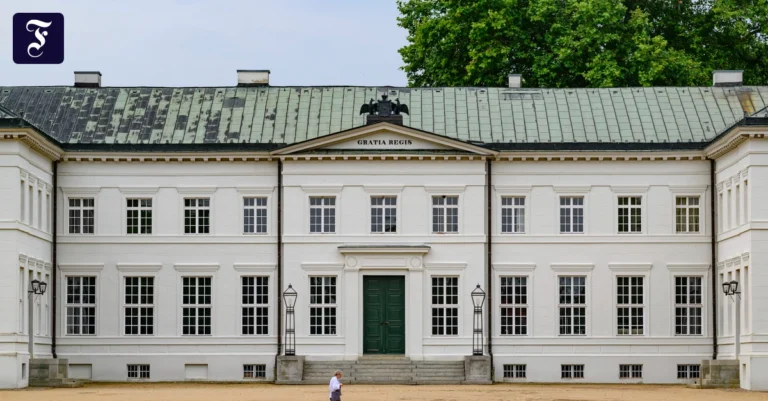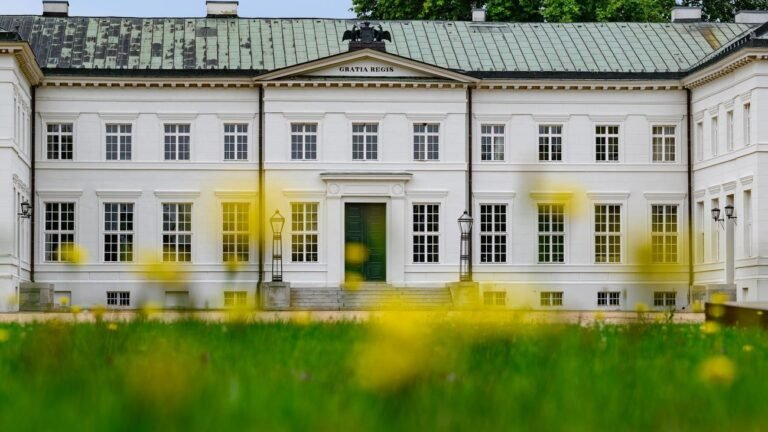
In late 2024, Janata Bank attempted to auction Beximco’s factories, land, and corporate headquarters to satisfy over Tk1,322 crore in overdue obligations.
Illustration: TBS
“>

Illustration: TBS
Once a titan of Bangladesh’s corporate landscape and home to its premier manufacturing hubs, Beximco Group is struggling to maintain basic operations. Hundreds of administrative staff remain unpaid, and the vast majority of its industrial plants sit idle.
At its peak, the industrial conglomerate employed more than 70,000 people. Today, a skeleton staff oversees quiet corporate offices, locked factories, and a small fraction of operating units.
Working capital has dried up, business revenues have collapsed, and group bank accounts remain frozen – leaving some corporate staff unpaid for nearly a year.
It took more than five decades to build the sprawling Beximco empire, which expanded aggressively into textiles, pharmaceuticals, ceramics, real estate, construction, energy, media, and financial services.
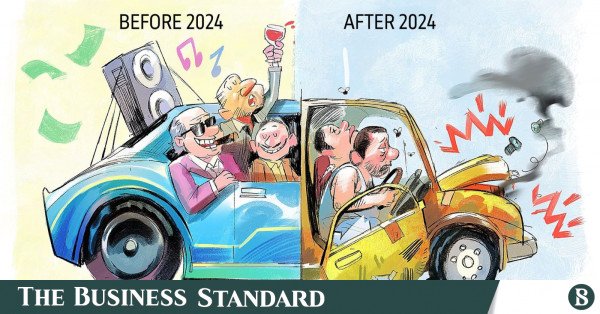
However, its fortunes took a sharp turn following the fall of the Awami League administration in August 2024. Co-founder Salman F Rahman – a close economic aide to former prime minister Sheikh Hasina – was arrested and has since remained in custody. In the immediate aftermath, the group’s headquarters and retail outlets suffered vandalism and arson, exports plummeted, and bank liabilities escalated rapidly.

Infographic: TBS
“>

Infographic: TBS
Founded in the 1970s by brothers Ahmed Sohail Fasihur Rahman and Salman F Rahman, Beximco grew into one of the country’s most formidable business entities across successive political regimes.
Now, the group faces extensive legal and financial exposure. Investigators from the Anti-Corruption Commission have filed multiple cases alleging loan fraud, money laundering, and irregular borrowing. According to a 2024 central bank assessment, group liabilities exceeded Tk50,000 crore, with Tk25,524 crore classified as defaulted, primarily with state-owned Janata Bank.
There are also allegations that Salman used his government influence to obtain loans.
Lenders have moved to recover assets. In late 2024, Janata Bank attempted to auction Beximco’s factories, land, and corporate headquarters to satisfy over Tk1,322 crore in overdue obligations. The auction yielded no buyers.
Human cost and factory closures
The industrial fallout has been severe. Around 15 textile plants inside the Beximco Industrial Park in Gazipur ceased operations after account freezes prevented management from opening Letters of Credit (LCs) to secure raw materials.
While approximately 44,000 production line workers were paid their statutory dues before being laid off, white-collar staff faced severe disruption. Of the 2,000 administrative officers who managed operations, most have departed amid persistent salary delays. Fewer than 500 administrative staff and a minimal security detail remain to guard the facilities.
At the group’s 14-storey Bell Tower headquarters in Dhanmondi, once a bustling commercial hub, the corridors are largely empty. Those visiting are mostly creditors, unpaid staff, or retail investors seeking returns on Beximco-issued debentures and bonds.
Among its businesses, Beximco Pharmaceuticals is operating at full capacity, while Shinepukur Ceramics is partially operational. Beximco LPG Unit-1 is running at reduced capacity, sourcing raw materials locally because the company cannot open LCs.
Its services, real estate and other businesses are also struggling to operate normally.
Management perspective
Osman Kaiser Chowdhury, managing director of Beximco Limited, spoke regarding the operational deadlock at his Dhanmondi office.
“I do not know whether industrial establishments are destroyed or deliberately targeted for destruction following a change of government in any other country,” he said.
Addressing the central bank’s allegations, Osman argued that owner-level irregularities should be separated from factory operations. “The owners took the loans, not the physical institutions. Why should factories be torched or shut down? We were forced to terminate 44,000 workers at once. My hand trembled to sign that decision.”
He added that Beximco received no assistance from the interim government; instead, its problems worsened. “Hundreds of bank accounts were frozen.”
Osman noted that account freezes have rendered existing capital inaccessible. “In some months I receive half my salary; in others, nothing for two months. Over the past two years, I am owed 12 months of pay. Those of us who built our careers here are staying despite the hardship.”
He estimated the debt load of the group’s textile arm alone at roughly Tk23,000 crore – with interest accounting for nearly 40% – alongside an estimated Tk10,000 crore in liabilities across other subsidiaries.
Legal complications compound crisis
Beximco’s operational problems have been compounded by legal and governance complications. With the group’s Chairman ASF Rahman abroad and Vice Chairman Salman F Rahman in jail, it has struggled to meet the corporate governance and compliance requirements needed for fresh financing.
Its bank accounts remain frozen, while lenders require board resolutions and other compliance documents before extending new loans. The group has therefore been seeking government assistance to secure financing and restart its businesses.
“We’re holding meetings with senior government officials. They’re assuring us of support. We’re also trying to reopen the factories with everyone’s cooperation,” Osman said.
Revival plan collapsed at last moment
A major attempt to restart Beximco’s closed textile factories through foreign financing also fell through after reaching what appeared to be the final stage.
In August 2025, 15 factories under Beximco Textiles were expected to reopen under an arrangement involving Janata Bank, Japanese company Revival, US-based Ecomillie, and Beximco Group. Revival planned an initial $20 million investment, financed by Ecomillie, to restart the factories and restore jobs for more than 25,000 workers.
Osman said the deal had been finalised when it was abruptly halted. “One day before the factories were supposed to reopen, the Chief Adviser’s Office informed us that the deal wouldn’t happen.”
Osman now believes the revival of Beximco’s factories depends largely on the new government, which took office after the 12 February election.
“After the government took office, we held meetings with everyone concerned, and we’re still doing so. Every day we have to attend one meeting or another. We are hopeful because the new government has promised to prioritise employment generation and support closed and distressed industries. We also want the factories to restart.”
He said the government should help restart the factories. “If necessary, it can monitor the income and expenditure. Even then, let the factories restart.”
Pharma remains fully operational
Beximco Pharmaceuticals remains the group’s strongest operating business, while Shinepukur Ceramics and Teesta Solar Park are also operating at varying capacities.
Beximco Pharma posted a profit of Tk699 crore in FY25 and nearly Tk705 crore in the first nine months of FY26, according to its quarterly reports filed with the Dhaka Stock Exchange.
Early last year, the securities regulator appointed nine independent directors to Beximco Pharma. The company challenged the decision in the High Court, where the matter remains pending, preventing it from holding board meetings for some time.
However, as concerns grew over a possible delisting of Beximco Pharma from the London Stock Exchange, the commission granted special permission for the company to hold board meetings.
Shinepukur Ceramics is also operating partially. The company posted a profit of Tk2.29 crore in FY24 but incurred a Tk19 crore loss in July-December of FY25.
Solar Park generates income, but little cash reaches Beximco
Beximco raised Tk3,000 crore from the capital market through a controversial sukuk to finance the Teesta Solar Park. The solar park now supplies 200MW to the national grid and generates around Tk50 crore in monthly revenue.
However, the company receives Tk5-7 crore to cover operating expenses, while the rest goes towards interest payments to investors and a sinking fund to repay the principal.
Capital market investments remain stuck
Beximco Group also has several hundred crore taka invested in the stock market. The group acquired stakes in two listed companies through secondary-market purchases and later placed nominee directors on their boards – scandal-hit Fareast Islami Life Insurance and state-owned Bangladesh Shipping Corporation.
Two Beximco-linked companies, Tradenext International and Jupiter Business, acquired 9.91% and 9.9% stakes in Fareast Islami Life Insurance, respectively. The group later acquired a 5% stake in Bangladesh Shipping Corporation.
Following the change in government, Beximco withdrew its nominee directors from both companies but has been unable to sell the shares because its BO accounts remain frozen.
Beximco Securities, the group’s brokerage arm, has also been unable to resume normal operations. Its licence was not renewed after the change in government as renewal required signatures from the company’s directors.
The brokerage could not submit the required documents on time because Salman was in jail. It later submitted them after obtaining his signature, but the licence has yet to be renewed.
About The Author