Egypt was the largest importer, with 314.6 bcf, followed by the Netherlands, Italy, France and the UK. India ranked 10th among the top 20 importers, while Pakistan did not make the list.
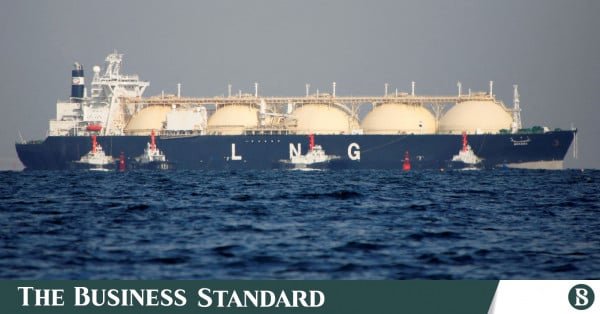
File of an LNG vessel. Photo: Reuters
“>

File of an LNG vessel. Photo: Reuters
Bangladesh became the 17th-largest importer of US liquefied natural gas (LNG) in the first half of 2026 as disruptions to its traditional LNG supplies intensified amid the ongoing conflict in the Middle East.
According to the US Energy Information Administration (EIA), Bangladesh’s LNG imports from the US rose to 50.23 billion cubic feet (bcf) in January-June this year, up by 61% from 31.27 bcf during the same period a year earlier.
Egypt was the largest importer, with 314.6 bcf, followed by the Netherlands, Italy, France and the UK. India ranked 10th among the top 20 importers, while Pakistan did not make the list.

US LNG exports averaged 17.4 billion cubic feet per day in the first six months of 2026, up 23% from the same period a year earlier, according to the EIA. The agency forecasts exports to average 17.3 bcf per day in the second half of 2026 and rise further to 18.7 bcf per day in the first half of 2027.
Bangladesh remains heavily reliant on Middle Eastern countries for LNG and fuel oil imports, particularly Qatar, the UAE and Saudi Arabia. QatarEnergy has recently extended force majeure on LNG supplies to buyers in Bangladesh, Pakistan, and Italy as shipping through the Strait of Hormuz remains severely disrupted amid security concerns, according to Bloomberg and Reuters.
Bloomberg reported that QatarEnergy notified Pakistani buyers this week that LNG cargo cancellations would continue into October, while the force majeure period for supplies to Bangladesh has been extended beyond September.
QatarEnergy first suspended LNG operations and declared force majeure on 4 March, about a week after the war between the US-Israel alliance and Iran broke out.
Since then, Bangladesh has been grappling with a persistent gas crisis that has severely disrupted power generation and industrial production.
About The Author