With the global Fund for Responding to Loss and Damage still too small to meet the huge financial needs created by climate disasters, experts have urged Bangladesh to establish its own national financing mechanism by mobilising private sector resources and building a transparent governance framework.
The call came at a roundtable titled “Unlocking Private Sector Finance for Loss and Damage in Bangladesh”, organised by Practical Action Bangladesh, Mercy Corps, Zurich Climate Resilience Alliance and The Business Standard at the TBS conference room in Dhaka today (14 May).
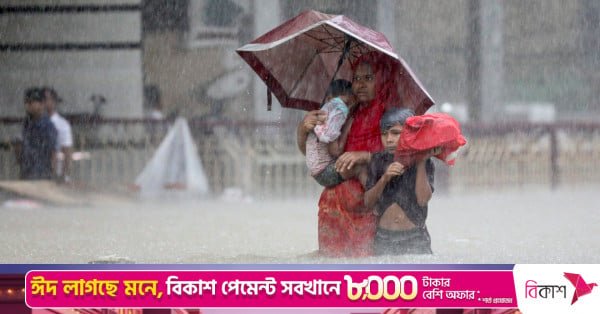
The experts said Bangladesh can no longer depend solely on global funds as international funding commitments remain far below actual needs despite rising climate-induced losses from floods, cyclones, salinity intrusion, heat stress and river erosion.

The Fund for Responding to Loss and Damage, created under the UN climate process to support countries facing climate-related loss and damage, has so far received pledges of about $822 million from 27 contributors, according to its latest update as of March 2026. But the fund currently holds only a little over $200 million as much of the pledged money has yet to be deposited, experts said.
They said the amount is negligible compared to estimated global loss and damage financing needs, which now exceed $400 billion annually.
The speakers stressed that Bangladesh needs a credible and coordinated national platform to channel climate-related loss and damage financing efficiently and transparently.
They said such a framework should bring together government agencies, financial institutions, corporations, NGOs and development partners to ensure quicker and more accountable support for communities affected by climate disasters.
The discussants also stressed the need to move beyond fragmented CSR activities and short-term humanitarian responses, arguing that private sector financing must become part of a long-term national climate resilience strategy.
Attending as chief guest, Mahammad Navid Safiullah, additional secretary at the Ministry of Environment, Forest and Climate Change, said climate discussions in Bangladesh still focus largely on adaptation and mitigation, while loss and damage remain underemphasised despite their growing impact.
“Alongside financial losses, non-economic losses such as displacement, disruption to education, and cultural and psychological harm have deeper and longer-term consequences. These issues also deserve greater attention,” he said.
Safiullah said the government alone cannot bridge Bangladesh’s climate financing gap and stressed the need for coordinated partnerships involving the private sector, NGOs, development partners and financial institutions.
Mahbub Anan, managing director of Lal Teer Seed Ltd, said in addressing climate-induced losses and damages, greater emphasis should be placed not only on post-disaster response but also on early preparedness, research, and preventive measures.
He noted that floods and sudden flash floods cause crop damage in the haor region every year, but there is a lack of long-term data-based research and planning on the nature, timing, and recurrence of such disasters.
Mirza Shawkat Ali, director (Climate Change & International Convention), Department of Environment, said Bangladesh must strengthen its own financing and capacity, assuming that limited support will come from international Loss and Damage funds.
He said better governance and coordination of climate-related government budgets and development programmes could play an effective role in reducing losses and damages.
Keynote presentations were delivered by Md Shamsuddoba, chief executive of CPRD, and Tamanna Rahman, thematic lead, Practical Action Bangladesh.
Md Shamsuddoba said although a large portion of international support currently focuses on adaptation and business expansion, long-term social impacts of loss and damage – such as displacement, school dropouts, inequality and human rights issues – are not receiving adequate attention.
He also said “invisible losses” or long-term social damages are often overlooked in media coverage and policymaking compared to visible disaster damages.
Tamanna Rahman said Bangladesh still relies heavily on government and donor funding for addressing loss and damage, while private sector participation remains limited.
Apurba Swatee Mahboob, programme analyst in the Resilience and Inclusive Growth Cluster, UNDP, highlighted this year’s haor experience, saying that a “local economy” emerges during disasters.
She said, “Although government-subsidised harvesters were provided in haor areas, there was a lack of proper monitoring of how market prices and supply conditions actually functioned on the ground. In crisis situations, many farmers are forced to buy services and labour at higher prices to protect crops, further complicating the economic impacts of disasters.”
Faruk Ul Islam, country representative, Bangladesh, WorldFish, said accurate measurement of climate-induced loss and damage remains a major challenge, resulting in a gap between actual losses and policy and financial responses.
He said climate-resilient technologies and innovations in agriculture and fisheries – such as resilient genetics and improved fish and crop varieties – will be key areas of future financing.
Rabeya Begum, executive director, SDS, said a coordinated pooled fund involving government, NGOs and the private sector is needed, where a certain percentage of CSR funds can be included and used not only for emergency response but also for long-term rehabilitation and reconstruction.
She added that rehabilitation efforts after disasters are still insufficient and planning is often hampered by a lack of data.
M Samiun Nabi, head of Strategic Planning and Business, IWM, said if the government can prepare a clear budget and assessment framework identifying potential losses and financing needs for each area, the private sector will be more interested in investing.
He added that although trust remains a challenge, greater transparency and accountability can significantly increase private sector participation.
Biswajit Mondol, technical adviser (Livelihoods and Market Systems), Concern Worldwide, said the agricultural sector is the most affected by climate-induced disasters, and private sector actors involved in seeds, fertilisers and feed also have direct business interests and responsibilities.
He said instead of focusing only on post-disaster recovery, immediate recovery mechanisms should be strengthened through closer engagement between the private sector and farming communities.
Nusrat Naushin, manager, NACOM, said that in accessing the Loss and Damage fund, lessons should be learned from global plans, particularly how they have created multiple channels to ensure fund disbursement at the local level.
Abu Alam Mohasin, additional director, Bangladesh Bank, said climate finance discussions in Bangladesh often focus more on mitigation and adaptation, while loss and damage remains relatively neglected.
He acknowledged that there is still no clear and structured financial product for addressing loss and damage in the banking sector.
Ishrat Shabnam, country director, Practical Action Bangladesh, said Practical Action works on technology-based solutions for marginalised communities and has long experience in addressing climate risks.
She added that climate change, nature loss and biodiversity loss, and urban resilience are deeply interconnected and all linked to the broader context of loss and damage.
The event was also attended by Md Mostafa Kamal, assistant director (Evaluation-1), Bangladesh Climate Change Trust; Palash Sarker, manager, Practical Action; M Tariqul Hasan Rifat, senior officer-Climate Resilience, Practical Action; and Md Abdul Rayhan Bhuiyan, assistant general manager-Institutional Sales, Lal Teer Seed Ltd. Sajjadur Rahman, deputy editor of The Business Standard, moderated the discussion.
About The Author