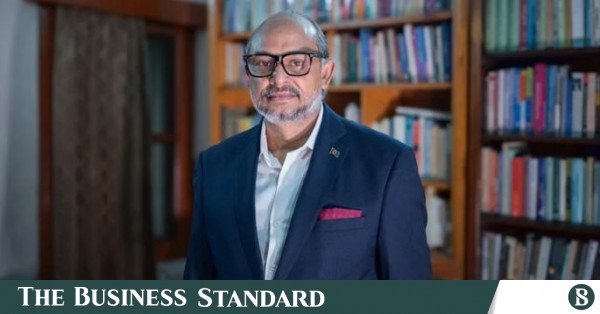
Prime Minister’s Adviser on Finance and Planning Prof Dr Rashed Al Mahmud Titumir today (7 October) said Bangladesh will present its locally driven, homegrown economic reform agenda at the upcoming World Bank-IMF Annual Meetings, highlighting that the ongoing reforms are rooted in domestic policy commitments rather than being dictated by external institutions.
“Multilateral development partners have demonstrated growing confidence in Bangladesh as the government itself identified key structural weaknesses and initiated reforms before seeking support from international financial institutions,” he added.
The finance and planning adviser made the remarks while briefing journalists at Bangladesh Secretariat in the city on Bangladesh’s participation in the “2026 Annual Meetings of the International Monetary Fund (IMF) and the World Bank Group take place from 12 October to 18 October, in Bangkok, Thailand.

The adviser said the current reform approach is fundamentally different from previous IMF programmes, which he described as having been undertaken under pressure by earlier governments.
He identified three key features of the present approach: strong political commitment, domestic identification of structural problems and collaboration between Bangladesh and international institutions based on the country’s own priorities.
“Our reforms are not dictated by external entities; they stem from our own commitments, which is why multilateral trust in our economy has surged,” he said.
He said the heads and senior officials of major multilateral institutions, including the World Bank, Asian Development Bank (ADB), Asian Infrastructure Investment Bank (AIIB) and Islamic Development Bank (IsDB), have been engaging with Bangladesh to align their support with the country’s development priorities.
The adviser said the government inherited a fragile economy characterised by weak private-sector investment, very low revenue mobilisation and severe liquidity problems in the banking sector.
He said the revenue-to-GDP ratio had fallen to around 6.6%, while the actual ratio of non-performing loans (NPLs) was estimated at 35.72%, significantly higher than the officially reported figure of around 11% under the previous regime.
He said both state-owned and private banks, including institutions with high advance-deposit ratios, faced serious financial stress.
To restore discipline in the banking sector, the government has sought to free bank boards from political influence while strengthening protection for depositors, he said.
Since 1 September, depositors of five troubled banks and the Combined Islamic Bank have been allowed to withdraw their required funds, he added.
The adviser also highlighted a refinancing initiative designed to coordinate fiscal and monetary policies.
Under the scheme, he said, financing will be available at a concessional interest rate of 7%, with a target of mobilising Tk 60,000 crore to revive closed factories and expand private-sector credit.
He said the initiative would particularly focus on businesses in northern Bangladesh, women entrepreneurs and economically neglected areas.
The adviser expressed the expectation that greater autonomy of the central bank would help facilitate a gradual reduction in interest rates while maintaining stability in foreign exchange reserves and the exchange rate.
On fiscal management, he said revenue collection had improved significantly after the government introduced three specialised task forces focusing on domestic resource mobilisation.
Revenue growth, which was around 2% initially under the interim administration, rose to 10% between mid-February and 30 June, he said.
The government has set a target of raising the tax-to-GDP ratio to 10% by 2030.
He said the government was also seeking to shift the growth model towards production, investment and employment generation, with the broader objective of increasing economic growth and revitalising the capital market.
The adviser said Bangladesh was witnessing renewed interest from foreign investors.
Work has begun at the Chinese Economic and Industrial Zone, with production expected to begin within 18 months, he said.
He also said Bangladesh had received positive responses from technology companies in Silicon Valley and the global startup accelerator Plug and Play.
Multilateral support has also increased, he said, noting that the ADB has committed US$500 million for growth and development programmes, while the IsDB is providing trade financing and the World Bank is extending budget support.
On social protection and poverty reduction, the adviser said previous safety-net programmes had suffered from exclusion errors, inclusion errors and fragmentation.
Within 23 days of taking office, the government launched the Family Card initiative, he said.
Citing independent estimates, he said distribution of 40 lakh Family Cards could reduce the poverty rate by around five percentage points from the current level of 18.1%.
On inflation, he attributed the current pressure largely to external shocks, including the impact of the conflict in the Middle East on global oil prices.
He contrasted the present situation with what he described as inflationary pressures created in the past by oligarchic practices, cronyism and weaknesses in distribution networks.
The adviser said Bangladesh’s relationship with multilateral institutions was based on partnership rather than one-sided dependence.
The country is pursuing a diversified development-financing strategy combining concessional and non-concessional multilateral loans with domestic bonds, Sukuk bonds and Wage Earner schemes, he said.
He said the approach would help Bangladesh maintain greater flexibility and sustainability in financing its development priorities.
About The Author