Bangladesh has been one of the few nations globally to see a high number of overall advances in democratic performance, according to an annual Global State of Democracy report.
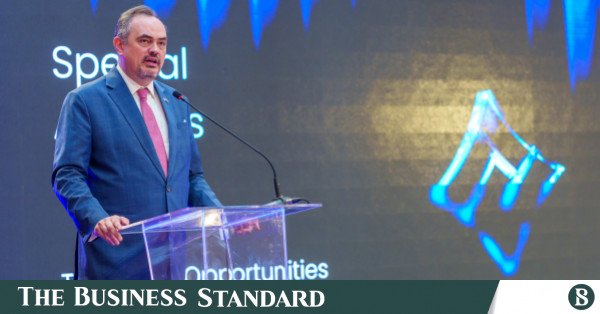
The report, titled “The Global State of Democracy 2026: Democracy in an Age of Conflict”, was published today (15 September) by the International Institute for Democracy and Electoral Assistance (International IDEA).
According to the report, Bangladesh achieved measurable progress in the Rule of Law category, moving from a low-performing classification to mid-range performance between 2024 and 2025.

Bangladesh is also featured among a select group of eight countries worldwide – and three in the Asia-Pacific region – to log significant improvements in Judicial Independence.
“Countries that experienced some of the largest numbers of advances include Bangladesh, Brazil, Poland, Sri Lanka, and Syria,” the report notes.
The Stockholm-based intergovernmental organisation’s annual Global State of Democracy report is considered the most comprehensive of its kind, covering 174 countries and measuring democratic performance since 1975.
The report assessed countries in four major categories of democratic performance rather than one overall classification. These four categories are: Representation, Rule of Law, Rights, and Participation.
Under the Rights category, Bangladesh also registered gains in Access to Justice. This progress was driven by a 2025 amendment to the Legal Aid Act that mandated pre-case mediation and enforceable settlements, prioritising alternative dispute resolution over litigation. The initiative integrated virtual mediation, online platforms, and digital case management to cut costs and reduce court backlogs.
Bangladesh experienced the highest number of democratic indicator shifts in the Asia-Pacific region, followed by Sri Lanka.
“Bangladesh had three declines related to the discredited January 2024 election and the subsequent removal of Prime Minister Sheikh Hasina (Credible Elections, Elected Government, and Effective Parliament), as well as seven advances, including in Absence of Corruption, Civil Liberties, and Personal Integrity and Security,” the report details.
“The advances align with key legal reforms and ordinances introduced by the interim government, such as the repeal of restrictive digital-speech laws and Bangladesh’s first legal framework criminalising enforced disappearances”.
Post-uprising gains yet to produce far-reaching reform
The report highlights youth-led popular protests in Bangladesh, Nepal and Sri Lanka unseated long-serving leaders, but says “it has proven difficult to create far-reaching, meaningful reform in a short period of time”.
It notes that while the democratic gains remain fragile, these protest-driven transitions have created political openings for parliamentary reforms that previously appeared out of reach.
“Subsequent elections in Sri Lanka (2024), Bangladesh (2026), and Nepal (2026) were atypically peaceful (given violence in past elections in these countries), sparking hopes for democratic renewal,” reads the report.
However, the report notes that the advances and reform processes of the South Asian trio will continue to warrant close monitoring, particularly in the aftermath of youth-led movements and post-election governance transitions.
Global democratic decline continues
Stagnating democratic performance was the most common trend in 2025.
When change occurred, it was mostly negative. Around 57% of countries declined in at least one key indicator of democratic performance between 2020 and 2025.
This global democratic decline was concentrated in many fundamental building blocks of democracy: Judicial independence hit a 36-year low. Credible elections fell to a 30-year low. Freedom of expression, freedom of the press, and access to justice were also at their worst in over three decades.
The year 2025 was the 11th consecutive year with more countries showing a net decline rather than improvement in overall democratic performance, the longest consecutive fall since International IDEA’s records began in 1975, according to the report.
Globally, Rule of Law emerged as the weakest-performing category, with 71 countries (41% of those assessed) classified as low-performing. Freedom of Expression also suffered widespread deterioration, declining across 42 nations under the Rights category.
Representation remains democracy’s strongest-performing category globally, but its overall trend is still negative, recording 17 declines and only four advances between 2020 and 2025 – reflecting deterioration in both electoral integrity and legislative oversight.
African and European countries accounted for the largest shares of deterioration (33% and 27% of all declines, respectively), while Asia and the Pacific led on improvements.
About The Author