Referring to the World Bank’s global container port ranking, Ashik said Bangladesh ranked 364th among 400 ports worldwide, underscoring the urgent need to improve port efficiency and logistics capacity.
Ashik Chowdhury. Sketch: TBS
“>

Ashik Chowdhury. Sketch: TBS
Bangladesh must engage global-scale port operators to modernise its ports, improve logistics performance and remain competitive in international trade, Bangladesh Investment Development Authority (Bida) Executive Chairman Ashik Chowdhury said today (13 June).
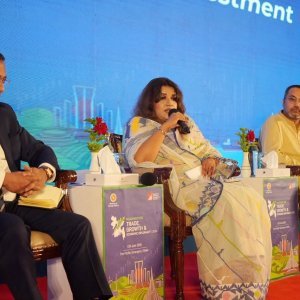
He made the remark while presenting a paper at the conference titled “Roadmap for Trade, Growth and Economic Diplomacy 2026 – Navigating Risks: Leveraging Resilience” at a hotel in Dhaka.
The conference was jointly organised by the International Trade, Investment and Technology Wing of the Ministry of Foreign Affairs and the Bida.

Referring to the World Bank’s global container port ranking, Ashik said Bangladesh ranked 364th among 400 ports worldwide, underscoring the urgent need to improve port efficiency and logistics capacity.
“This tells us our work is cut out, and we are a very proud nation,” he said, adding that engaging international-scale operators in port management has become essential to boosting competitiveness.
He said the ranking reflects the scale of challenges facing Bangladesh amid rapidly changing global trade dynamics and stressed that the country must adapt to the pace of change in the global economy.
Acknowledging concerns raised by businesses, Ashik said investors frequently point to gas shortages, logistics bottlenecks and excessive regulation as key obstacles.
He said the government is addressing these challenges through a broader reform agenda and described the proposed FY2026-27 budget as one of the most investor-friendly budgets in recent years, with a strong focus on deregulation.
The Bida chief also highlighted sector-specific reforms, pointing to recent policy changes in the shrimp export sector as an example of targeted efforts to improve competitiveness.
On energy, he said reliable and uninterrupted power supply remains one of the most critical requirements for investors, particularly in a manufacturing-led economy like Bangladesh.
To address the issue, he said the government plans to expand renewable energy generation by allocating unused public land for large-scale solar projects and simplifying rooftop solar installation policies.
Ashik also stressed the need to diversify Bangladesh’s energy sources, noting that a dedicated government team is working on long-term solutions in the oil and gas sector.
He acknowledged that Bangladesh is lagging behind by five to ten years in energy infrastructure development and said priority is being given to projects including additional floating storage and regasification unit (FSRU) capacity, a land-based LNG terminal and the expansion of the Eastern Refinery Limited’s second unit (ERL-2).
About The Author