Bangladesh needs to develop evidence-based, bankable climate projects that can attract investment and deliver measurable results, experts have said.
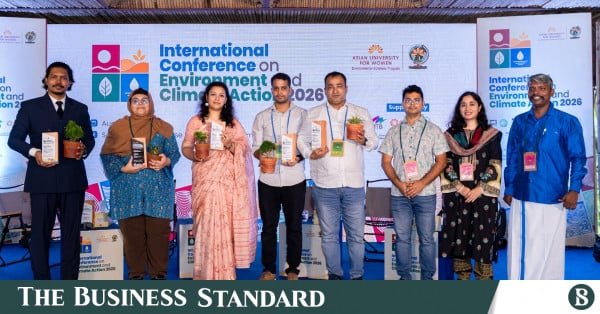
The remarks came at a plenary session titled “Evidence-Based Climate Policy: A Vision for COP31” on the opening day of the two-day International Conference on Environment and Climate Action (ICECA) 2026 at Sonapahar in Chattogram on Friday (7 August).
Tanzina Dilshad, programme manager for energy and environment at the Delegation of the European Union to Bangladesh, said climate finance needed evidence-based, bankable projects capable of attracting investment.

She acknowledged concerns over rising debt linked to climate financing and called for innovative financing mechanisms to reduce dependence on international borrowing.
The discussions come three months before COP31, scheduled to be held in Antalya, Türkiye, on 9-20 November, where countries will negotiate climate finance, adaptation and implementation of international climate commitments.
Organised by the Asian University for Women, the session brought together researchers, academics, climate finance specialists and journalists to discuss climate finance, displacement, governance and accountability.
Nazifa Rafa, senior instructor at the Asian University for Women, highlighted the need for clearer recognition of climate-related human mobility in policy planning.
People displaced by climate impacts do not experience migration in the same way, she said. Some move temporarily or permanently, while others remain in vulnerable areas because they lack the resources to relocate.
Better classification of these forms of mobility could help policymakers provide more targeted support, she added.
M Mofazzal Hossain of the Change Initiative, who moderated the session, called for a shift from state-centred climate action towards community ownership.
“It is high time that development partners, governments and think-tanks shift their priorities from state-based modalities to a community-owned approach for both climate finance and climate actions,” he said.
Shamsuddin Illius, Chattogram bureau chief of The Business Standard, said stronger links were needed between scientific research, policymaking and public communication.
He said credible evidence on climate risks, adaptation, loss and damage and displacement would strengthen Bangladesh’s position in international climate negotiations and help it secure climate finance.
About The Author