As the world undergoes an increasingly complex and rapidly evolving geopolitical realignment, Bangladesh must maintain a balanced foreign policy that preserves relations with all major powers while safeguarding its national interests, foreign policy and security experts said today (25 July).
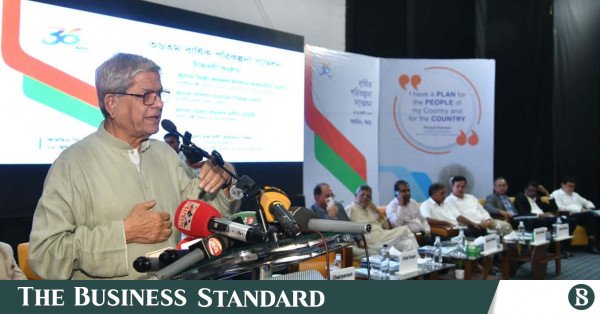
Their observations came during a virtual discussion titled “Strategic Options in a Polarising World: What Is the Compelling Calculus for Bangladesh?”, organised by the Power and Participation Research Centre (PPRC).
Moderating the discussion, Hossain Zillur Rahman, executive chairman of the PPRC, questioned whether Bangladesh will be able to achieve strategic autonomy amid growing global rivalry or risk becoming a theatre for competition among major powers.

Mohammad Sufiur Rahman, senior research fellow at the South Asian Institute of Policy and Governance (SIPG) at North South University and a former ambassador, said Bangladesh remains inadequately prepared to navigate an increasingly multipolar world.
“As we witness the rise of China and other middle powers, geopolitical tensions are also increasing. Bangladesh is poorly prepared to survive in this changing environment,” he said.
He added that the country’s economic preparedness remains weak due to the absence of free trade agreements (FTAs) with key partners.
“We are also weak in diplomatic and cultural networks,” he added.
Sufiur further said Bangladesh has lost consistency in its foreign policy, making it difficult to make the right strategic choices.
He urged the government to deepen cooperation with middle powers like Türkiye, South Korea and Saudi Arabia through sector-specific partnerships instead of relying disproportionately on any single superpower.
Maj Gen (retd) Fazle Elahi Akbar, chairman of the Foundation for Strategic and Development Studies (FSDS), said Bangladesh should diversify its defence partnerships to strengthen its military capabilities.
Responding to a question on defence cooperation with China and Pakistan, he said, “Our air force is not as strong as we need it to be. We have to procure aircraft from China or other countries that can support our requirements.
“We can also expand engagement with Pakistan, as greater diversification will enhance our capabilities.”
Sreeradha Datta, professor at OP Jindal Global University and non-resident senior fellow at the Institute of South Asian Studies (ISAS) of National University of Singapore (NUS), said she does not observe significant concern within India’s strategic establishment over Bangladesh’s recent engagement with China following the prime minister’s visit.
“As long as Bangladesh assures that its territory will not pose any security threat to India, New Delhi is unlikely to be concerned about Dhaka’s relations with other countries,” she said.
Sreeradha added that bilateral relations between Bangladesh and India have suffered over the past two years and expressed hope for more robust engagement between the two neighbours.
About The Author