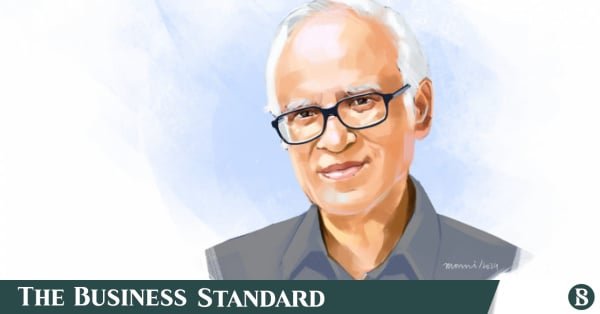
Bangladesh needs to swiftly initiate free trade agreement (FTA) negotiations with major trading partners, particularly the European Union (EU), Japan and South Korea, to safeguard its economic interests as the rules-based global trading system weakens, economist and former interim government adviser Wahiduddin Mahmud has said.
Following the country’s graduation from the least developed country (LDC) category, Bangladesh will no longer be able to rely on the same unilateral trade preferences, making FTAs increasingly important. However, he said, signing agreements alone would not be enough without stronger production capacity, policy reforms and a skilled negotiating team.
Wahiduddin made the remarks as the chief guest at a seminar titled “Global Crisis, Economic Integration and the Bangladesh-EU FTA” at the Sonargaon hotel in Dhaka yesterday. The Bangladesh Institute of International and Strategic Studies (BIISS) and Friedrich-Ebert-Stiftung (FES) Bangladesh jointly organised the event.

He said an FTA with the EU could create opportunities to expand exports of leather goods, pharmaceuticals and other labour-intensive products alongside readymade garments (RMG). It could also help Bangladesh attract technology-intensive machinery, capital goods and foreign investment from developed countries, said the economist.
However, Wahiduddin cautioned that an FTA could make imports from certain countries more expensive relative to other sources. Reducing tariffs exclusively for partner countries could encourage Bangladesh to import higher-priced goods from Europe while shifting away from cheaper suppliers, creating the risk of trade diversion, he said.
Wahiduddin also said FTA preparations should be integrated into broader economic reforms, including improving the investment climate, promoting environmentally friendly industrialisation, upgrading trade logistics and reducing bureaucratic complexities. Bangladesh should also form a competent negotiating team comprising experts in international trade law, economics and World Trade Organisation (WTO) affairs.
EU market exposure raises stakes
Mashrur Riaz, chairman of Policy Exchange Bangladesh, said an FTA with the EU is essential not only for businesses but also for the broader economy. Amid geopolitical uncertainty and economic volatility, Bangladesh needs stronger and more predictable trade relations with major markets.
Citing UN Trade and Development (UNCTAD) estimates, he said Bangladesh could lose $17 billion in exports following LDC graduation, with 70% of the potential losses concentrated in the EU market.
To address the risks, Bangladesh must ensure labour rights, human rights and environmental standards while reforming the banking, revenue, customs and logistics sectors, he said.
Nazneen Ahmed, executive director of the Centre for Policy Dialogue (CPD), said Bangladesh must use the additional three years secured by postponing its LDC graduation to prepare effectively for an FTA with the EU.
She said reforms in banking, revenue, foreign direct investment (FDI), environmental standards, labour rights and working conditions were necessary to maximise the benefits of an agreement.
India took 20 years to conclude an FTA with the EU, she said, adding that Bangladesh does not have that much time. The country must therefore develop a time-bound action plan based on the remaining preparation period, including the additional three years, she said.
Export diversification key to maximising benefits
In the keynote paper, BIISS Research Director Mahfuz Kabir said Bangladesh exported $20.76 billion worth of goods to the EU in fiscal year 2025-26, with nearly 92% coming from the RMG sector.
To reduce this dependence, Bangladesh needs to expand exports from sectors such as leather and footwear, pharmaceuticals, agro-processing, light engineering, jute and ceramics, he said.
Commerce Secretary Sharaf Uddin Ahmed Chowdhury, speaking as a special guest, said the government is preparing for an FTA with the EU, with emphasis on industrial capacity, workers’ skills and environmental compliance.
Baiba Zarina, deputy head of the EU Delegation to Bangladesh, said the EU wants to deepen its partnership with Bangladesh. The country’s geographical position and economic potential are important to Europe, she said.
However, Bangladesh must undertake the necessary reforms to improve governance, labour rights, environmental protection and the business climate, she added.
Foreign Secretary Md Nazrul Islam said an FTA with the EU will create new opportunities for Bangladesh’s economic progress and help diversify its export basket.
Ahmed Ullah, additional secretary at the commerce ministry and team leader of Bangladesh’s negotiating team for the Bangladesh-EU FTA, said the government has a strong political commitment to the agreement.
Syed Muntasir Mamun, director general of the Ministry of Foreign Affairs, said Bangladesh has opportunities to expand value addition and exports of products beyond RMG in the EU market.
He said the FTA should be viewed not merely as a trade agreement but also as a means of strengthening people-to-people relations between the two regions.
About The Author