Referring to the country’s energy sector, the minister said Bangladesh is implementing its nuclear power programme with Russian financial support, imports energy resources from Middle Eastern countries, particularly Qatar, and is exploring opportunities to import hydropower from Nepal and Bhutan through India.
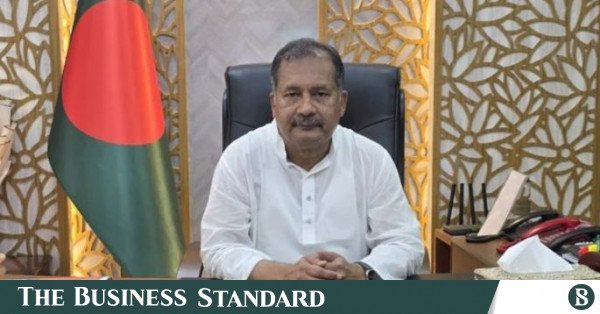
File photo of Information and Broadcasting Minister Zahir Uddin Swapon. Photo: Collected
“>

File photo of Information and Broadcasting Minister Zahir Uddin Swapon. Photo: Collected
Information and Broadcasting Minister Zahir Uddin Swapon today (4 June) said any approach forcing Bangladesh to choose between key international partners would be detrimental to national interests.
“Any policy that compels Bangladesh to choose one side over another would be harmful to the country’s long-term interests,” the minister said.
Bangladesh must pursue a foreign policy that integrates all major internal and external dimensions, he said while presiding over a discussion titled “Ziaur Rahman’s Independent Foreign Policy in the Current Context” and a newspaper exhibition organised at the Press Institute Bangladesh (PIB) auditorium marking the 45th death anniversary of former president Ziaur Rahman.

Local Government, Rural Development and Cooperatives Minister Mirza Fakhrul Islam Alamgir attended the programme as the chief guest.
Swapon said Bangladesh’s economic and strategic interests are deeply interconnected with multiple global partners and regions.
He said the country relies significantly on China and India for imports while the United States and European countries remain the primary destinations for Bangladesh’s ready-made garment exports.
He also said remittances largely originate from the Middle East, while Bangladesh depends on foreign energy sources and international cooperation to ensure energy security.
Referring to the country’s energy sector, the minister said Bangladesh is implementing its nuclear power programme with Russian financial support, imports energy resources from Middle Eastern countries, particularly Qatar, and is exploring opportunities to import hydropower from Nepal and Bhutan through India.
“In such a reality, the government must carefully manage these interdependencies through a balanced and pragmatic foreign policy,” he said.
Drawing on the legacy of former President Ziaur Rahman, Swapon said Bangladesh’s foreign policy underwent a significant transformation after 1975.
He said Ziaur Rahman successfully guided the country from a one-party political framework to a multiparty system, embraced a market-oriented and pro-Western economic approach, strengthened relations with international development partners, expanded ties with the Muslim world and played a key role in the establishment of the South Asian Association for Regional Cooperation (SAARC).
He said Ziaur Rahman’s diplomatic strategy helped transform several bilateral issues into broader regional and multilateral discussions.
“His leadership enabled Bangladesh to secure international cooperation, achieve food self-sufficiency, increase overseas employment and remittance inflows, and explore new export sectors, including the ready-made garment industry,” Swapon said.
The minister stressed that Bangladesh should avoid any foreign policy framework that requires choosing between major global partners such as China, India, the United States, Europe or the Middle East.
Swapon also highlighted Ziaur Rahman’s inclusive and independent diplomatic approach, saying it earned recognition from regional and international leaders.
He said Bangladesh’s foreign policy should continue to prioritise national interests, economic stability and sovereign decision-making while maintaining constructive relations with all partners.
Economist Mushtaq Khan of the School of Oriental and African Studies attended the event as a special guest.
Major Gen (retd) ANM Muniruzzaman, president of the Bangladesh Institute of Peace and Security Studies, delivered the keynote speech.
Director General of the Press Institute of Bangladesh Faruk Wasif moderated the programme.
About The Author