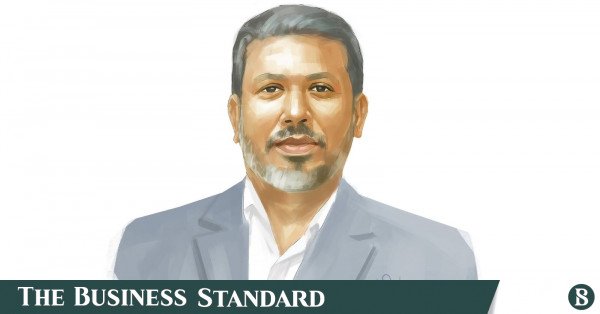
Mohammod Khourshed Alam, who recently joined RAK Ceramics (Bangladesh) as CEO, is leading the company in creating greater value in its products instead of focusing on selling more. In an interview with The Business Standard’s Abbas Uddin Noyon, he spoke about Bangladesh’s ceramic industry and his new role.
You joined RAK Ceramics as CEO recently. What are your observations and priorities?
RAK Ceramics Bangladesh has an established brand, manufacturing base, product portfolio and distribution network. But the market is facing higher input costs, energy constraints, financing pressure, changing consumer behaviour and intense competition.
My priorities are profitable growth, operational efficiency and strengthening the company’s market position. We need to improve manufacturing, supply chain, distribution and working-capital efficiency while developing products based on changing customer needs.

Over the next one to two years, I want to see improvement not only in sales but also in market share, profitability, productivity and customer satisfaction.
How are gas shortages and electricity problems affecting ceramic production?
Energy is critical because ceramic manufacturing is highly energy-intensive. Gas availability and pressure affect kiln operations, production planning, capacity utilisation, product quality and costs.
In the short term, we need better production planning, energy monitoring and kiln optimisation. Over the longer term, investment in energy-efficient technology, process optimisation, alternative energy and waste reduction will be necessary.
Energy efficiency is also a cost issue. Every unit of energy saved improves competitiveness.
Demand has weakened amid the slowdown in construction and housing. What is needed to revive the market?
The current situation is challenging, but I would not describe it as a permanent structural decline. High financing costs, inflation, lower purchasing power and economic uncertainty are affecting construction and real estate.
At the same time, urbanisation, population growth, housing demand and renovation will continue to support the sector. RAK Ceramics’ Bangladesh tile revenue grew 20.7% year-on-year in the second quarter of 2026, showing that demand for quality products remains present.
Reviving the broader market will require stronger investment confidence, better access to housing finance, infrastructure development and a predictable business environment. Companies also need to generate demand through design, innovation and differentiated products rather than simply waiting for an economic recovery.
Does RAK Ceramics have plans for new investment, capacity expansion or products?
Our approach will be market-driven. Before major capacity expansion, we need to ensure efficient utilisation of existing assets and appropriate returns on current investments.
We are evaluating new products, designs and value-added segments. RAK’s global portfolio includes ceramic and gres porcelain tiles, sanitaryware, faucets and tableware. In Bangladesh, we will focus on areas with sustainable demand and clear financial returns.
Our approach is growth with discipline.
What are your plans for technology and product innovation?
The ceramic industry is becoming increasingly design-, technology- and consumer-driven. RAK’s global operations provide access to technology, design and product-development capabilities.
The focus in Bangladesh will be to connect those capabilities with local market intelligence. We need to understand the requirements of consumers, architects and developers and translate those insights into products faster.
We want to strengthen local design capability, improve speed-to-market, introduce contemporary designs and benchmark technical and quality standards against leading products.
What is your leadership approach, particularly during difficult business conditions?
My approach is based on clarity, empowerment and accountability. Employees need to understand the organisation’s direction, their responsibilities and how performance will be measured.
Empowerment must come with accountability. During difficult periods, leadership teams need to absorb uncertainty, make decisions and provide clear direction rather than simply passing pressure down the organisation.
Developing people is also important. The organisation needs the right talent, continuous capability building and a performance-oriented culture.
How do you see Bangladesh’s building materials sector over the next five years?
Bangladesh’s urbanisation, expanding middle class and continuing demand for housing and commercial space will support the sector. Renovation and replacement demand will also increase as existing buildings age.
But consumer behaviour is changing. Purchasing decisions will gradually move from being primarily price-driven towards value-driven. Consumers are becoming more conscious of design, quality, functionality, after-sales service and brand reputation.
I see potential in premium and value-added tiles, larger-format products, design-led surfaces, modern sanitaryware, bathroom solutions and other lifestyle-oriented building materials.
The opportunity is not simply to sell more products but to create greater value per customer and per square metre. Companies investing in technology, design, energy efficiency, distribution and people will be better positioned as the industry becomes more organised and quality-driven.
About The Author