Officials say attacks once limited to high-risk operations or remote areas are now occurring in broad daylight, often fuelled by rumours or mob mobilisation, causing injuries and damage to government vehicles and facilities.
Infograph: TBS
“>

Infograph: TBS
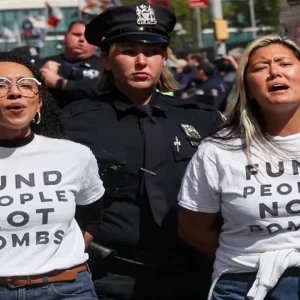
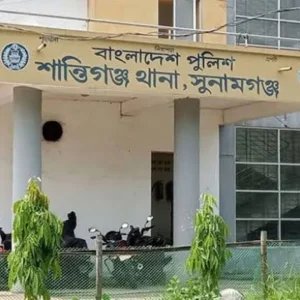
Attacks on Bangladesh’s law enforcement personnel are no longer limited to armed criminals resisting major raids. Increasingly, police and other security agencies are facing assaults from mobs and civilians attempting to free suspects, block arrests or take the law into their own hands – signalling a shift in how resistance against law enforcement is taking shape.
Police Headquarters data show more than 600 attacks on police occur annually on average. In the first six months of this year, police recorded 317 attacks, with April reporting the highest number at 66. January and February each saw 42 incidents, followed by 63 in March, 55 in May and 49 in June.
Officials say attacks once limited to high-risk operations or remote areas are now occurring in broad daylight, often fuelled by rumours or mob mobilisation, causing injuries and damage to government vehicles and facilities.
Recent attacks

The latest incident occurred on 25 July in Chattogram’s Ambagan area, where police attempting to arrest Alamgir, an accused in a narcotics case, came under attack from his associates.
Double Mooring Police Station Sub-Inspector Mobinul Islam was stabbed and later admitted to Chattogram Medical College Hospital. Police arrested Alamgir, but his associates escaped.
Two days earlier, on 23 July, miscreants attacked Special Branch Sub-Inspector Md Osman Gani alias Faisal outside his residence in Mohammadpur’s Kaderabad Housing in Dhaka, leaving him with injuries requiring 45 stitches to his back.
He later filed a case with Mohammadpur Police Station, and police arrested four suspects in Chattogram.
On 19 July, a mob of around 50 people allegedly attacked police in Cox’s Bazar’s Kutubdia upazila while officers were taking Md Mizanur Rahman, wanted in a case filed by his wife, to the station.
Four policemen were assaulted, and the handcuffed suspect was snatched away. Police arrested six alleged attackers and filed a case naming 35 people and 30 unidentified accused.
Earlier, on 16 July, police in Pabna’s Sujanagar upazila were attacked after mosque loudspeaker announcements allegedly mobilised hundreds of people. The OC and a constable were injured, while two police vehicles were vandalised.
Police said they had gone to the upazila’s Mathurapur village after receiving information that supporters of banned Awami League leader Abdul Wahab were planning a procession or sabotage during a public gathering for the England-Argentina football match. Two cases were filed and 11 people, including a woman, were arrested.
The violence has also targeted other agencies. On 22 May, RAB member Emon Acharya was fatally stabbed in Sylhet while helping detain a suspected mugger.
On 2 March, Department of Narcotics Control Inspector Siddiqur Rahman was shot in the leg by drug traffickers during an operation near Syedabad railway area in Jatrabari, Dhaka.
A changing pattern
Police Headquarters data show attacks on police declined during the Covid years, with 555 incidents in 2019 and 449 in 2020, before rising to 608 in 2021, 601 in 2022, 607 in 2023, 643 in 2024 and 601 in 2025.
Officials and analysts say the nature of these attacks has changed since the July uprising, with declining fear of police among criminals and growing public willingness to take the law into their own hands.
They also say police have yet to fully regain operational confidence after the political transition, encouraging more aggressive resistance during arrests.
Associate Professor Towhidul Haque of Dhaka University’s Institute of Social Welfare and Research said attacks on police are not isolated crimes but direct challenges to the rule of law.
“Attacking those responsible for enforcing the law amounts to rejecting the law itself,” he said, adding that declining public trust in police has weakened respect for law enforcement.
He said impartial policing free from political influence is essential to rebuild public trust and curb the growing frequency and changing nature of such attacks.
Additional Inspector General (Crime and Operations) Khondoker Rafiqul Islam said the trend stems from both social and operational factors. Public distrust had encouraged people to take the law into their own hands, while police were in a weakened position after the mass uprising, he said.
“We are now addressing those issues, and the trend has declined, although isolated incidents still occur. We take strict legal action after every such incident,” he said.
In the past, three officers could arrest a drug offender without difficulty because the public trusted police and criminals feared them. After the mass uprising, criminals became bolder,” he added.
“We have instructed our members to conduct fewer operations if necessary, but not to take unnecessary risks. In reality, however, when officers locate a wanted suspect, they often cannot simply walk away. That is when some of these incidents occur. Still, we are gradually improving,” he said.
About The Author