The analysis also raises allegations that some Border Guard Bangladesh (BGB) officers have provided intelligence, ammunition and logistical support to Rohingya armed groups operating near the border.
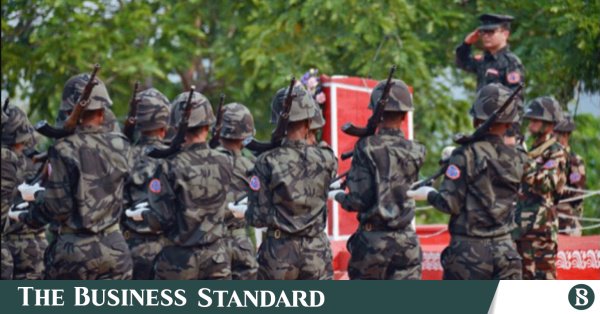
Soldiers salute Arakan Army chief Major General Twan Mrat Naing during a parade in Myanmar, 6 April 2018. File Photo: Arakan Army deputy chief Brig Gen Nyo Twan Awng/Twitter
“>

Soldiers salute Arakan Army chief Major General Twan Mrat Naing during a parade in Myanmar, 6 April 2018. File Photo: Arakan Army deputy chief Brig Gen Nyo Twan Awng/Twitter
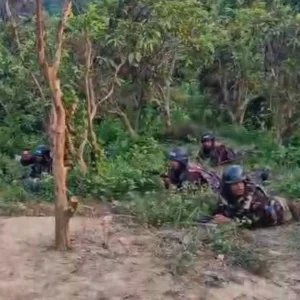
The Arakan Army (AA) is facing a renewed security challenge along the Bangladesh border as armed Rohingya groups step up attacks in northern Rakhine State, forcing the ethnic armed group to divert resources from its campaign towards the state capital, Sittwe, according to an analysis by Aung Marm Oo, editor-in-chief and executive director of Development Media Group (DMG).
The escalating conflict stems from an alliance between Myanmar’s military junta and Rohingya armed organisations, including the Arakan Rohingya Salvation Army (ARSA) and the Rohingya Solidarity Organization (RSO), which have received ammunition, training and tactical guidance from the military, according to reports cited in the analysis.
The alliance emerged as the military suffered major territorial losses across Rakhine State in 2024, prompting it to seek local partners to strengthen its position, says Irrawaddy.

“Here was the military that was responsible for the 2017 atrocities that drove hundreds of thousands of Rohingya into Bangladesh, brazenly co-operating with Rohingya armed organisations against the AA.”
The analysis argues that the junta’s strategy is aimed at diverting AA personnel and resources from key battlefronts, including Sittwe, while exploiting tensions between Arakanese and Muslim communities.
Maungdaw remains a flashpoint
The AA captured the border township of Maungdaw in December 2024, but armed groups have continued operating in the area, using remote terrain and cross-border sanctuary to sustain their activities.
Following a clash near Inn Chaung village in September, ARSA launched a broader offensive in late October, according to the analysis.
“ARSA activities have resurged in both northern and southern Maungdaw Township,” a local resident told Development Media Group.
The recurring attacks have forced the AA to redirect personnel, intelligence and supplies towards northern Rakhine, potentially affecting its military operations elsewhere, the analysis said.
It added that the attacks could continue to undermine the AA’s territorial gains even without direct command from Myanmar’s military junta.
Bangladesh’s role under scrutiny
The analysis also raises allegations that some Border Guard Bangladesh (BGB) officers have provided intelligence, ammunition and logistical support to Rohingya armed groups operating near the border.
The BGB has denied the allegations, while investigative reports cited in the analysis point to links between armed factions and elements of Bangladesh’s security establishment.
Bangladesh hosts more than 1 million Rohingya refugees, making the activities of armed groups operating within and around refugee communities a concern for border security and the prospects of repatriation.
The author argues that using armed groups as leverage against the AA could destabilise the border and undermine efforts to facilitate the refugees’ eventual return to Myanmar.
Bangladesh’s interests, the analysis says, would be better served by preventing armed groups from exploiting refugee communities and maintaining communication with the AA, which controls territory across the border.
“…stopping ARSA and co. from exploiting refugee communities, and instead maintaining effective communication with the AA authorities controlling the opposite side of the border.”
Civilian protection and governance
The analysis identifies decades of statelessness, discrimination and declining humanitarian assistance as factors that have left Rohingya refugee communities vulnerable to recruitment and exploitation by armed groups.
However, it says these grievances do not justify attacks on civilians, forced recruitment or abductions.
It also cautions against treating ARSA, RSO and the Arakan Rohingya Army (ARA) as representatives of the wider Muslim population.
With the AA exercising de facto control over much of the territory, the group has a responsibility to ensure equal protection for all ethnic and religious communities and prevent further communal tensions, the author said.
“The Maungdaw conflict demonstrates that territorial control does not necessarily end a war.”
The analysis concludes that addressing the networks and underlying grievances sustaining the violence will be necessary to achieve lasting peace in Rakhine State.
“Unless the networks and grievances sustaining violence are addressed, no lasting peace can come to Arakan.”
About The Author