Authorities say corrective measures are already underway, including soil removal, compensation payments and long-term rehabilitation efforts.
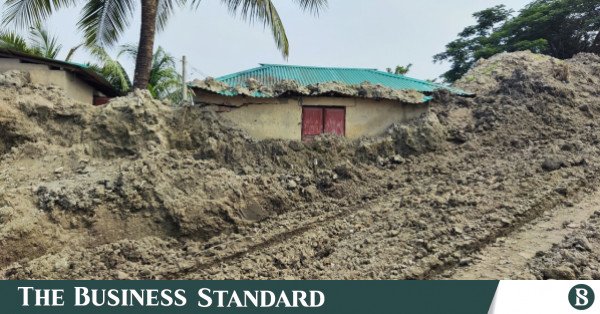
The affected families are from the Chuknagar, Kathaltala and Baratia Ashrayan projects, where large volumes of excavated soil from river restoration works were dumped nearby, damaging homes and forcing many residents to leave. Photo: TBS
“>

The affected families are from the Chuknagar, Kathaltala and Baratia Ashrayan projects, where large volumes of excavated soil from river restoration works were dumped nearby, damaging homes and forcing many residents to leave. Photo: TBS
A river dredging project aimed at reducing waterlogging in the Kopotakkho River basin has left more than 150 families from the Ashrayan project (shelter housing scheme) in Khulna’s Dumuria upazila temporarily displaced.
However, authorities say corrective measures are already underway, including soil removal, compensation payments and long-term rehabilitation efforts.
The affected families are from the Chuknagar, Kathaltala and Baratia Ashrayan projects, where large volumes of excavated soil from river restoration works were dumped nearby, damaging homes and forcing many residents to leave.

Project in-charge Lieutenant Colonel Mamunur Rashid said the excavated soil had been sold through auction and was supposed to be removed promptly by contractors, while local authorities were responsible for monitoring the process.
Due to delays in the process, soil accumulated and created the unexpected situation, he said. After the issue came to light, the soil removal process was initiated, and compensation for affected residents is now being arranged through the concerned contractor.
Dumuria Upazila Nirbahi Officer (UNO) Sabita Sarkar said soil removal at the Baratia shelter project has already begun under army supervision. She added that the Bangladesh Water Development Board (BWDB) has informed the administration that compensation will be provided to affected residents.
Regarding displaced residents in Chuknagar, she said permanent rehabilitation would take time. Although the administration offered temporary accommodation at other vacant shelter projects, residents declined the proposal. A request has already been sent to higher authorities seeking permanent rehabilitation arrangements.
A visit to the area found that soil excavated from the Upper Bhadra River had been dumped on parts of the Chuknagar shelter project, causing cracks and structural damage to houses. Many residents have moved to the nearby cattle market grounds, where they are living in makeshift shelters built with plastic sheets and corrugated tin.
Even light rainfall causes waterlogging in the temporary settlement. Residents are also facing shortages of safe drinking water and sanitation facilities. While local representatives and officials have assured them of rehabilitation and limited food assistance, a permanent solution has yet to be implemented.
Rabeya Begum, a resident of the project, said: “We no longer have a house or even a bathroom. Everything has been destroyed and buried under soil. We have nowhere to go.”
Another resident, Rizia, said they are currently living on the cattle market grounds but are being pressured by leaseholders to leave. “The MP promised rehabilitation. The UNO visited once and later provided 30 kilograms of rice. That was all,” she said.
Several kilometres away, 13 houses at the Kathaltala Ashrayan project have also been partially buried by soil from riverbank excavation. Some roofs have collapsed, while doors and windows of other homes have been buried under earth. Many affected families have moved elsewhere.
Tania Begum, a resident of Kathaltala, said the damage occurred after Eid-ul-Adha. “There were soil piles before, but the houses were not affected this badly. Now soil has covered the tin roofs and the verandas have collapsed. Some families are still here, while others have left. We can only hope for government assistance,” she said.
A similar situation was reported at the Baratia shelter project, where around 24 homes were damaged after being covered by excavated soil. The issue drew widespread attention after a video showing homes being buried circulated on social media.
Residents said soil removal and house repair work has now begun with assistance from contractor representatives. Locals alleged that the crisis developed after a brick kiln owner failed to remove soil purchased earlier, while additional soil was later dumped on top of it.
Krishnapada Mondal, manager of one of Shahjahan Jamaddar’s brick kilns, said most of the soil at Baratia has already been removed and only a small amount remains.
According to the BWDB office in Jashore, the Bangladesh Army is carrying out dredging work on six rivers under the second phase of the Kopotakkho River Waterlogging Mitigation Project, with an allocated cost of Tk139.98 crore.
The project includes dredging sections of the Hari, Teligati, Harihar, Upper Bhadra, Teka and Sri rivers. Work is scheduled to be completed by June next year, after which the BWDB will formally receive the completed project from the army.
About The Author