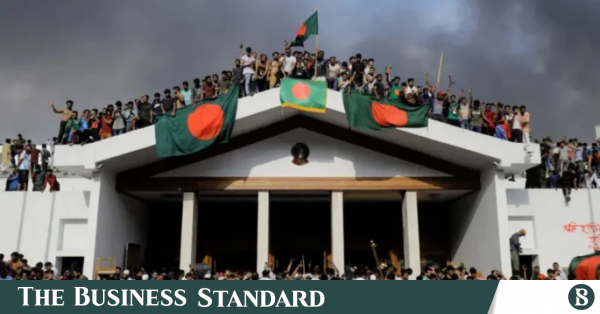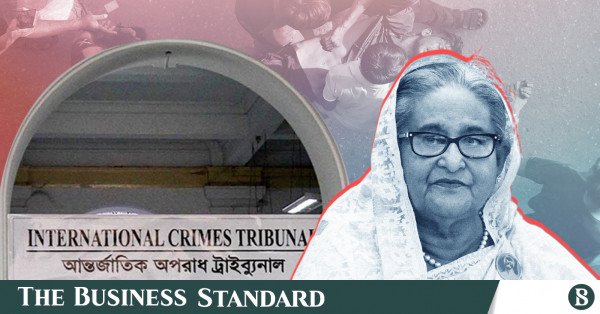
Two years ago today, an army helicopter lifted the ousted despot Sheikh Hasina off the lawn of Gono Bhaban and carried her across the border to India. She has not made any public appearance since, apart from a few audio recordings. She has not set foot in Bangladesh in the 730 days that followed.
On 17 November 2025, the International Crimes Tribunal found her guilty of crimes against humanity for the killings of July and August 2024 and sentenced her to death in absentia.
Prosecutors named her the mastermind of the bloodshed. Her home minister was convicted alongside her, while the then police chief later turned state witness and was spared. The primary evidence against her came from phone intercepts collected through the mass surveillance system her government built to monitor citizens. In a cruel twist of fate, the machinery she had fashioned against her opponents ultimately became the evidence used against her.

Meanwhile, Bangladesh accomplished what she had spent 15 years trying to prevent. In February, under Muhammad Yunus’s interim administration, the country held an election widely regarded as its most credible in nearly two decades.
The BNP secured a landslide victory, and Tarique Rahman returned from 17 years in exile to become prime minister. At the same time, a national referendum incorporated the July Charter into the Constitution, marking another milestone in the country’s democratic transition.
Hasina remains in Delhi as India has yet to respond to Bangladesh’s repeated extradition requests.
Marking the second anniversary of the July uprising yesterday, Prime Minister Tarique Rahman described 5 August 2024 as the day Bangladesh ended more than 15 years of fascist rule and restored the people’s democratic rights.
He urged the nation to preserve the unity forged through the sacrifices of the uprising and pledged that Bangladesh would never again allow authoritarianism, fascism, extremism or militancy to take root. Drawing a parallel with the Liberation War, he said 1971 secured the country’s independence, while 2024 safeguarded its freedom and democracy.
Acting President Hafiz Uddin Ahmed called for building a democratic, accountable, just and discrimination-free Bangladesh in line with the aspirations of those killed and injured in the uprising.
Describing the movement as the culmination of years of public anger over authoritarian rule, corruption, enforced disappearances and the erosion of democratic rights, he pledged support for victims’ families, rehabilitation of the injured and impartial, speedy trials of all killings and crimes against humanity committed during the movement.
The anniversary, however, also serves as a reminder that Bangladesh’s journey remains unfinished.
The institutions left weakened by years of authoritarian rule are still being rebuilt. The economy continues to struggle with high inflation, unemployment and the fallout from the war in the Middle East. Justice for those killed and injured during the July uprising has yet to be fully delivered.
True justice demands more than symbolic verdicts; it requires the painstaking work of rebuilding impartial institutions capable of outlasting any government.
Ultimately, the legacy of the July uprising will not be determined by who governs from Dhaka, but by whether Bangladesh fulfils the aspirations of the young people who stood before Sheikh Hasina’s bullets.
Their movement rejected not only authoritarianism but also a development model that enriched a kleptocratic elite while leaving an increasingly educated generation facing limited opportunities and rising living costs.
The responsibility for fulfilling those aspirations now rests with the government that came to power through the democratic opening created by the uprising. It is a task that cannot be delayed.
About The Author