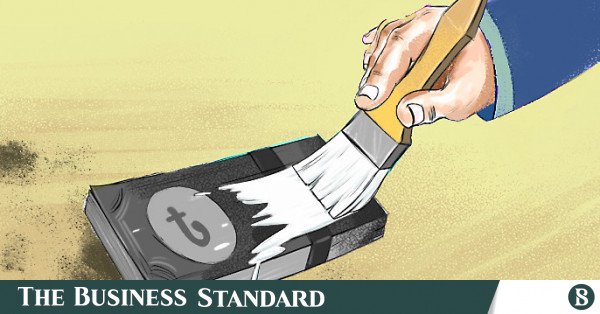
Successive governments in Bangladesh have allowed undisclosed money to be legalised since independence, but the facility saw its sharpest expansion in the 2020-21 fiscal year under the Awami League government.
At the time, the government allowed holders of undisclosed money to legalise assets by paying a flat 10% tax, alongside indemnity protection.
The move triggered widespread criticism as regular taxpayers were subject to tax rates of up to 30%, while holders of undisclosed money were allowed to legalise assets at a much lower rate.

During that fiscal year, 11,839 individuals legalised approximately Tk20,500 crore, the highest amount regularised in a single year in the country’s history. The NBR collected Tk2,064 crore in revenue from those declarations.
Of the total amount, Tk16,830 crore in cash held in banks or as cash under temporary NBR provisions was legalised by 7,055 holders of undisclosed money. The remainder was invested in land, apartments and the stock market.
The facility was reintroduced in FY25 at a 15% tax rate. Following the fall of the Awami League government, however, the interim administration gradually withdrew the facility, particularly the indemnity provision.
At present, individuals and companies can still invest undisclosed money legally, but they must pay the applicable tax rate of up to 30% along with a 10% penalty on the payable tax amount.
Under indemnity provisions, no government agency outside the tax authority, including the Anti-Corruption Commission, can question the source of the declared funds.
About The Author