At a time when Bangladesh’s poultry sector is grappling with rising costs and shifting market dynamics, the US Soybean Export Council (USSEC) sees growing opportunity.
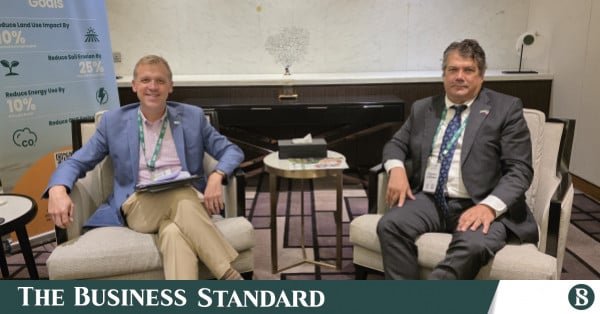
During a visit to Dhaka on 3 May, Kevin Roepke, executive director (Middle East, North Africa and South Asia), and Thomas D’Alfonso, director (Animal and Aquaculture), spoke to The Business Standard’s Abbas Uddin Noyon about how the sector could drive the next phase of growth.
The US Soybean Export Council has been working with Bangladesh’s feed, poultry, and aquaculture sectors for years. How do you assess the partnership today?

Kevin Roepke: Our relationship with Bangladesh has evolved significantly. What was once a developing market is now becoming a strategic growth engine for US soy.
Bangladesh is not only a fast-growing economy, but also one where industries increasingly value quality and consistency. The strong preference for US soy among feed millers and poultry producers reflects that shift.
The broader economic relationship also matters. The US remains one of the largest investors in Bangladesh, and agriculture, particularly soy, plays an important role in strengthening that partnership.
What excites us most is the alignment. Bangladesh is rapidly expanding its poultry and aquaculture sectors, while we bring technical expertise, innovation, and a reliable supply chain. That creates strong long-term synergies.
What future opportunities do you see for expanding US soy exports and broader agribusiness cooperation?
Roepke: We see the protein gap as the defining issue and opportunity for Bangladesh. Despite strong economic growth, per capita protein intake remains below optimal levels. This affects not just nutrition, but also public health, workforce productivity, and long-term development.
That’s why we launched the “Right to Protein” campaign to raise awareness about the importance of protein for immunity, cognitive development, and overall well being.
At the same time, global benchmarks are shifting, with recommended protein intake increasing. That means demand is set to rise significantly.
Poultry, as an affordable and scalable source of protein, will play a central role. Bangladesh’s poultry industry is already on a strong growth trajectory and will be key to closing the protein gap.
In a competitive global market, why should producers choose US soy over other origins?
Thomas D’Alfonso: Feed cost matters, but what matters more is the cost per kilogram of animal protein produced. That’s where US soy delivers consistent value.
We have more than a decade of data showing that US soy offers higher levels of digestible essential amino acids and metabolisable energy nutrients animals actually use for growth.
Better digestibility leads to more efficient feed conversion, faster growth, improved uniformity, and better processing outcomes.
So, even if the upfront cost is not always the lowest, the overall return on investment is often higher.
Bangladesh’s poultry sector is under pressure from rising feed costs. How can US soy help improve productivity?
D’Alfonso: Global disruptions particularly in energy markets are increasing input costs, including synthetic amino acids.
Soybean meal derived from US soy naturally contains high levels of essential amino acids, and these nutrients are highly digestible.
This improves feed conversion ratios meaning producers can generate more output using less feed.
There’s also a revenue benefit. Birds that grow faster and reach target weights consistently generate higher returns. Uniformity is especially important for modern retail and food service markets.
So, improving feed quality doesn’t just reduce costs; it enhances overall profitability.
How are US soybean farmers advancing sustainability, and how does that benefit Bangladesh?
D’Alfonso: Sustainability is not just about the environment, it’s about efficiency and long-term business viability.
US farmers have been early adopters of precision agriculture, using GPS and data analytics to apply inputs only where needed. That reduces waste, lowers costs, and improves yields.
Traceability is also becoming increasingly important, as buyers want to understand the origin and production process of their inputs.
For Bangladesh, this presents an opportunity. Companies that adopt sustainable practices can differentiate themselves in both domestic and export markets.
In our experience, businesses that prioritise sustainability tend to be more efficient, better managed, and more competitive.
Meghna Group of Industries has adopted the SUSS (Sustainable US Soy) certification. How significant is this?
Roepke: It’s a major milestone. MGI is demonstrating leadership by choosing to compete not just on price, but on integrity and long-term value.
Consumer behaviour is shifting globally, with a growing willingness to pay more for sustainably produced goods.
For Bangladeshi companies, this creates a clear opportunity to differentiate – especially in higher-value market segments.
How is the Soy Excellence Center contributing to industry development?
Roepke: The Soy Excellence Center is one of our flagship initiatives, and Bangladesh has been one of its most active participants.
We identified a need to strengthen human capital particularly among early- and mid-career professionals.
So far, more than 2,000 Bangladeshis have enrolled in the programme, and engagement remains strong even after certification.
This shows that the training is relevant and valued. Ultimately, building a skilled workforce is essential for sustaining long-term growth.
What are the Soybean Council’s strategic priorities in Bangladesh over the next five to 10 years?
Roepke: We see Bangladesh as a long-term strategic market. Our priorities include strengthening trade relationships, advancing sustainability, building technical capacity, and supporting market development.
The poultry sector already supports around 10 million jobs, and with rising protein demand, its economic impact could grow significantly.
We also see strong potential in aquaculture, particularly in export growth and foreign exchange earnings.
These sectors are not just agricultural industries, they are engines of economic transformation.
Any final thoughts on trade and market outlook?
Roepke: A key milestone was the $1.25 billion letter of intent for US soy purchases signed last year.
More than one million tonnes have already been delivered, reflecting strong confidence from Bangladeshi buyers.
We look forward to supporting the full implementation of that commitment and continuing to work closely with industry stakeholders.
The fundamentals are strong growing demand, an expanding industry, and a shared commitment to quality and sustainability.
About The Author