Bangladesh would maintain balanced ties with both countries while protecting its own national interests, he says
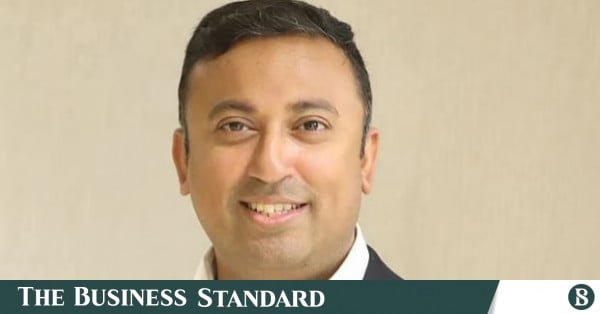
Humayun Kabir. File Photo: Collected
“>

Humayun Kabir. File Photo: Collected
Prime Minister’s Foreign Affairs Adviser Humayun Kabir has said Bangladesh will not become a “football” between China and India, as the new government pursues a “Bangladesh First” foreign policy centred on pragmatism, balance and national interest while maintaining constructive ties with all major global powers.
Responding to questions from diplomats, academics and policy experts at a roundtable titled “Bangladesh First: A foreign policy outlook for a new Bangladesh,” organised by the Bangladesh Institute of Peace and Security Studies in Dhaka, Kabir said the government would avoid dependence on any single country and instead adopt a “flexible and multifaceted” diplomatic approach.
Addressing questions on Dhaka’s relations with Beijing and New Delhi, he said Bangladesh would maintain balanced ties with both countries while protecting its own national interests.

“We will not be a football between China and India,” he said. “We can be a referee now and then to ensure fair play, but we will not become a football.”
Kabir described China as an “important development partner” for Bangladesh and said his recent visit to Beijing had been “very positive”. At the same time, he stressed that Bangladesh would maintain balanced relations with India and all other major powers.
“We will have balanced relations with everyone – whether it is Washington, Beijing or Delhi,” he said.
According to the adviser, the new government’s democratic legitimacy gives Bangladesh a stronger negotiating position internationally.
“We are a legitimately elected government with the mandate of the people. That gives us a position of strength in negotiations,” he said.
‘Bangladesh First’ doctrine
Kabir also questioned the relevance of the traditional foreign policy slogan “Friendship to all, malice towards none,” arguing that today’s volatile geopolitical environment requires a more strategic and realistic approach.
He said the new doctrine does not imply isolationism but rather prioritising Bangladesh’s sovereignty, development and national interests.
“Putting Bangladesh first does not mean isolating Bangladesh,” he said. “It means prioritising the national interest and development of the country.”
“We live in a very volatile world. Foreign policy cannot remain only idealistic or slogan-based,” he said.
Instead, Bangladesh would pursue diplomacy guided by national interest, strategic flexibility and evolving global realities, he said.
He said the government’s approach would remain “non-country specific,” flexible and rooted in the aspirations of the Bangladeshi people.
He emphasised that Dhaka would continue pursuing “balanced global engagement” as a strategic policy choice. “Balance is not a weakness. Balance is a strategy.”
On the Indo-Pacific, he said Bangladesh supports an “inclusive, open and cooperative” regional framework. “We will not take sides in rivalry, but we will actively participate in initiatives that promote trade, connectivity, maritime security and sustainable development.”
Stronger focus on economic diplomacy
Kabir said economic diplomacy would become the “centerpiece” of Bangladesh’s foreign policy under the new government.
He also emphasised the need to integrate foreign policy, economic policy and national security strategy.
Focus on regional cooperation
On South Asian diplomacy, Kabir said the government wants to revive regional cooperation frameworks, including Saarc and Bimstec, believing stronger regional engagement would amplify Bangladesh’s voice internationally.
“Regional cooperation and regional leadership are the best ways forward,” he said.
While acknowledging continuing tensions between India and Pakistan, he said Bangladesh would continue engaging all regional partners through multilateral cooperation platforms.
Foreign Service reform
On reforms within the Ministry of Foreign Affairs, Kabir said the government wants to depoliticise and professionalise the diplomatic service after what he described as years of political interference.
“You work for the country, not for any political party,” he said, recalling his first meeting with senior foreign ministry officials.
Kabir alleged that a small group of individuals had politicised the foreign ministry during the previous administration, but stressed that the broader diplomatic corps should not be blamed collectively.
He specifically accused former foreign secretary Masud Bin Momen of misconduct and corruption, saying investigations would be conducted into alleged abuses of power.
About The Author