Load shedding has exceeded 2,700MW amid energy supply disruptions
Representational image. Photo: TBS
“>

Representational image. Photo: TBS
Bangladesh’s growing dependence on imported fuel is increasing risks to energy security and economic stability. Civil society groups warn that delays in expanding solar power could worsen the crisis, despite the government’s target of producing 10,000MW of solar energy by 2030.
The call was made at a press conference held today (4 May) at the National Press Club, organized by the Bangladesh Solar and Renewable Energy Association and international development organization ActionAid Bangladesh. The event was titled “Expectations and Roadmap of Civil Society Welcoming the Government’s Target of Generating 10,000MW Solar Power by 2030.”
Import dependence rising fast

According to information presented at the press conference, around 65% of Bangladesh’s electricity generation and 62.5% of its primary energy supply currently depend on imports. This reliance has increased rapidly from about 47.78% four years ago.
Due to disruptions in energy supply, load shedding in the country has exceeded 2,700MW. At the same time, government subsidies for LNG and diesel have risen significantly, putting additional pressure on the national budget.
This increasing exposure to global fuel markets has already triggered significant challenges. Load shedding has exceeded 2,700MW in recent months, while rising costs of LNG and diesel have forced the government to increase subsidies, putting pressure on the national budget.
Shafiqul Alam, lead energy analyst at the Institute for Energy Economics and Financial Analysis (IEEFA) and an adviser to JETNET-BD, said the country’s overreliance on fossil fuel imports is at the core of its ongoing energy crisis.
“This high exposure to international fossil fuel markets is driving a prolonged energy crisis,” he said. “Import dependence in power generation has reached nearly 65%, and it continues to rise, creating both price pressures and competitiveness challenges.”
Mounting economic pressure
The financial implications of this dependence are also becoming more severe. Zakir Hossain Khan, chief executive of Change Initiative and a JETNET-BD advisory member, noted that Bangladesh’s total internal and external debt stands between $112 billion and $114 billion, with additional climate-related liabilities.
He warned that rising global oil prices already above $100 per barrel could further increase energy costs, potentially doubling expenditure and raising industrial production costs by up to 30–40%.
“In this situation, energy sovereignty is no longer optional,” Zakir said. “We must move away from import-dependent fossil fuels toward decentralised renewable energy systems.”
Quick gains possible through decentralised solar
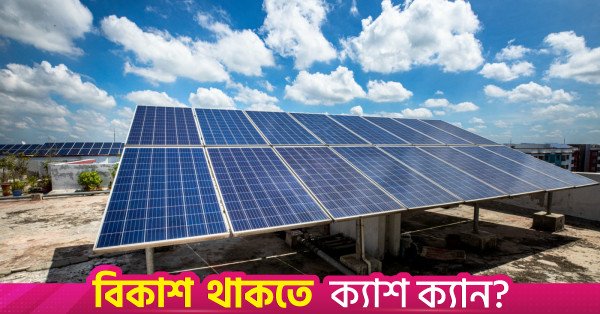
Experts stressed that Bangladesh does not need to rely solely on long-term mega projects to meet its energy needs. Instead, they advocated for decentralised solutions such as rooftop solar, which can be deployed quickly.
According to research presented at the event, rooftop solar installations in the industrial sector alone could generate up to 12,000MW of electricity.
Dipal Chandra Barua, chief executive of Bright Green Energy Foundation (BGEF), said the 10,000MW solar target is achievable but hinges on rapid execution.
“The target is measurable. The real question is how fast we can implement it,” he said, adding that public participation in energy generation could significantly accelerate progress.
A strategic but urgent transition
Civil society groups welcomed the government’s solar ambition as a timely and strategic decision, but cautioned that without immediate and inclusive action, the opportunity could be lost.
In a joint statement, they noted that global geopolitical tensions, fossil fuel price volatility, and supply disruptions are already affecting Bangladesh’s economy and everyday life.
They called for prioritising decentralised, inclusive renewable energy models to reduce import dependence, enhance resilience, and ensure long-term energy security.
About The Author