Agriculture Minister Amin-ur Rashid added that the amount could be increased depending on the extent of the damage
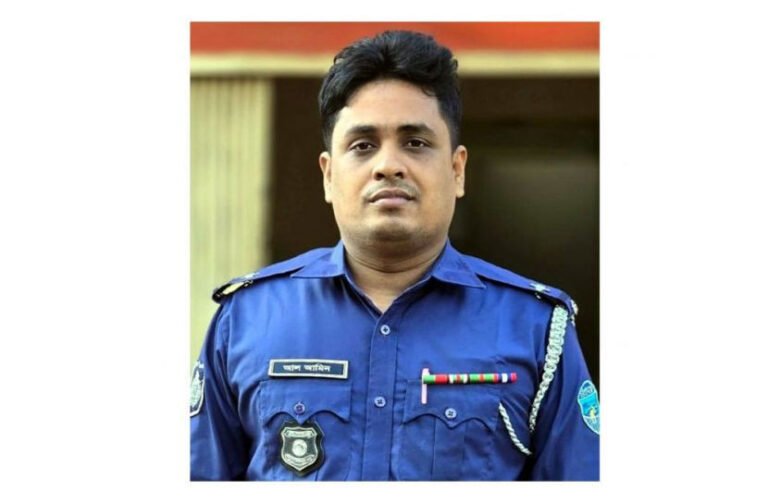
The file photo of Fisheries and Livestock, Agriculture and Food Minister Mohammad Amin-ur Rashid. Photo: Collected
“>

The file photo of Fisheries and Livestock, Agriculture and Food Minister Mohammad Amin-ur Rashid. Photo: Collected
Farmers affected by recent floods in the country’s haor regions will receive monthly financial assistance of Tk7,500 for three months, Agriculture Minister Amin-ur Rashid said today (4 May).
He added that the amount could be increased depending on the extent of the damage. The support will be provided to help affected farmers cope with losses.
The minister made the remarks while speaking to reporters after a meeting with district commissioners (DCs) during the DC Conference at the Osmani Memorial Auditorium in the capital.

Earlier, a session involving the ministries of agriculture, fisheries and livestock, and food was held with the DCs.
“A plan is being considered to provide financial assistance from the prime minister’s relief fund, other funds, and the disaster management fund to all farmers affected in the haor areas. It is not possible for the government to compensate for the full extent of the losses,” he said.
“They will be provided with assistance for the next three months. Initially, each affected farmer will receive Tk7,500. A committee is being formed for this, and a list is being prepared at the field level,” he added.
Responding to questions, the minister said that although there has been a bumper potato harvest, many farmers are not receiving fair prices. To address this, the government has introduced farmer cards.
Once fully implemented, the system will allow authorities to track which potato varieties are cultivated in different districts and unions, the extent of cultivation, and how many farmers are involved.
It will also indicate how much cultivation remains. He said the system could move towards a quota-based approach if necessary.
The minister said planned production would help ensure fair prices for farmers while allowing consumers to purchase products at reasonable rates.
He noted that natural disasters remain beyond human control and often affect farmers even after good harvests due to excessive rain or flooding. In this context, increasing potato consumption in daily diets is also under discussion.
He further said Bangladesh has recently achieved success in producing special potato varieties used for making French fries and chips, which were previously imported. With good domestic production this year, the government hopes to export these potatoes in the future.
Regarding cattle movement across the border, the minister said some border markets have been closed as unusually large numbers of cattle were arriving compared to actual demand. The Border Guard Bangladesh is monitoring the situation.
He added that while there is no surplus of cattle in the country, there is also no risk of shortage. Farmers can hold onto cattle for a longer period if market prices are not favourable, which sometimes creates a perception of surplus.
The minister also noted growing interest among educated youth in agriculture and farm management, describing it as a positive development for the sector.
About The Author