Bangladesh spends billions of dollars every year buying energy it cannot control, from markets it cannot predict, through supply chains it cannot protect. Experts at a roundtable in Dhaka today said it is time to rethink.
They said renewable energy is no longer about saving the country from climate change. It is about saving the economy.
Speakers at the event urged the government to immediately waive all VAT and taxes on renewable energy equipment and initiatives for at least two years, and to back that up with real incentives, not policy documents, but actionable measures that move money and mobilise investment.

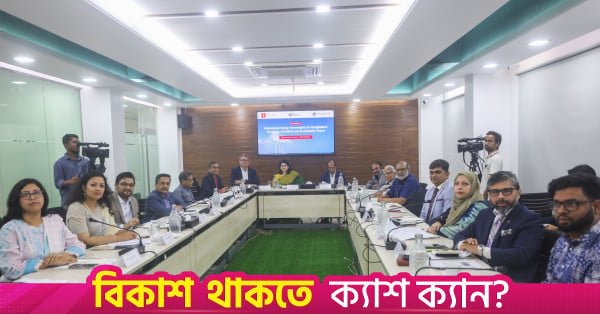
The roundtable, titled “Advancing Energy Sovereignty for Bangladesh: Securing a Resilient and Sustainable Future,” was held at The Business Standard conference room and jointly organised by the Embassy of Denmark, The Business Standard, and the Centre for Policy Dialogue (CPD). It was chaired by CPD Executive Director Fahmida Khatun and moderated by TBS Deputy Editor Sajjadur Rahman.
Policymakers, academics, researchers, and private sector leaders arrived at the same conclusion: Bangladesh’s deepening dependence on imported fossil fuels is not only a fiscal strain but a strategic vulnerability.
Every price shock in the Middle East, every disruption in global shipping lanes, every OPEC decision made without Bangladesh in the room lands directly on factory floors, household electricity bills, and the national budget.
Fahmida pointed to structural weaknesses in Bangladesh’s energy management despite notable economic progress. “Over the last few decades, we have experienced economic growth, reduction of poverty, urbanisation and industrialisation, as well as an increase in the use of energy in households,” she said.
“Among the many advances, we are also witnessing weaknesses in that as our energy management has yet to settle into a strong and resilient structure.”
She stressed that energy goes beyond being a commodity. “Energy is not only a mere product but also related to the economy, budget management, and national security.”
Linking energy to Bangladesh’s upcoming LDC graduation, she said, “To cope with the challenge of LDC graduation, we need diversification of imports, industrialisation and transformation into an economy.”
“For our overall economic diversification, energy security is very important, and establishing energy sovereignty will be a pressing need for the diversification of our economy,” she said, urging the government to introduce concrete incentives to speed up renewable adoption.
Professor Ijaz Hossain called for a full waiver of duties and taxes on all solar equipment, including panels and battery storage, for at least two years to give the renewable energy sector the boost it needs.
“Duties for solar-related materials have to be waived to give renewables momentum,” he said.
He also warned that Bangladesh’s growing dependence on energy imports poses a serious threat to the country’s long-term energy security. “More than 62% of energy is import-dependent. Every year, this dependency is increasing by 3-4%,” he said.
“Whenever people talk about more industry, they talk about importing more LNG and other fuel, which will push us towards more imports.”
He warned of a looming crisis. “We are in a frightening situation, thinking about the future of our energy security.”
Referring to recent shortages, he added, “Due to the energy crisis, load-shedding amounting to 3,000MW was enforced recently, and industries were suffering beyond description.”
Alamgir Morshed, CEO of Infrastructure Development Company Limited (IDCOL), said the organisation’s once-celebrated solar home system programme was derailed by corruption and greed.
He pointed to Vietnam as a model worth emulating. “In just three years, Vietnam has developed a huge renewable energy sector, and Bangladesh can replicate that model,” he said, adding that the net-metering system should be simplified.
M Shamsul Alam, energy adviser at the Consumers Association of Bangladesh, criticised the slow pace of renewable adoption.
“Five per cent renewable capacity is not the true reflection; rather, we have to focus on kilowatt hours, which is around one per cent,” he said. “When the renewable energy policy was framed in 2008, it was declared that by 2021, 10% of electricity would be generated from renewable energy. But as of today, actual power generation hovers around 1%.”
He blamed flawed policies and vested interests. “Due to flawed policy and the rise of vested interests, energy management went in the wrong direction and the government started to lose control over the energy landscape.”
Anders Karlsen, deputy head of mission at the Danish Embassy, underscored international support for Bangladesh’s transition.
“We would like to see more renewables as part of the solution – not only to save the planet but also to achieve energy sovereignty,” he said. “We should see renewable energy as the way forward, as Bangladesh has strong capacity and potential to transition further. Denmark is ready to partner and share experiences in the renewable energy sector.”
Shafiqul Alam, lead energy analyst at the Institute for Energy Economics and Financial Analysis (IEEFA), highlighted inconsistencies between targets and implementation.
“We are parroting that our renewable generation capacity is more than 5% of the total power generation capacity, but last year, power generation from renewable sources was just 2.3%,” he said. “We are framing policy and setting targets, but midway we often abandon them.”
He cited stalled initiatives. “We have drummed up rooftop solar, which was later abandoned. Now we are targeting a lofty goal of setting up 10,000MW of solar power.”
“To implement the plan, we need an action plan as well as policy and coordination,” he added.
Sakib Bin Amin, a professor of economics, noted that Bangladesh has no shortage of policies, but struggles with implementation.
Md Rafiqul Alam, additional secretary of the Energy and Mineral Resources Division, stressed the need for a balanced energy mix.
“To establish sovereignty, we need to focus on mixed energy mechanisms instead of relying solely on renewable energy,” he said. “When it comes to energy security, we mean access to energy and the free flow of energy to people’s doorsteps.”
He noted that solar power, despite its potential, has limitations. “No matter how hard we push, solar power can at best cover 50% of the total energy needs.”
Highlighting long-term realities, he added, “There are three types of energy – fossil, clean, and solar. By 2050, while we cannot entirely phase out our current energy mix, which is heavily dependent on fossil fuels, we must move decisively toward renewable energy.”
He also cautioned about land constraints: “Due to land scarcity and agricultural needs, we have to think very judiciously about the extent we can go to set up solar energy.”
The roundtable concluded with a strong consensus that Bangladesh must urgently align policy, incentives, and implementation strategies to scale up renewable energy and secure long-term energy sovereignty.
About The Author