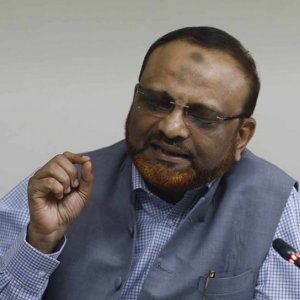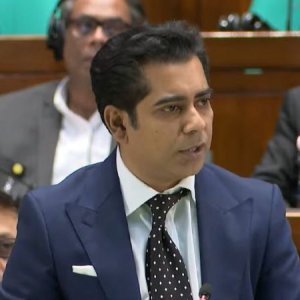
The government has approved five proposals for $1.9 billion in loans from development partners of which $1.6 billion is non-concessional. Of the amount, $1.3 billion will be set aside as budget support to help tackle urgent financial pressures, according to finance ministry officials.
The approval for loans under relatively tough terms were granted today (28 April) at a meeting of the Standing Committee on Non-concessional Loan chaired by Finance and Planning Minister Amir Khosru Mahmud Chowdhury at the Planning Ministry in Sher-e-Bangla Nagar.
Sources present at the meeting said the budget support package includes $450 million from the Asian Development Bank (ADB), $500 million from Japan International Cooperation Agency (Jica), $250 million from the Asian Infrastructure Investment Bank (AIIB), and $100 million from the OPEC Fund for International Development (OFID). Officials said these loans come with higher interest rates, shorter grace periods and faster repayment schedules than concessional financing.

Under the programme titled Strengthening Economic Management and Governance, Subprogram 2, ADB will provide a total of $750 million, consisting of $300 million in concessional financing and $450 million through its regular Ordinary Capital Resources (OCR) window.
The concessional portion carries a 2% interest rate, a repayment period of 25 years, and a five-year grace period. The $450 million OCR loan is classified as non-concessional and carries an interest rate of SOFR plus 0.50%, which based on the 20 April 2026 SOFR rate of 3.63%, brings the effective rate to 4.13%. It also includes a 0.15% commitment charge on undrawn balances.
This ADB OCR loan has a 15-year tenure, including a three-year grace period. According to ERD analysis, the loan’s grant element is 6.61%, making it highly non-concessional. Negotiations with ADB were completed on 15 April 2026, and the package is now awaiting board approval.
The government is also seeking $500 million from JICA to help manage immediate fiscal challenges. The proposed loan carries an indicative interest rate of 3.05%, a 30-year repayment period, and a 10-year grace period.
Officials said the Japanese financing would be used in line with IMF recommendations, including expanding social protection spending, strengthening revenue administration, and improving macroeconomic stability.
AIIB is set to provide $250 million as co-financing alongside ADB. The proposed loan carries an interest rate of SOFR plus 1.45%, which based on the same benchmark rate would bring the effective cost to around 5.08%. It has a 35-year maturity, a five-year grace period, and a 0.25% front-end fee. ERD analysis found the grant element to be negative 0.68%, meaning it is considered extremely hard borrowing.
The government is also pursuing $100 million equivalent from OPEC Fund for International Development, denominated at approximately €85.3 million. Indicative terms include an interest rate of six-month EURIBOR plus 1.20%, giving an effective rate of about 3.616%. The loan has an 18-year maturity, a three-year grace period, and a 0.25% commitment fee. Its grant element is estimated at 11.38%, also placing it in the non-concessional category.
Beyond budget support, the committee also approved a separate $300 million ADB loan for the SASEC Dhaka-Sylhet Corridor Road Investment (Tranche-2) project.
The project will upgrade around 210 kilometres of highway from Dhaka (Kanchpur) to Sylhet into a four-lane corridor, with separate service lanes for slow-moving vehicles. The goal is to better connect the Dhaka-Sylhet route with regional transport networks including the Asian Highway, SASEC (South Asia Subregional Economic Cooperation) and BIMSTEC corridors.
The total project cost is estimated at Tk16918.58 crore, of which the government will provide Tk3,674 crore, while ADB will finance Tk13,244.68 crore.
The road loan will come from ADB’s OCR window at an effective rate of around 4.23%, with a 25-year repayment period and a five-year grace period.
Officials said the Standing Committee on Non-concessional Loan also adopted several policy measures to improve management of costly foreign borrowing. Non-concessional loans will be approved only where concessional financing is unavailable or impractical. Borrowers receiving government or central bank guarantees must demonstrate repayment capacity from their own income.
Loans with excessive conditions or mandatory down payments will be discouraged. The committee also decided that annual debt servicing on non-concessional external loans must remain below the lower of 10% of export earnings or 15% of government revenue, while total non-concessional external debt stock must remain below 10% of GDP.
ERD officials said these measures are expected to improve transparency, reduce risks and strengthen long-term sustainability in Bangladesh’s external debt management.
About The Author