The report notes that an “unethical competition” existed within the administration to deliver results in favour of the ruling party, resulting in voter turnout figures exceeding 100% in some centres
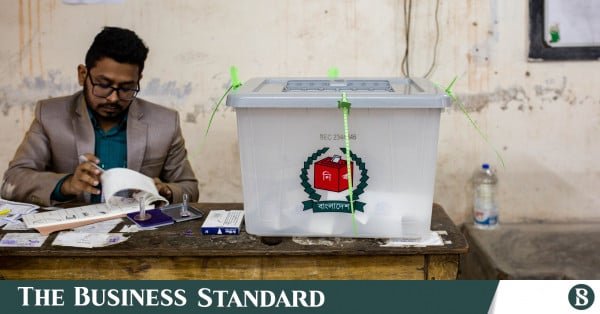
Ballot box at a polling station during the 12th national polls on 7 January 2024. File Photo: Nayem Ali/TBS
“>

Ballot box at a polling station during the 12th national polls on 7 January 2024. File Photo: Nayem Ali/TBS
The investigation commission on the national elections of 2014, 2018 and 2024 has found that all three parliamentary polls were conducted under what it described as “innovative planning” taken at the highest level of the state, with sections of the administration, police, Election Commission and intelligence agencies used in a coordinated manner to ensure Awami League victories.
According to the commission’s report, decisions regarding the design and execution of the three elections were made at the highest level of the state, and implementation involved the systematic use of the civil administration, law enforcement agencies, the Election Commission, and selected parts of the intelligence apparatus. A special coordination unit, widely known as the “election cell”, was formed with certain officials to carry out these plans.
Regarding the 11th National Parliament election in 2018, the report states that, based on the commission’s estimates, ballot papers were stamped at night in around 80% of polling centres to ensure an Awami League victory.

The report notes that an “unethical competition” existed within the administration to deliver results in favour of the ruling party, resulting in voter turnout figures exceeding 100% in some centres.
Between 2014 and 2024, the commission finds, control over the electoral system was gradually shifted from the Election Commission to the administrative machinery. During this period, the administration, not the Election Commission, emerged as the primary force in managing elections.
The commission notes that thousands of officials and employees were involved in electoral irregularities across the three elections. Due to the limited time allocated to the investigation, it was not possible to identify each individual by name or determine specific roles.

Other irregularities cited include voter intimidation; obstructing voters from entering polling centres; irregular delimitation of parliamentary constituencies; stuffing ballot boxes in advance; manipulating turnout figures; restricting media access to polling stations; coercing or enticing candidates to withdraw nominations; and fielding dummy candidates to influence outcomes.
The investigation commission submitted its report to the chief adviser on 12 January. The commission was headed by former High Court judge Shamim Hasnain and included former additional secretary Shamim Al Mamun, University of Dhaka law department associate professor Kazi Mahfuzul Haque, lawyer Tajrian Akram Hossain, and election expert Md Abdul Alim.
About The Author